
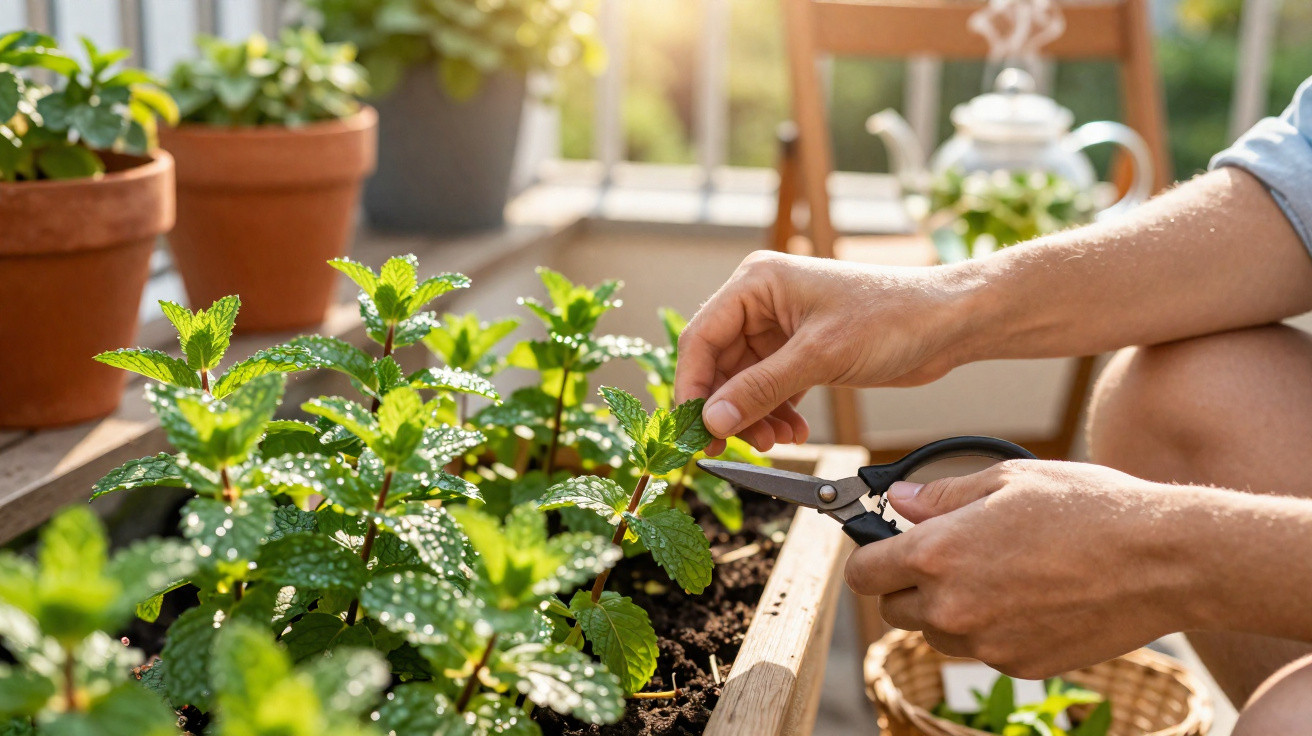
The air already carries a hint of summer before the sun clears the garden fence. You step outside barefoot onto the cool paving stones, coffee mug in hand, and as you pass you brush against a dense, green cushion: mint. You pause for a second. The leaves still shine with dew and smell of tea, cocktails, childhood. On impulse you pinch off a leaf and rub it between your fingers-the scent is so punchy that your coffee suddenly seems a bit dull. And then the question arrives, sooner or later, for every hobby gardener: do you cut, do you pinch, do you go hard or stay cautious? Mint grows like mad, yet your last trim somehow seemed to offend it. This time you want a different outcome. You want to harvest mint like someone who actually knows what they’re doing.
Why harvesting mint properly is more than just “pinching a few leaves”
Anyone who has watched a mint plant sulk in the corner after a chaotic grab-and-tear session quickly understands why timing and technique matter. Mint looks tough, almost indestructible, but it can be surprisingly sensitive to how we take from it. A clean, deliberate cut encourages fresh, tender shoots. A rough tug on the stems can leave brown edges behind-and then nothing much happens for ages. Before long you’re standing there, mojito glass in hand, wondering why the supermarket bunch is suddenly more tempting than the tired tuft in your own bed.
I once watched a neighbour on an allotment who treated his herb patch like an operating theatre every Sunday morning. While many of us let mint simply “do its thing”, he took it bit by bit-always cutting just above a pair of leaves, always removing only a third of the plant at most. A year later, he had a mint hedge that looked like it belonged in a compost advert. His “secret” wasn’t really a secret at all: consistency, respect for the plant, and secateurs sharp enough to outdo some people’s kitchen tongues. And yes-at the height of summer, the smell of his mint carried right out to the garden path.
Mint is a perennial that pushes strongly from rhizome growth. In other words, every harvest is a message. If you tidy the top neatly, it responds by sending out new growth from below. If you rip at it, you trigger stress. On top of that, the level of essential oils isn’t identical every day. In late morning-when the sun is up but the heat hasn’t started to press down-flavour and fragrance are at their richest. When you harvest mint, you’re not just taking leaves-you’re taking the moment when the plant gives the most of itself. That’s the difference between an “okay” brew and a cup that lifts you out of everyday life for a few minutes.
How to harvest mint like a professional - and your plant will thank you
Imagine you weren’t “raiding” your mint, but maintaining it the way a good hairdresser looks after their best regular. Step one: use clean, sharp scissors or a small knife. Choose shoots that are at least 15–20 centimetres tall and cut them off just above a pair of leaves. Don’t cut right down at soil level, and don’t pluck single leaves from all over the plant. This style of cut prompts mint to branch out, becoming thicker and bushier. If you want a bigger haul, you can take up to one third of the plant at a time. More than that feels like a clear-fell; less can be as ineffective as half-hearted small talk.
A lot of people fall into the same harvesting habit: they pick the prettiest top leaves whenever they feel like it. It seems handy in the moment, but over time it weakens the very shoots the plant relies on for growth. We all know that scene-dashing out to grab “just a little” for tea and coming back with two or three sadly torn stems. Let’s be honest: nobody heads to the bed with secateurs and a perfect plan every single time. Still, if you commit to one or two harvesting sessions a month where you cut properly and with structure, your whole patch changes. The mint grows fuller, more even, and far less temperamental.
“Mint forgives a lot, but it rewards consistency. If you harvest regularly and with purpose, you’ll get the best aromas-season after season.”
- Best time – Cut in late morning, when the leaves are dry but still fresh.
- Gentle technique – Take whole shoots, snipping just above a pair of leaves; don’t tear and don’t twist.
- Maximum harvest amount – Remove no more than one third of the plant per session so it keeps its strength.
- Encourage new growth – Water well after cutting and remove any dead or brown parts.
- Protect the flavour – Use harvested mint quickly or dry it in airy shade; never leave it lying in harsh, direct sun.
What harvesting mint has to do with patience, pleasure, and a small loss of control
Once you’ve seen a few unassuming shoots turn into a lush, fragrant cushion, harvesting stops feeling like a chore and starts to feel like a ritual. You step outside, notice what has changed since last week, and almost instinctively decide which stems are “ready”. Some days you cut generously to build a stash for tea and dried bunches. Other days, a small handful is enough for a glass of water with mint leaves beside your desk. That variation removes the pressure. Mint isn’t a project plan-it’s more like a conversation you deepen over time.
At the same time, the way we harvest herbs quietly reflects our pace in everyday life. You can chop mint right back and forget about it; it will come back somehow. Or you can spend a few minutes paying attention-looking, smelling, feeling. Then a bundle of leaves becomes something close to self-care. A bunch of herbs in the evening can say more about our day than any to-do list. And when you start harvesting mint with intention, you often notice you begin handling other things more thoughtfully too-pinching gently rather than tearing away.
Maybe next time you have a friend over in the garden, you’ll mention that you now “cut instead of pick” your mint. Maybe you’ll hand someone a glass of water with fresh leaves and casually add that you harvested them in the morning because the aroma is strongest then. These small stories travel quietly. And suddenly mint isn’t just a garnish on dessert-it’s a small lesson in how growth works: regular attention, pruning back, seasons of abundance, and moments where you give the plant-and yourself-a few centimetres of breathing space.
| Key point | Detail | Benefit for the reader |
|---|---|---|
| Correct harvesting time | Cut in late morning when leaves are dry; just before flowering the aroma is strongest. | Noticeably more intense flavour for tea, cooking and drinks with no extra effort. |
| Clean cutting technique | Snip whole shoots just above a pair of leaves; take a maximum of one third of the plant per session. | Mint branches more readily, stays healthy, and delivers bigger harvests long term. |
| Gentle handling after harvesting | Don’t wash the leaves; just shake them out. Dry them in an airy place or use fresh straight away. | Preserves essential oils, reduces flavour loss, and improves keeping quality. |
FAQ:
- How often can I harvest mint in a year? From spring through to autumn, every two to four weeks-so long as the plant looks vigorous and keeps producing new shoots.
- Should I harvest individual leaves or whole stems? For a healthier plant, cut whole stems just above a pair of leaves instead of pinching single leaves from all over.
- Can I harvest mint before it flowers? Yes-ideally. Just before flowering, the essential oil content is usually at its highest; afterwards the flavour often turns a little more bitter.
- How do I dry mint properly for tea? Tie stems into small bunches and hang them upside down in an airy, shaded place until the leaves rustle and crumble easily.
- What should I do if mint looks weak after harvesting? Remove old and brown parts, water well, optionally feed lightly with an organic fertiliser, and give it a few weeks to recover before cutting again.

Comments
No comments yet. Be the first to comment!
Leave a Comment