
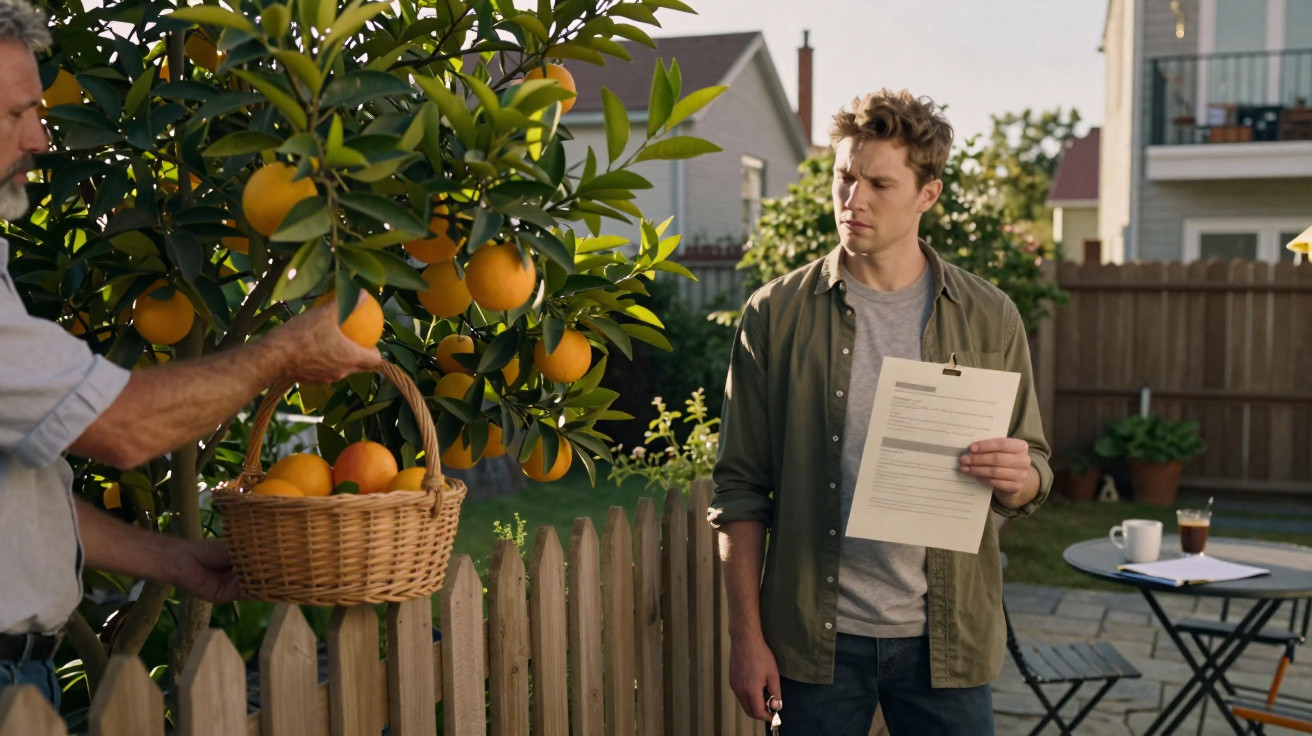
The first detail she saw was not the absent fruit. It was the lavender, partly flattened beside the garden gate, and two trails of muddy footprints stamped into the wet ground. When she returned from work, her landlord’s car remained outside, yet there was no sign of him. Then her eyes went to the ageing plum tree: its branches had been cleared, buckets were piled near the shed, and a ladder was still propped up as though somebody had rushed away.
Her pulse quickened. This garden was her refuge, her private space, the one area where the outside world was not meant to intrude without being invited. At least, that was what she had believed.
Was this a genuine legal entitlement, or had her landlord seriously overstepped the mark?
When your “private” garden no longer feels private
For many tenants, a garden is what makes a tenancy appealing. It may be a small lawn for summer meals, a shady tree, or a quiet corner away from prying eyes. You sign the tenancy agreement, pay the deposit, and that outside area soon becomes woven into your everyday life, your wellbeing and your home.
That is why something changes when a landlord appears without warning to pick “his” apples or figs. This is not simply about a basket of fruit. It is about unfamiliar footsteps where you dry washing, have rows with your partner or sit drinking coffee in your pyjamas.
Accounts like these are appearing throughout tenant forums and social media. One woman in London found her landlord in the garden at 7 a.m., cheerfully loading crates with pears while she was still asleep. A couple in California returned from a weekend away to discover their lemon tree had been stripped, while their landlord’s Instagram was filled with photos of a “homegrown harvest”. In Sydney, another tenant watched a landlord carry a ladder straight past the sitting-room window without even sending a text.
The response tends to follow the same pattern: disbelief, a sharp burst of anger, then an uneasy question: “Am I even allowed to complain about this?”
In legal terms, the issue is often far clearer than landlords may imply. In most countries, renting a property gives the tenant exclusive possession of every area covered by the tenancy: the home, garage and, yes, any garden, patio or balcony listed in the agreement. A landlord cannot normally wander in simply because “the tree is mine” or “because I planted it ten years ago”. They generally require proper notice and a valid reason connected with maintenance, inspection or repairs.
Owning the land does not remove a tenant’s right to quiet enjoyment and privacy. Those rights do not end at the back door.
What to do when your landlord “harvests” your garden
Before reacting in anger, take a moment to slow down. Photograph what is there: the fruitless trees, footprints and any tools or equipment that have been left behind. Record the date and time. If messages show that the landlord admits entering to take fruit, take screenshots. That is not overreacting; it is creating a clear record.
After that, check your tenancy agreement. Pay particular attention to wording about “premises”, “garden use”, “access” and “landlord entry”. Where the garden, yard or another outdoor area is included, you will usually have the right to decide who enters it from day to day.
The next step is to communicate, preferably in writing. A brief, measured email can establish the right tone. Set out what happened, explain how it affected you, and make clear that you expect advance notice and your consent before anyone enters the garden again. Legal terminology is unnecessary. Even a sentence such as “I value my privacy and I wasn’t comfortable with you entering the garden without my knowledge” can make a real difference.
We all know that moment of mentally redrafting a message three times because you do not want to seem “difficult”. The truth is that nobody gets up in the morning looking forward to a dispute with their landlord.
This is also a point at which external support can be useful. Many areas have tenant advocacy organisations, local mediation services or housing advice lines that can clarify your actual rights where you live. Send them the tenancy agreement, describe what has happened and ask for an answer in plain language. Simply understanding the law can often give you the confidence to respond politely but firmly.
“I felt crazy at first, like maybe I was overreacting,” one tenant told me. “Then the legal advisor said, ‘No, he cannot enter your garden to take fruit without your permission.’ That one sentence changed everything.”
- Request written notice before any visit to the property.
- Make it clear that the garden forms part of your rented home.
- Suggest a compromise only if you are comfortable with it, such as sharing some of the harvest or agreeing particular times.
- Keep every message and response together in an email thread.
- Contact a tenants’ union or solicitor if the behaviour happens again.
Where the law finishes and power games start
What makes these experiences painful is not only the possible legal violation, but also the power imbalance surrounding it. Your landlord has influence over your tenancy, rent and sense of security. So when they casually enter your garden “just to grab a few peaches”, it does not feel neutral. It can feel like a reminder of who holds the keys, owns the land and has power over the future of your tenancy.
That is why a simple basket of fruit can suddenly feel like a battle line.
Sometimes, landlords genuinely believe they have done nothing wrong. They planted the tree, saw it mature and have always picked “their” fruit. Perhaps previous tenants never objected, or quietly accepted the unspoken arrangement. Tenants, meanwhile, often move in believing that “private” truly means private. Both parties are navigating the same area with entirely different maps.
The conflict begins when those maps finally meet: one side asserting ownership, the other asserting privacy.
Once that is clear, the question changes from “Is he allowed to do this?” to “What boundaries am I willing to set here?” The law often supports tenants more than they realise, particularly regarding quiet enjoyment and unlawful entry. Yet using that protection requires a willingness to say no, put conditions in writing and risk being labelled “the tenant who complains”. That is not an abuse of power on your part. It is you insisting that your home - garden included - is not a stage where somebody else can walk in halfway through a scene.
The wider issue is one our housing systems still avoid: when you rent, how much of your life do you truly own?
| Key point | Detail | Value for the reader |
|---|---|---|
| Garden = rented space | Where the garden is included in the tenancy agreement, the tenant will usually have exclusive possession of it. | Helps you recognise when a landlord’s entry may cross a legal boundary. |
| Consent and notice | Landlords generally need notice and a valid reason to enter any rented space, whether indoors or outdoors. | Gives you a clear expectation to request in writing. |
| Document and respond | Photographs, dates and calm emails provide a reliable record and re-establish boundaries. | Sets out practical ways to protect your privacy without escalating without thought. |
FAQ:
Can my landlord enter my garden without telling me?
Usually not. If the garden, yard or outdoor area is part of your rented premises, your landlord will generally need notice and a proper reason to enter, just as they would for the inside of the property.What if the landlord owns the fruit trees?
Even where the landlord planted or owns the trees, your right to quiet enjoyment of the rented space will often take priority. Owning a tree does not automatically give them permission to enter unannounced or harvest fruit.Is it trespassing if they come in anyway?
It may be. Under local law, repeated entry without notice or consent can amount to unlawful entry or harassment. A tenants’ association or solicitor can explain how this is treated in your area.Should I offer to share the fruit as a compromise?
Only if that is what you genuinely want. Some tenants are content to arrange a harvest day together, while others want complete control. A written agreement can prevent further awkwardness.What if I’m afraid of retaliation if I complain?
Many jurisdictions prohibit retaliatory measures, including rent increases or eviction, when a tenant asserts their rights. Seek advice from a tenant support group, keep records of everything and do not deal with that fear alone.





Comments
No comments yet. Be the first to comment!
Leave a Comment