
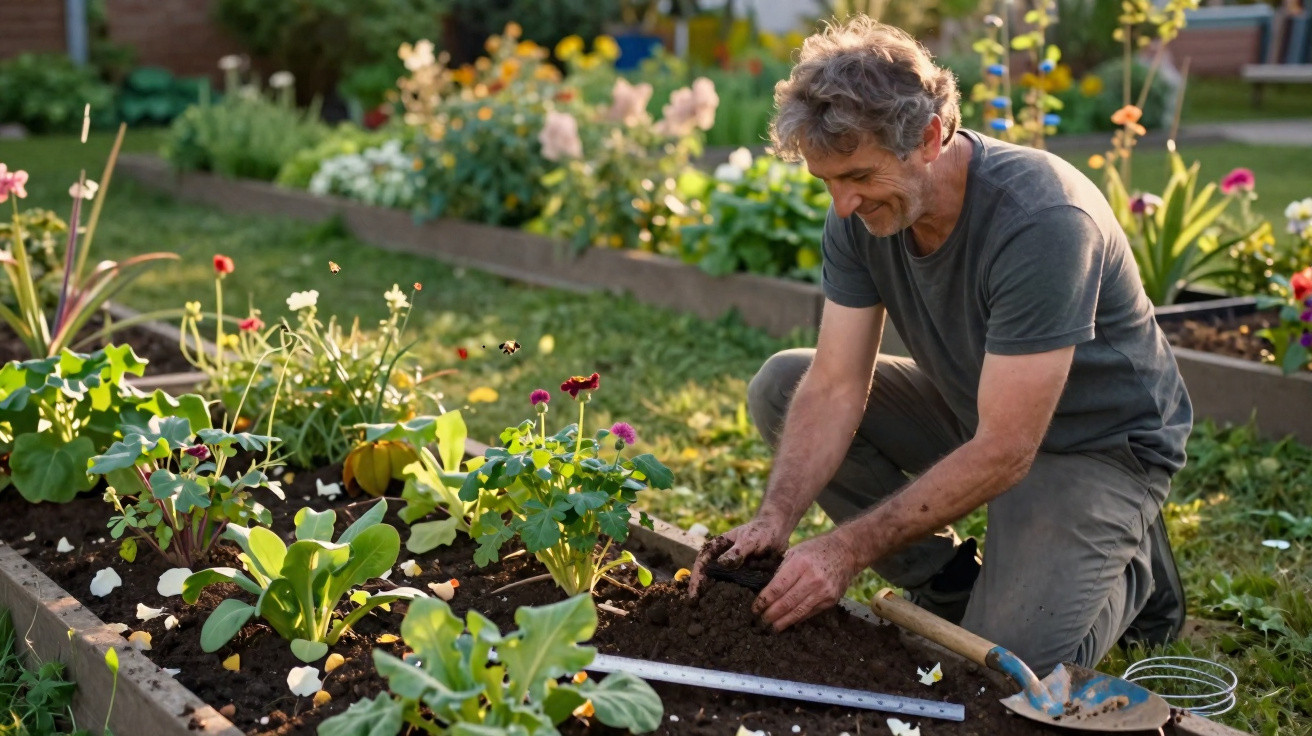
The woman on the neighbouring allotment used to take a ruler into the garden. I would see her checking the gap between every lettuce, cutting back any leaf bold enough to fall out of line. Her beds were ruler-straight, like something from a catalogue. Mine resembled a terrible haircut: squashes spilling over the paths, self-seeded marigolds appearing among the onions, and one determined dandelion that would not go away. At first, I was ashamed of the disorder. Then I noticed something odd. My “chaotic” plot seemed more alive. Bees lingered there. Birds rummaged for insects. Even during heatwaves, the soil remained cool and crumbly, while her pristine rectangle formed a hard, cracked crust. As the seasons passed, one quiet lesson rose from the soil.
Sometimes, the healthiest garden is the one that stops trying to be perfect.
When flawless garden beds begin to fail
There is a point that many gardeners recognise but seldom confess to. You step outside, look over your immaculate rows and feel... unsettled. Everything is supposedly “right”, but the plants appear rigid, as though posing for a magazine photograph. The leaves are spotless yet strangely lacking in vitality. The soil feels exhausted beneath your fingertips. Meanwhile, nearby plots with uneven borders and scattered flowers alive with insects seem brighter and healthier. You begin to question whether all those hours spent removing every scrap of clover and aligning each cane have truly helped. That is often when the thought first appears.
What if the garden is trying to tell you it doesn’t want to be perfect?
One spring, a local gardening group carried out an informal experiment. One half maintained their exceptionally tidy beds, removing every “weed” as soon as it emerged. The others adopted a more relaxed method: they kept small wild patches, allowed some plants to flower and accepted clover and violets among the soil. By late summer, the contrast was unmistakable. The less controlled gardens supported more pollinators, suffered fewer aphid outbreaks and had darker, richer soil. Their harvests were not always larger, but their plants coped with drought and heavy rain with less difficulty. From afar, the neat plots looked impressive; up close, they appeared strained. There were fewer bees, more yellow leaves and more labour for less life.
Before long, people were discreetly following the example of the “messy” plots.
The reasoning behind this change is straightforward. Garden perfection commonly relies on control, and control often removes diversity. If you uproot every stray plant, smooth every rise and pursue an immaculate lawn, you also eliminate habitat. Soil loses shade, insects lose food and microbes lose organic matter. The whole system becomes vulnerable because it relies on you managing every centimetre. Leave a few “imperfections” in place and the garden gains support. Flowers nourish beneficial insects. Taller grass gives shelter to predators that feed on pests. Fallen leaves retain moisture and feed worms. The more you relax, the more the ecosystem quietly steps in to help.
The garden becomes a living community rather than a display space.
How to garden for life rather than photographs
An easy first step is to choose one area and deliberately allow it to be imperfect. It need not be the entire garden; a single corner or bed is enough. Avoid overly thorough raking. Let some fallen leaves remain as a protective layer. Allow a few self-seeded plants to develop, even when they have appeared somewhere you would not have chosen. Keep a notebook or take photographs, not to criticise your efforts but to observe what shifts: soil texture, visiting insects and how long the ground stays damp after rain. You are not “neglecting” the garden. You are conducting a quiet experiment in trust. In time, that small area becomes a useful comparison point. When the rest of the garden demands continual attention but this corner seems to thrive independently, you begin to see where genuine resilience comes from.
The plants cease to look arranged and begin to look as though they belong.
In truth, nobody deadheads and weeds every day without fail. The idea of the permanently perfect gardener is simply a myth. Plants are not damaged by your failure to groom them daily; they suffer from extremes instead. Intense clear-outs followed by weeks of inattention. Chemical shortcuts used to maintain a spotless appearance. Pulling out anything that seems “out of place” because it does not match an image seen on social media. When you loosen that expectation, your habits become gentler too. You weed with judgement rather than obsession. You learn which “weeds” may actually be useful allies. You accept that several chewed leaves show that something else is being fed. Strangely, as you become more compassionate towards the “mess”, you may become more compassionate towards yourself. The garden feels less like a test you are failing and more like a relationship you are learning to understand.
A long-serving horticulturist I met at a community allotment expressed it in a way I have never forgotten.
“A garden with zero ‘problems’ is usually a garden with zero life,” she said. “If you want butterflies, you have to accept caterpillars. If you want soil, you have to accept decay. Perfection is a lonely goal for a place meant to be shared by thousands of tiny beings.”
She had attached a brief list to her shed door:
- Leave 10–20% of the garden as “wild margin” each season
- Let at least a few vegetables bolt and flower for insects
- Keep bare soil covered with mulch, clover or low plants
- Plant something you love, not just something that “fits the plan”
- Observe one hour a week without touching anything
Nothing on that list suggests perfection. Still, her plot seemed to breathe. Birds darted through it, frogs sheltered beneath the rhubarb and tomatoes withstood heatwaves. Those “imperfections” were precisely what kept the whole system together.
Letting go: a practical gardening tool
Once you recognise the connection between relaxed expectations and healthy plants, it is difficult to overlook it again. You start to see that gardens which allow clover along their paths need less water. You notice how a partly wild hedge at the rear can house ladybirds that watch over your roses. You see that leaving last year’s kale to flower provides food for the first spring bees. These are not merely romantic touches; they are small insurance policies woven through the soil. The change in outlook is quiet but significant. Instead of asking, “How do I make this look perfect?”, you ask, “What is already working here that I can support?” Gardening does not suddenly become simple or effortless. Slugs still cause trouble, late frosts still arrive and disappointments still happen. Yet you are no longer battling the garden itself. You are working with its natural tendencies, allowing them to direct your efforts instead of letting fear of disorder do so.
That is where the healthiest gardens quietly take root.
| Key point | Detail | Value for the reader |
|---|---|---|
| Welcome “useful mess” | Permit some wild corners, flowers that go to seed and leaf litter | Cuts maintenance while improving biodiversity and soil health |
| Move from control to observation | Watch before taking action, and keep brief notes or photographs | Helps you recognise natural allies, patterns and simpler solutions |
| Redefine garden success | Prioritise resilience, insect life and long-term soil vitality | Makes gardening more rewarding, forgiving and climate-resilient |
FAQ:
- Do “messy” gardens really have fewer pests? Often they do, as mixed planting and wild areas attract predators such as ladybirds, lacewings and birds that help control pests.
- Won’t leaving weeds harm my vegetables? Certain vigorous weeds can compete strongly, but many low-growing plants, including clover and violets, protect the soil and support beneficial insects.
- How do I balance beauty with this looser style? Create defined edges, paths or several bold shapes; keep the framework intentional while allowing the beds themselves to be more relaxed.
- Is this approach OK for small urban gardens or balconies? Yes. Even a container combining flowers, herbs and a little self-seeding can attract pollinators and reduce problems.
- Will my neighbours complain that my garden looks neglected? Clear paths, mown edges and a few well-tended focal plants communicate care, even if some sections are intentionally wilder.

Comments
No comments yet. Be the first to comment!
Leave a Comment