
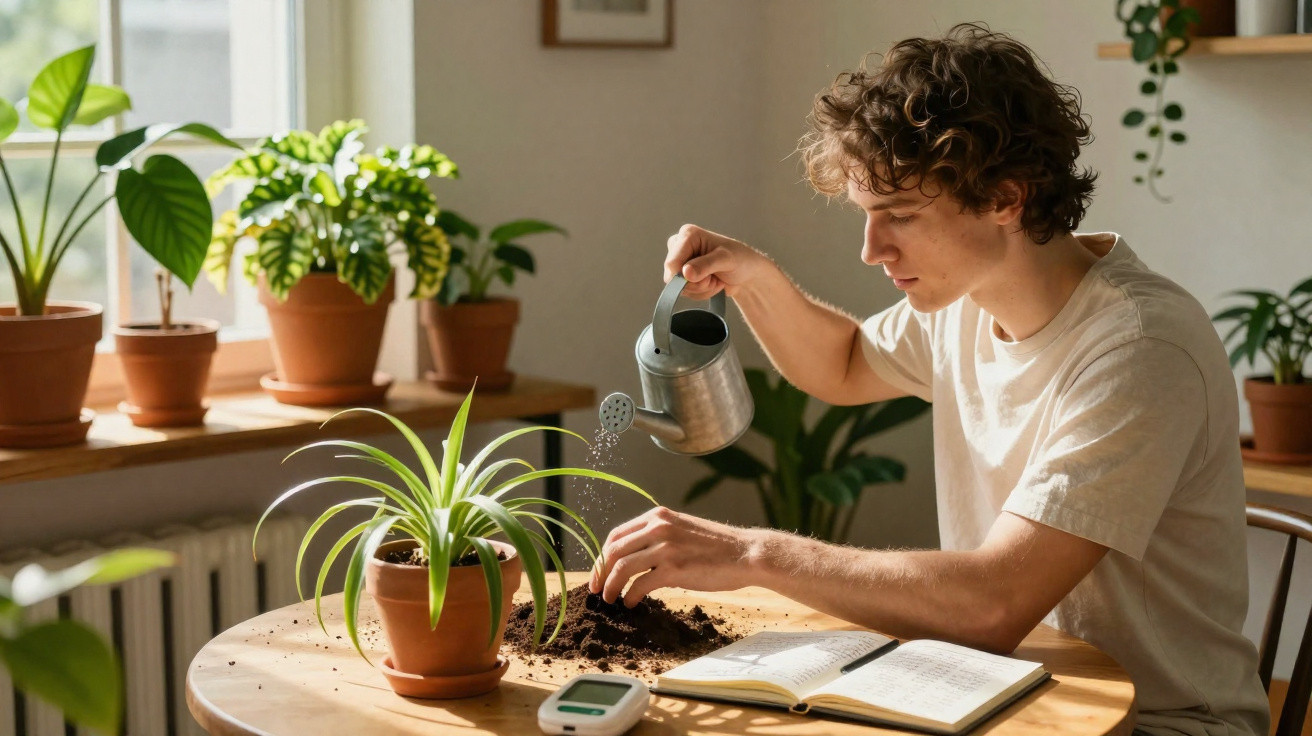
The first time I “forgot” to water my monstera, I felt like the worst plant parent imaginable.
The leaves slumped, the compost was completely dry, and the pot sat in the corner of my living room like it was silently judging me. I reached for the watering can as if I were putting out a fire, convinced one big, dramatic soak would make everything right.
Then I paused.
What if the problem wasn’t that I’d missed a watering, but that I was always rushing in to save it?
That brief hesitation shifted how I look after every plant I own.
I began allowing a bit of difficulty-carefully, on purpose. A short dry spell. Slightly brighter light than they were used to. Less fussing, more watching.
A few weeks later, something genuinely caught me off guard.
The plants I’d stopped mollycoddling had become… stronger.
When “over-caring” quietly weakens your plants
Most of us don’t lose plants through neglect-we lose them through affection.
We water before the compost has a chance to dry, we move pots around every few days, and we panic as soon as a single leaf turns yellow. From the outside, it looks like good care. Down in the pot, though, roots can end up starved of air, never needing to explore, never being nudged to grow deeper.
Once that clicked, I started spotting it everywhere.
My peace lily that always sat above a saucer of water? Its roots stayed close to the surface, and fungus gnats treated it like a permanent venue. At the same time, the half-ignored snake plant on the shelf-left “alone” more often than not-was sturdy as anything, sending up new shoots without the slightest fuss.
The difference was hard to ignore.
The more tightly I managed everything, the less my plants seemed able to cope.
One summer I accidentally ran a little test with two spider plants.
One sat on my desk in soft, filtered light, and I watered it the moment the top 2.5 cm of compost felt dry. The other ended up near a sunny window I rarely passed. It often went longer between waterings, and every so often it would look a bit limp before I noticed.
By autumn, they no longer looked like siblings.
The pampered spider plant had thin, floppy leaves and barely produced any babies. The one that had learned to wait for water had thicker, arching leaves, strong roots winding around the pot, and a spill of plantlets. It looked like it had actually lived.
Nothing else had changed.
Same compost, same house, the same tap water. The only real difference was how fast I’d rush in to rescue it.
Plants are built to react to gentle pressure.
Brief dry periods encourage roots to travel down and out in search of moisture. Slightly stronger light prompts leaves to grow thicker and work more efficiently at photosynthesis. A bit of movement-airflow or a breeze-helps stems strengthen so they’re not taken out by the first gust.
When we smooth out every tiny obstacle, plants stay delicate.
They have no reason to invest in toughness when everything arrives before they even feel the need. That kind of comfort can quietly backfire.
Letting a plant struggle a little isn’t unkind.
It’s allowing it to do what it’s designed to do: adjust, respond, and become surprisingly resilient.
How to let your plants struggle… just enough
I began with watering, because that’s where most of the harm tends to happen.
Rather than watering by routine, I started taking cues from the plant itself instead of the calendar. With my pothos and snake plants, that meant holding off until the leaves were just starting to lose their bounce, and the compost felt dry about 2.5–5 cm down. Not crisped. Not desperate. Just beginning to ask.
Then I watered properly.
No little sips-more like a thorough drench until water ran from the drainage holes, and then I left it alone again until those subtle early signs of thirst returned. Over time, the roots grew sturdier, growth slowed a touch but looked healthier, and new leaves appeared tougher and glossier.
That gentle, repeated pattern of “nearly uncomfortable” turned them into plants that could cope.
Of course, there’s a limit.
Letting a calathea “struggle slightly” isn’t the same as leaving a cactus bone-dry for two months. Some plants are melodramatic; others are unflappable. The goal is to widen the comfort zone, not shatter it.
You can usually leave a ZZ plant an extra day or two before watering.
But a fern needs a kinder version of the idea: slightly drier top compost, not an unintended desert holiday. And if you’re moving a plant into brighter light, treat it like sunscreen on the year’s first hot day-build up slowly, and respect how abrupt change can shock.
And honestly, none of us gets this perfect every day.
We guess, we misread, we realise we’ve pushed a bit too far. That’s normal. Plants are often more forgiving than we assume, provided neglect doesn’t become the standard.
At some point, this way of caring stopped feeling like a hack and started sounding like something bigger.
“Plants don’t need you to solve every discomfort,” a gardener friend told me once. “They need you to notice, then give them enough space to respond on their own.”
Here’s what that looks like in practice. When I want plants that can handle my imperfect care, I quietly stick to a simple checklist:
- Choose species known to be tough (pothos, snake plant, ZZ, spider plant).
- Water deeply, then let the compost dry according to that plant’s preferences.
- Introduce brighter light gradually, watching how leaves react.
- Allow mild wilt or slight droop before watering drought-tolerant plants.
- Resist fixing every yellow or brown spot; observe first, act second.
That single shift-from constant rescuing to mindful stretching-changed the feel of my home, and, if I’m honest, changed how I felt living in it.
What my plants taught me about resilience
These days my living room feels like a calm little classroom.
The rubber plant that used to collapse if I missed a watering now keeps its glossy leaves even after a week of neglect. The spider plants get through heatwaves without blinking. The pothos that once sulked in low light now climbs towards a brighter window, thicker, bolder, and happier.
I still lose plants sometimes.
Now and then I misjudge, or life gets hectic and “a little struggle” becomes real neglect. That sharp feeling is a reminder that resilience isn’t the same as abandonment. The point isn’t to harden everything at any cost-it’s to set conditions where strength has the opportunity to appear.
This approach has leaked into other parts of life too.
I catch myself before trying to fix every issue for a friend, before over-controlling a project, before padding every uncomfortable moment with instant relief. Plants showed me that a small, safe amount of difficulty can be a gift, as long as someone is still paying attention in the background.
Most of us know that moment: when you realise your urge to protect might be stopping something small and green-or someone you care about-from putting down deeper roots.
So I walk past my plants more often now.
I look, I notice, and I let them wobble a little. I don’t leap in for every rescue. And most of the time, they meet the challenge-quietly demonstrating that gentle stress can be a strange kind of care.
| Key point | Detail | Value for the reader |
|---|---|---|
| Controlled stress builds resilience | Short dry spells, gradual light changes, and deeper watering cycles encourage stronger roots and sturdier growth. | Helps plants survive busy weeks, heatwaves, and minor care mistakes. |
| Watch plants, not calendars | Use visual cues (slight wilt, compost dryness, leaf texture) instead of rigid watering schedules. | Reduces overwatering and root rot, especially in small indoor spaces. |
| Choose plants that tolerate mild struggle | Favor pothos, snake plant, ZZ, and spider plant when building a “resilient” collection. | Makes plant care less stressful and more compatible with real-life routines. |
FAQ:
- Question 1 How can I tell whether I’m letting my plant struggle too much?
- Question 2 Which plants respond best to this “mild struggle” approach?
- Question 3 Can I use this method with very delicate plants like calatheas or ferns?
- Question 4 If I’m trying this for the first time, how long should I leave between waterings?
- Question 5 What’s one simple change I can make today to build more resilient plants?
Comments
No comments yet. Be the first to comment!
Leave a Comment