
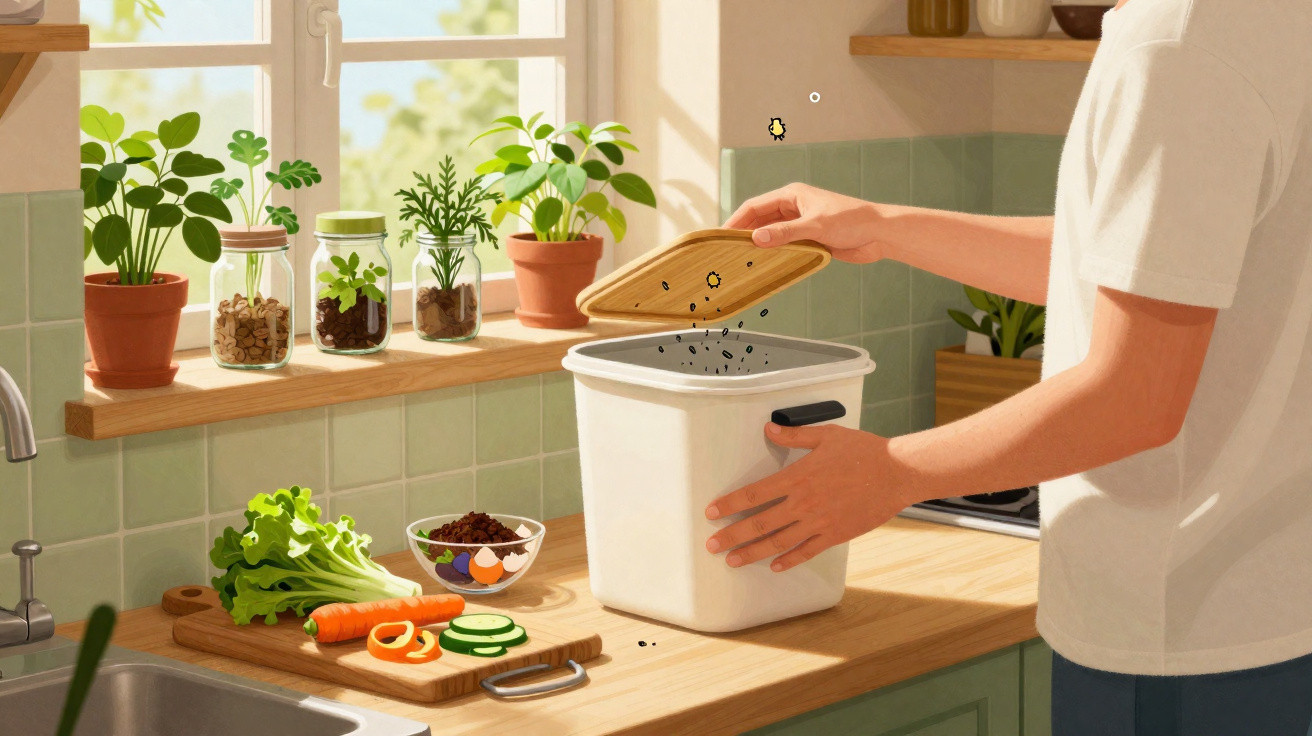
Sarah stands in front of her overfilled kitchen rubbish bin, watching yet another heap of coffee grounds and limp lettuce leaves head for landfill. From a fourth-floor flat in a city-centre block, she’s binge-watched YouTube tutorials on backyard composting with pure envy. No balcony, no garden, and hardly any worktop space beyond the coffee machine. Still, tipping all those nutrient-rich scraps into a plastic liner feels fundamentally wrong-especially when her struggling houseplants could really do with better soil.
The guilt lands every time banana skins and eggshells disappear into the bag. A neighbour along the corridor somehow keeps flourishing plants in every window, their foliage almost glowing with health. Sarah’s pothos, by contrast, looks as if it’s slowly giving up. Surely there’s a way to turn this waste into plant gold without needing a garden.
The Hidden World of Indoor Composting
Across urban areas, more apartment-dwellers are realising indoor composting isn’t just achievable-it’s genuinely straightforward once you understand the basics. The key is recognising that decomposition doesn’t need lots of outdoor space or pricey kit. With a simple container setup, everyday kitchen scraps can become rich, dark compost right on your worktop or neatly stored beneath the sink.
Consider Maya, a teacher in Brooklyn who began composting in her studio flat last winter. Starting with a no-frills two-bucket arrangement, she now makes roughly 500 ml (about two cups) of finished compost every six weeks. Her cherry tomatoes in window boxes have never produced so well. “I went from killing every plant I touched to having neighbors ask for gardening advice,” she laughs.
What’s happening is controlled decomposition: helpful microorganisms break down organic material in an oxygen-rich setting. Compared with outdoor heaps, indoor approaches are designed for smaller quantities and a quicker cycle. That usually means less waiting, plus better control over smells, moisture levels, and pests-the three biggest worries for people composting in flats.
Your Apartment Composting Setup
Begin with two matching containers with snug lids-big yoghurt tubs can do the job brilliantly. In one container, make small holes in the base and along the sides so air can circulate and liquid can drain. Place this perforated container inside the unperforated one, which will catch any excess liquid. As you add kitchen scraps, build them up with dry materials such as shredded newspaper or torn cardboard.
It’s easy to get carried away at the start-enthusiasm wins, and suddenly a whole week’s scraps get dumped in at once. And honestly, nobody keeps the ideal green-to-brown balance perfectly day after day. The mistake people make most often is adding too much wet material too fast, which turns the contents into a soggy, smelly mess rather than the compost you’re aiming for.
“Indoor composting taught me patience in a way nothing else could. You can’t rush the process, but you also can’t really mess it up if you stick to the basics,” says Jennifer, who’s been apartment composting for three years.
- Add kitchen scraps in thin layers
- Cover each new layer with dry materials
- Turn the mixture weekly using a fork
- Keep an eye on moisture-it should feel like a wrung-out sponge
- Plan on finished compost in 8-12 weeks
The Unexpected Joy of Small-Scale Growing
There’s something quietly thrilling about using your first batch of homemade compost and seeing tired houseplants perk up-like you’ve unlocked a new ability. When finished compost is mixed into potting compost, the resulting rich, earthy scent makes you feel connected to the fundamentals of growing. Quite a few apartment composters find they naturally move from a couple of windowsill herbs to much more ambitious indoor planting, supported by a steady supply of nutrient-dense soil amendment.
In time, your kitchen scraps slot into a satisfying loop: they nourish plants that give you fresh herbs for meals, which then creates more scraps to compost. Even the smallest flat can sustain this regenerative cycle. The liquid collected in the outer container can be diluted and used as a very effective fertiliser for houseplants-so nothing needs to be wasted.
| Key point | Detail | Value for the reader |
|---|---|---|
| Minimal space required | System fits under sink or on counter | Works in even the tiniest apartments |
| Low startup costs | Basic setup under £20 with household items | Accessible for any budget |
| Fast results | Finished compost in 2-3 months | Quick reward for consistent effort |
FAQ:
- Will indoor composting smell bad? Properly maintained systems smell earthy, not putrid. Bad odours indicate too much moisture or inadequate air circulation.
- What kitchen scraps can I compost indoors? Vegetable peels, coffee grounds, eggshells, and fruit scraps work best. Avoid meat, dairy, and oily foods which attract pests.
- How often do I need to tend the compost? A quick stir once or twice weekly and adding dry materials as needed. The whole process takes maybe five minutes per week.
- What if I get fruit flies or other pests? Cover fresh scraps immediately with dry materials and ensure proper drainage. A layer of finished compost on top acts as a natural pest deterrent.
- Can I compost year-round indoors? Yes, indoor systems aren’t affected by weather. You’ll actually produce more consistent results than outdoor composting in harsh climates.



Comments
No comments yet. Be the first to comment!
Leave a Comment