
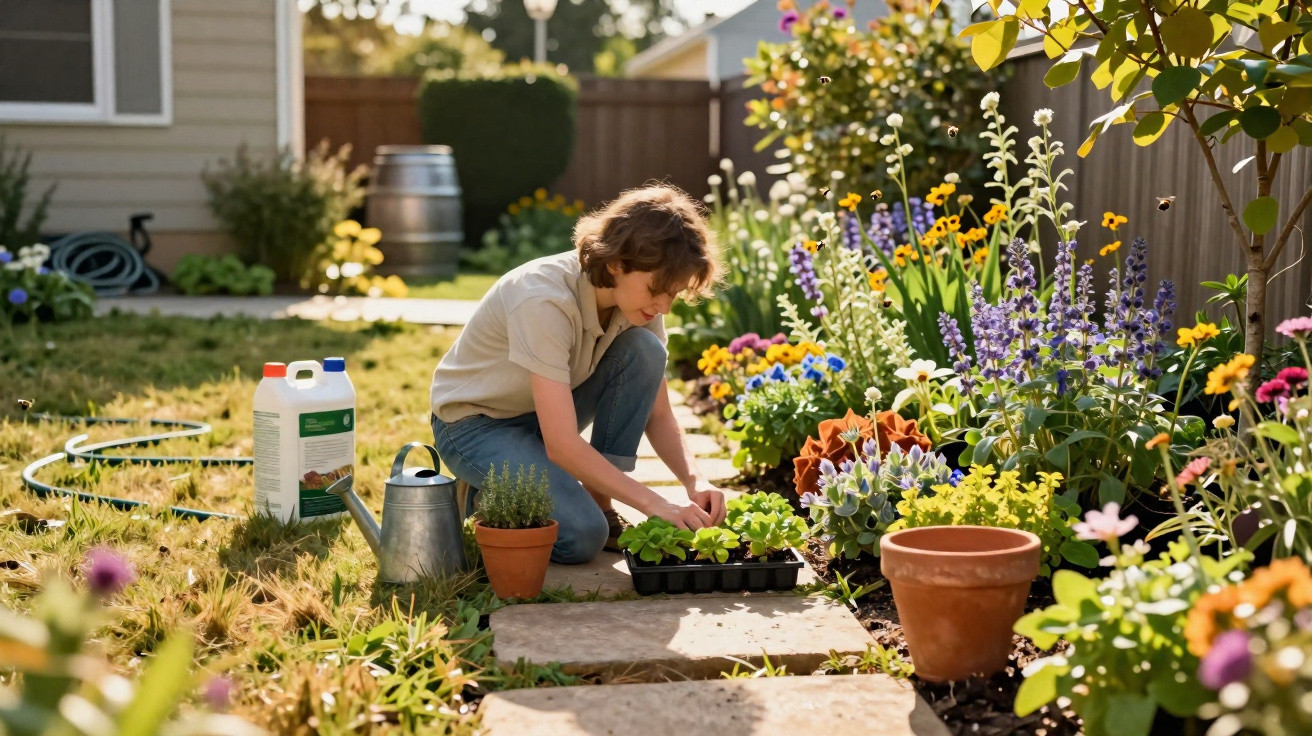
Saturday morning, 8:07 a.m. The neighbour’s mower kicks in before you’ve even finished your first coffee. You look out at your own lawn: a weary green sheet, dotted with bare spots and determined dandelions. Even so, you water it, feed it, and keep spending money you’d honestly rather use elsewhere.
You can already predict the rhythm of the day: mowing, raking, possibly a run to the garden centre. The weekend becomes unpaid upkeep for a patch of ground that never returns the favour.
Somewhere between the noise, the receipts and the drought warnings on the news, an irritating thought takes hold: What if the “perfect lawn” is the real weed?
The lawn myth that quietly drains your time, water and money
Once you notice them, conventional lawns are hard to unsee. They’re spread across front gardens, roundabouts, office parks and school playing fields-vast stretches of green that look soothing from a distance and oddly empty up close.
Keeping them that way takes constant input: weekly mowing in peak season, watering when rainfall doesn’t show up on time, fertiliser when the colour dulls, weedkiller the moment nature tries to reintroduce itself. Any one step feels minor; together they form a system that consumes weekends and cash.
For many of us, that routine is simply filed under “normal garden life”.
In the United States, lawns occupy more land than any food crop. Researchers put turf grass at up to 50,000 square miles (around 130,000 km²)-an area larger than many countries. Across Europe, municipal budgets quietly disappear into mowing and irrigating enormous green carpets that hardly anyone truly uses.
At home, it’s no less baffling. Studies suggest a traditional lawn can gulp down thousands of litres of water each summer. Add fertilisers, herbicides, and the loud, fuel-hungry kit needed to keep it all going.
One family in a small French suburb tracked the totals for a single season: once they added up water, petrol, fertilisers and other products, their “simple lawn” came in at nearly the cost of a weekend break. Every year.
That mindset has old roots. A flawless lawn used to communicate status, space and control over nature. Short, even grass implied you had land and resources to spare-no need for vegetables or grazing animals.
Now the world has changed. Heatwaves, water restrictions, collapsing insect numbers. A sterile green carpet no longer reads as success; it reads as refusal to acknowledge what’s happening.
A lawn offers a postcard view and, perhaps, somewhere to throw down a blanket a handful of days each year. In exchange, it demands water, energy, soil life and time. In a different century, that trade might have felt reasonable. Today, it’s simply poor arithmetic.
Smarter, softer alternatives: from thirsty carpet to living tapestry
A straightforward shift is to move from “lawn” to “meadow-style” zones. Instead of shaving everything down to 3 centimetres, you allow selected areas to grow taller and reseed naturally. You keep mown paths, a few islands, or a central clearing-and let the rest move with the breeze.
The approach is uncomplicated. Identify the parts you don’t really use (edges, slopes, awkward corners) and cut mowing back to two or three times a year. You can overseed with native flowers or low-effort mixes such as clover, yarrow, self-heal and wild thyme. The result isn’t a mess; it’s layers, motion and a garden that hums.
You move from a “green carpet” to a “living tapestry”. Same footprint, completely different feel.
Most of us know the scene: standing in a garden centre, staring at shelves of lawn products, trying to guess which one will finally deliver that “perfect” green. Camille, 39, living in a mid-sized city, remembers it clearly-two children, two jobs, constant fatigue, and a back garden that never matched the catalogue photos.
One spring, after a drought announcement, she let the ideal go. She stopped watering half the lawn and sowed a basic low-mow blend with clover and a few native flowers. The first summer was slightly scruffy. By the second, neighbours were asking where she’d bought the seed.
Now she cuts it once a month, apart from a small, short patch for the children to play on. No sprinkler, no fertiliser. More butterflies than she’d ever noticed there before-and far more free Sundays.
The ecology behind these options is simple. Short, uniform grass tends to have shallow roots, dries out quickly and relies on you to survive. A mixed sward that’s allowed to grow a bit higher develops deeper roots, holds moisture in the soil, and feeds insects-which then support birds.
Clover fixes nitrogen, effectively acting as a mild, natural fertiliser. Groundcovers such as creeping thyme or chamomile create soft, fragrant carpets and cope with dry spells far better than classic turf. Gravel gardens planted with Mediterranean species can thrive on very little water once established.
The more diversity you welcome into your yard, the less you have to make up for with hoses, machines and products. You’re not “giving up”. You’re switching from domination to partnership.
How to gently break up with your lawn (without wrecking your yard)
Keep it manageable so it doesn’t feel like a coup. Choose one section-perhaps the strip by the fence, the thin patch beneath a tree, or the neglected corner behind the shed. That becomes your trial area.
Suppress the grass with cardboard topped with mulch, wood chips or compost. After a few weeks, plant drought-tolerant choices: lavender, sage, ornamental grasses, native perennials. Or sow a low-maintenance wildflower mix suited to your region.
Another easy first step is simply to raise the cutting height on your mower. Leaving grass a little longer reduces stress, helps the soil retain moisture and immediately lowers watering demand. That one change can transform how the lawn behaves-and how you feel about it.
The common mistake is chasing a “zero effort, instant wow” makeover. Gardens don’t operate on that timetable. They develop, stall, and occasionally surprise you. Something you plant may sulk and vanish, while another choice you barely noticed on the label becomes the standout.
And realistically, nobody keeps up a daily routine of measuring soil pH or logging rainfall in a spreadsheet. You don’t need to.
What does help is paying attention for a season. Where does the dew linger? Which patch scorches first? That quiet observation will do more for your space than a fifth bag of fertiliser.
“Once I stopped fighting my yard and started listening to it, the whole space changed,” says Marc, 52, who replaced half his lawn with mixed borders and a tiny gravel garden. “I thought it would be more work. In reality, it’s just different work, and a lot more joy.”
- Start with one zone
A test patch lets you try things without panic or regret. - Create “rooms” instead of one big carpet
Combine short grass, meadow areas, flower beds and groundcovers. - Swap products for plants
Use clover, thyme and native perennials rather than fertiliser and weedkillers. - Think texture, not perfection
A mix of heights, colours and sounds (grasses in the wind, bees in flowers) can make even a small yard feel abundant. - Accept a bit of wildness
A few dandelions or a taller corner isn’t failure-it’s evidence that life is returning.
From status symbol to sanctuary: reimagining what a “beautiful yard” means
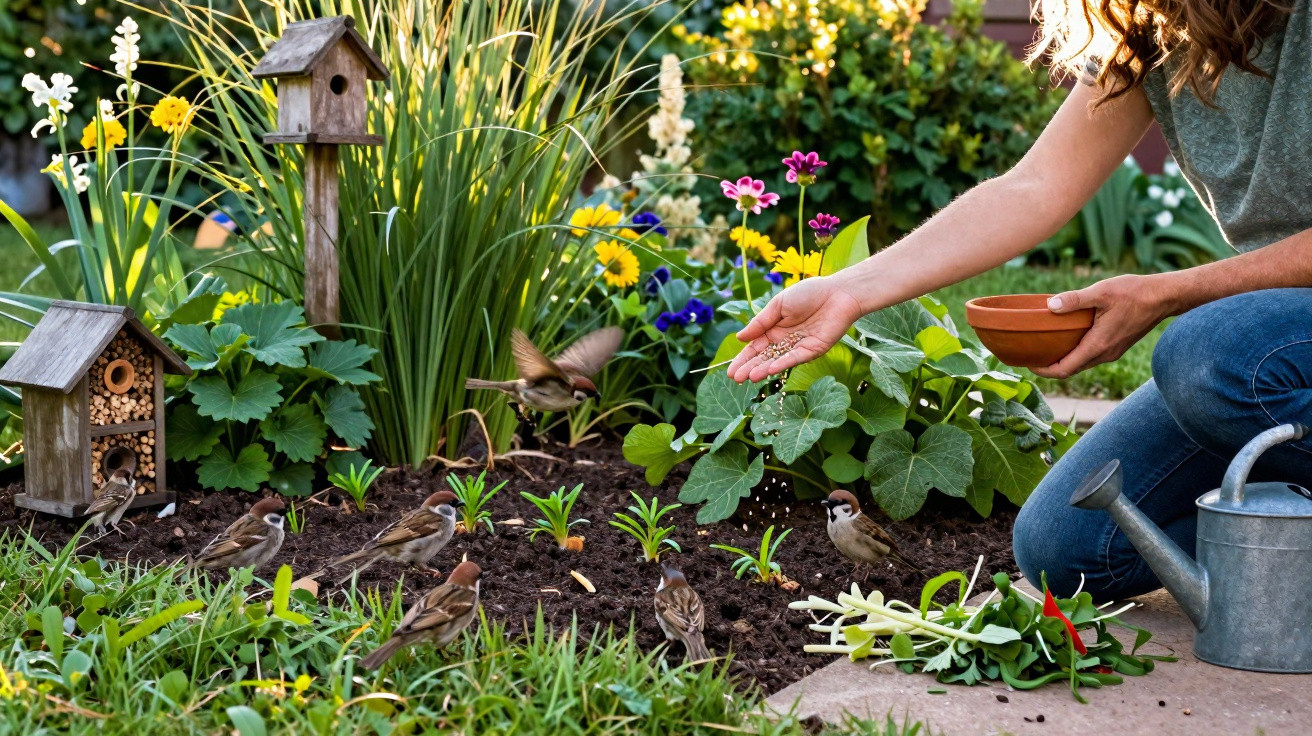
Once the grip of the perfect-lawn ideal loosens, other possibilities appear. The garden stops being a backdrop you must constantly service and becomes a place you actually inhabit. You hear birds you hadn’t noticed before. You start spotting and recognising insects. Children make tracks through taller grass and discover “secret” spaces beneath shrubs.
Your sense of what looks good changes as well. The uniform green that once signalled achievement can start to feel bland. A palette of golds, purples, silvers and soft browns looks richer-more truthful, more aligned with the weather outside and the headlines we read.
You don’t have to convert everything to a wild meadow or dig the whole plot up. Cutting lawn area by even 20 or 30% reduces water use, fuel or electricity costs, and weekend tasks. It also sends a quiet message: this piece of ground isn’t just decoration-it’s habitat.
Perhaps that’s what a yard can return to you now: not merely a crisp line of grass, but a living space that respects your time, your budget and the world beyond your fence.
| Key point | Detail | Value for the reader |
|---|---|---|
| Reduce mowing | Create meadow zones and raise cutting height | Fewer chores, less noise, more biodiversity |
| Save water | Swap thirsty turf for clover, groundcovers and drought-tolerant plants | Lower bills, resilience during heatwaves |
| Cut chemicals | Use plant diversity and soil life instead of fertilisers and herbicides | Healthier garden, safer for kids and pets |
FAQ:
- Is it okay to keep a small lawn area? Yes. Keeping a compact, functional lawn for play or visual balance works well if you let other areas go wilder or more planted. Think “lawn as accent”, not as default.
- Will my garden look messy if I stop mowing everywhere? It can, if you abandon it completely. The trick is contrast: clear paths, defined edges, and intentional zones make even a wild meadow patch feel designed, not neglected.
- What can I plant to replace part of my lawn? Good candidates include clover, creeping thyme, native prairie mixes, ornamental grasses, lavender, sage, and other drought-tolerant perennials adapted to your region.
- Do alternative lawns attract more insects? Yes, and that’s a benefit. More bees, butterflies and beetles mean a healthier ecosystem and usually more birds. If you’re worried about ticks or wasps, keep play areas mown short and place wilder zones at the edges.
- How long does it take for a low-maintenance garden to establish? The first year often looks a bit awkward. By the second year, most mixes and plantings start to knit together. After three seasons, you usually have a stable, much easier space than a classic lawn.


Comments
No comments yet. Be the first to comment!
Leave a Comment