
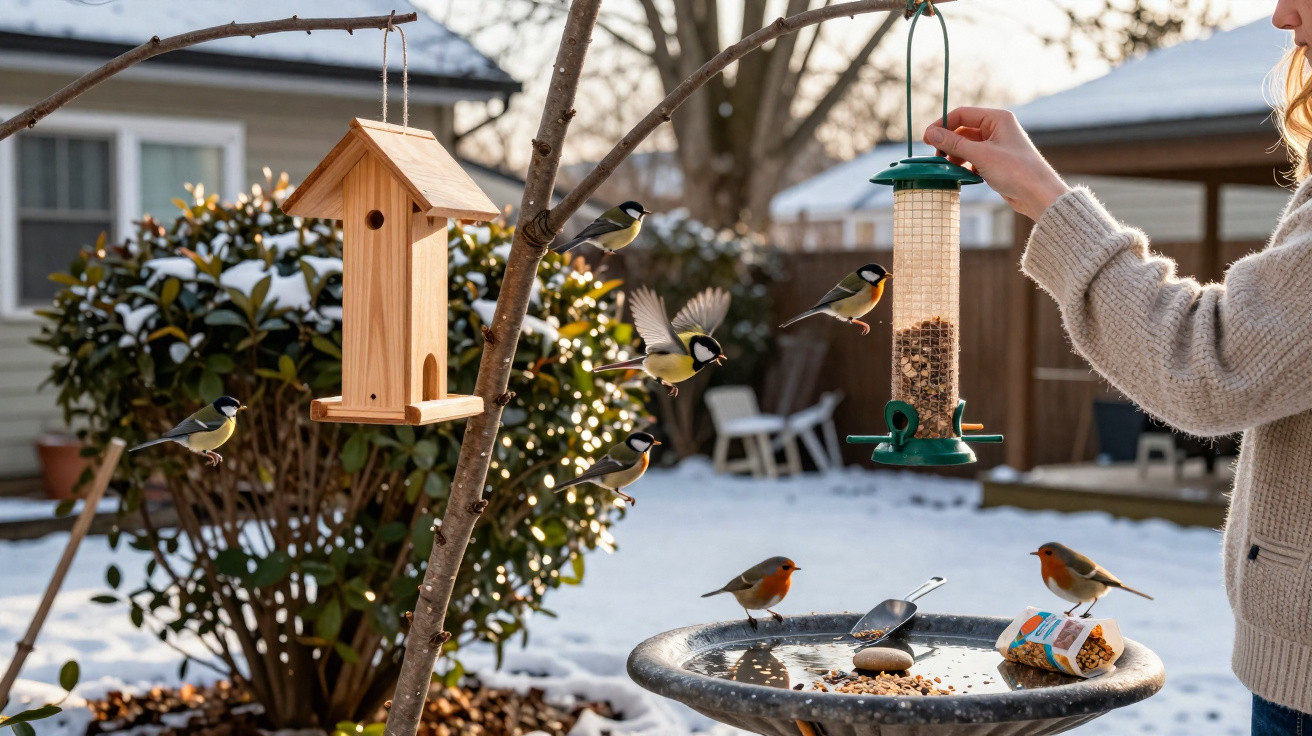
On the coldest days, a garden can seem as though it has been paused.
Then a quick flicker of wings changes the whole scene.
An increasing number of householders now see winter bird feeding as part of the season, rather than simply a kind gesture. With energy bills rising and weather patterns becoming less predictable, small choices in the garden can genuinely influence how wild birds get through the coldest months. Something as simple as where you put a feeder can bring reliable visitors all winter long - or leave a lonely pole ignored at the back of the garden.
Why placement matters more than the seed mix
It’s easy to fixate on premium seed blends and stylish feeder designs. Yet it’s placement that quietly determines which birds arrive - and whether they feel comfortable staying. When birds check out a garden, they are effectively looking for three things: food, a safe way to escape, and shelter from the weather. If any one of these feels off, they will often move on.
A well-placed feeder offers food, a clear view of danger, quick access to cover, and protection from wind and rain.
That trade-off - open space paired with nearby cover - influences how many species drop in, how long they feed, and whether they keep returning day after day throughout the season.
Choosing a safe and accessible spot
Bird feeders can look like an easy meal to predators. Cats, hawks, and even foxes can quickly learn the routine of a well-used garden.
Keep the ground open, but not exposed
Set feeders in a spot with a clear view around them. Birds need enough time to detect danger and enough room to launch into flight. Steer clear of thick shrubs, stacked logs, or low branches within roughly a couple of metres of the feeder - places where cats can sit unseen and pounce.
- Hang or mount feeders around 1.5–2 m above the ground.
- Leave about 2–3 m of open space around the base.
- Cut back low, dense growth where cats could hide.
Species that feed on the ground will still benefit from a little seed scattered beneath the feeder, but not tight up against thick cover. Leaving a small gap improves their odds.
Balance distance from cover
Most birds won’t remain out in the open for long. They want a tree, hedge, or tall shrub close enough to act as a rapid escape route. A distance of about 3–4 m between the feeder and natural cover is often a good compromise. Any closer can favour hidden predators; much farther away and many smaller birds may feel too exposed.
Think of your garden as a network of safe “islands”: feeder, nearby tree, boundary hedge, and a quiet corner for resting.
Stopping deadly window collisions
During winter, a surprising number of birds die after hitting windows. Reflections of sky and branches can mislead them into thinking there is open space ahead.
Two feeder positions are known to reduce the risk of serious impacts:
| Feeder distance from window | Effect on collisions |
|---|---|
| Under 1 m | Birds cannot build up speed; glancing bumps are less harmful. |
| Over 3 m | Birds recognise the house as a solid object rather than “sky”, and adjust their flight. |
Window stickers, vertical cords, or patterns made with tempera paint can help cut reflections. Random designs can work, but spacing is more important than appearance: gaps of under 5 cm horizontally and 10 cm vertically provide the clearest signal that the glass is a barrier.
Using sun and wind to help winter visitors
Face feeders toward the gentler side of your weather
Across much of the UK, the coldest winds often come from the north and west. Place feeders so that a wall, fence, or hedge offers shelter from those directions. A south- or east-facing position can feel noticeably warmer for birds and makes early feeding more comfortable.
Tray feeders and roofed designs benefit from some overhead protection to keep seed dry. Damp seed can clump, ferment, and encourage mould, which in turn can spread disease. Suet and fat balls also last longer when they are out of driving rain and sleet.
Dry food is not just convenient; it helps prevent mould-related illnesses that can spread through local bird populations.
Think about your access, too
Winter feeding only succeeds if you can keep it up. If topping up means crossing a slippery lawn or squeezing behind a shed, motivation can run out by February. Pick a place you can reach in bad conditions with a container of seed and something to clean with, such as a brush or bucket.
Mixing feeder styles to create a real “ballet”
Different species approach food in very different ways. One feeder type rarely suits them all. A small group of varied feeding points can turn a quiet garden into a constantly changing display of visitors.
Match feeder to behaviour
- Hanging tube feeders suit nimble birds such as tits and finches that cling and dart.
- Tray or platform feeders attract robins, dunnocks, sparrows, and other birds that prefer a flat surface.
- Suet cages and fat ball holders provide high-energy food during cold snaps and can appeal to woodpeckers and nuthatches where they occur.
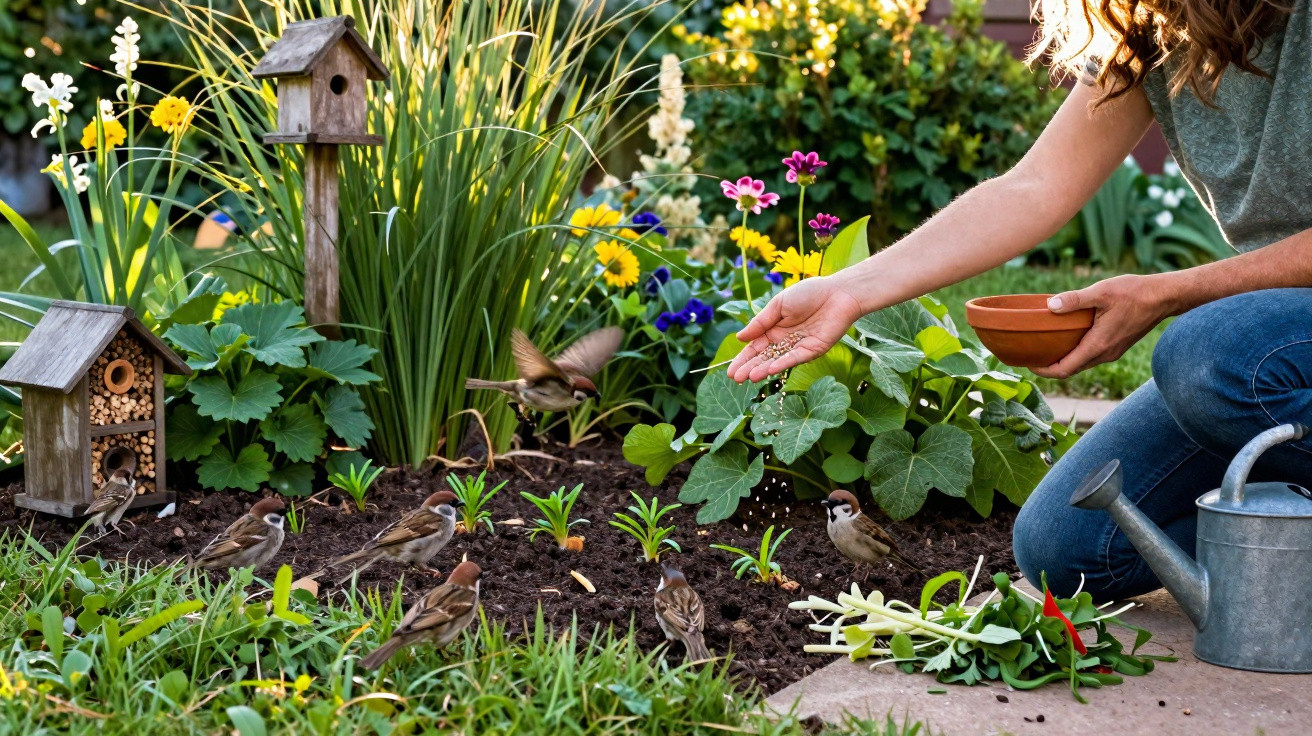
- Ground-feeding patches using scattered seed or a low tray draw blackbirds, thrushes, and other larger species.
Space different feeder types out so timid birds are not repeatedly pushed aside by bolder ones. Even a separation of 2–3 m between stations can reduce squabbling.
Food choices that carry birds through harsh spells
Where you place food matters, but winter survival is largely about calories. Small birds burn energy rapidly just to make it through long, freezing nights.
A straightforward winter menu might include:
- Black oil sunflower seeds for high fat and wide appeal.
- Unsalted peanuts (served in mesh or metal feeders) for tits, nuthatches, and woodpeckers.
- Suet and vegetable-based fat blocks for icy days and bitter nights.
- Small portions of raisins or chopped fruit for thrushes and blackbirds.
Avoid salty, flavoured, or cooked leftovers, which spoil quickly. Bread can fill birds up without offering much nutrition, so it is best treated as an occasional extra rather than a mainstay.
Consistency: a quiet winter contract with your garden birds
Once birds start including your garden in their winter route, they spend energy flying in on trust. If feeding stops abruptly during severe cold, they may struggle to find an alternative quickly enough.
When you start winter feeding, think of it as a seasonal commitment, at least through late winter or early spring.
If you expect to be away, ask a neighbour to refill feeders, or taper feeding down gradually while the weather is still mild so birds can adjust their routines before a cold snap.
Water: the forgotten half of winter support
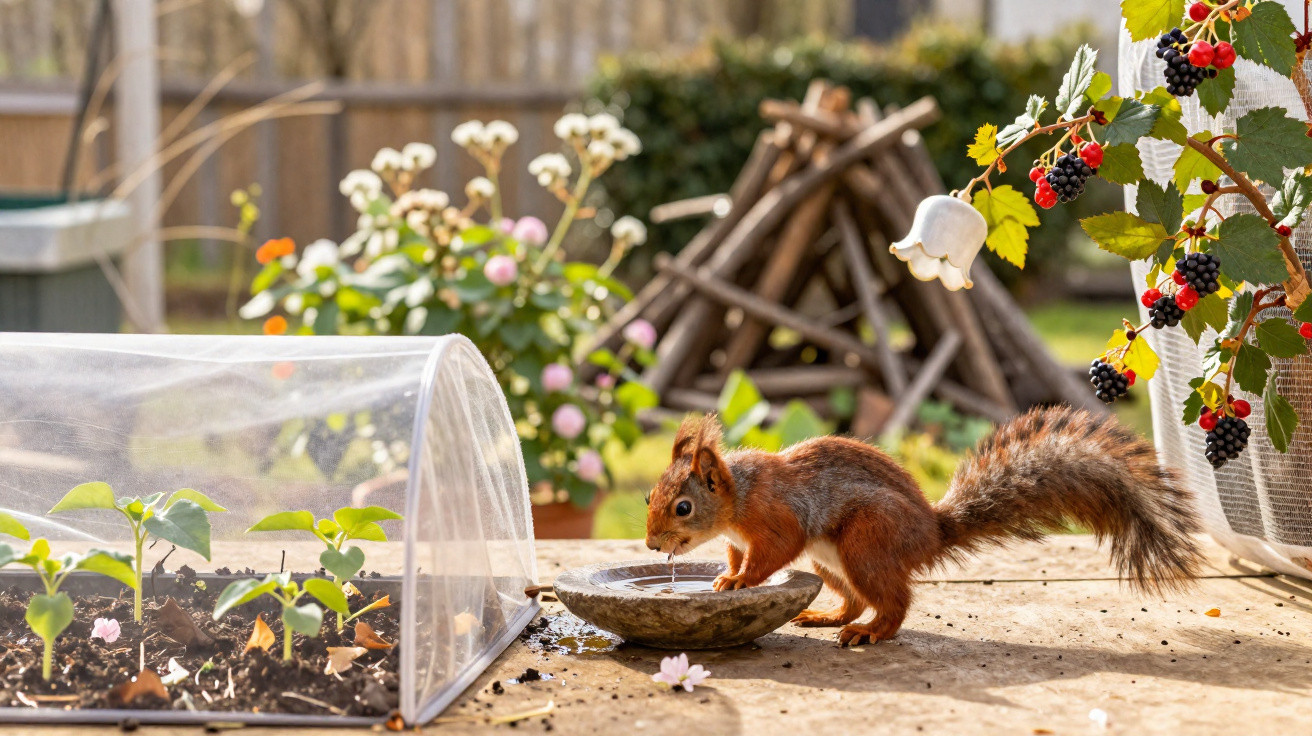
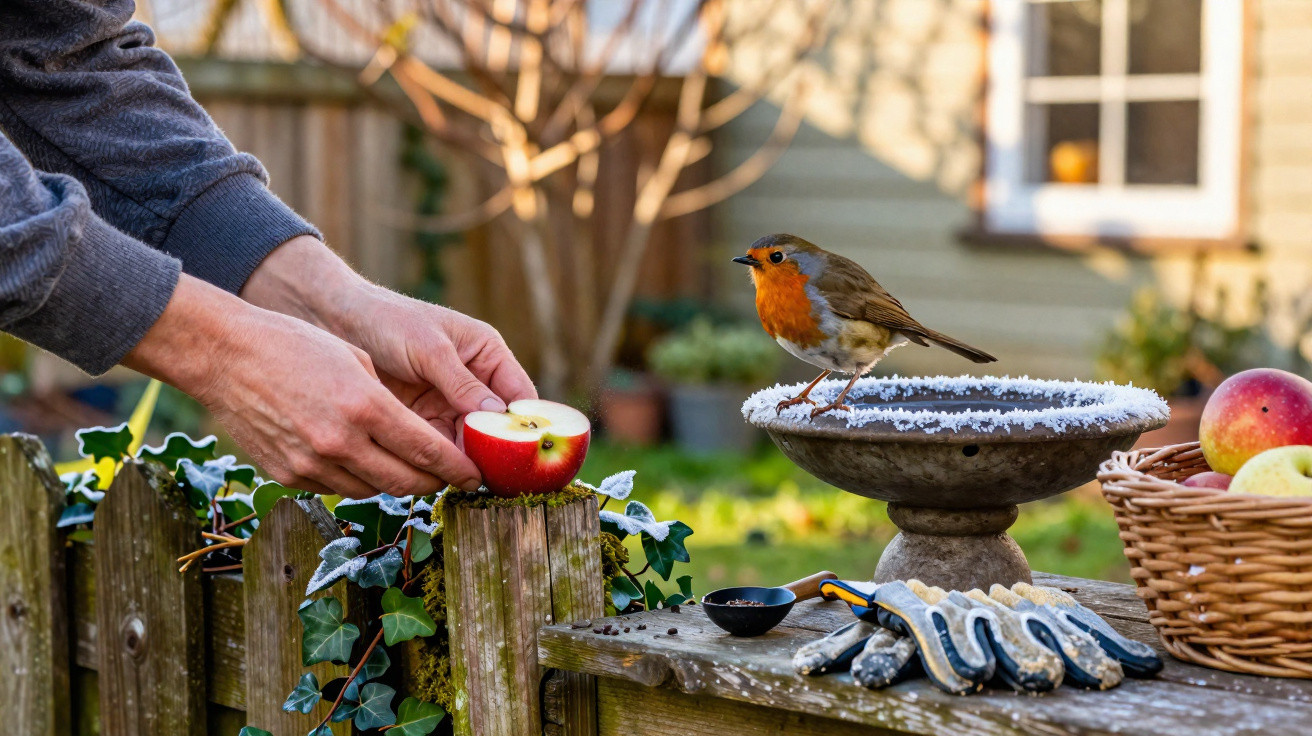
Snow and ice can leave birds short of liquid water, even when everything looks damp. A shallow bowl, bird bath, or even a wide plant saucer can help - particularly near feeders where birds already congregate.
Change the water every day, gently remove ice, and do not use chemical de-icers. In very cold weather, setting the dish on a rubber mat or near a sheltered wall can slow freezing slightly. Keep the water shallow - around 5 cm deep at most - so small birds can bathe safely.
Watching, adjusting, and learning from your visitors
No two gardens work in quite the same way. Urban balconies, small courtyards, and rural plots all shape bird behaviour differently. Spend a few minutes each day noticing how birds use the space you have.
- If a feeder is consistently ignored, move it a couple of metres and try again.
- If birds appear jumpy, increase the distance from dense cover.
- If one feeder becomes a hotspot for fights, provide a second option a short distance away.
A notebook - or a simple log on your phone - noting species, times, and weather can turn casual watching into useful information. Over several winters, patterns begin to emerge: which days bring siskins, when blackbirds take over the ground, or how early in the season tits start investigating nest boxes.
Going further: from feeding station to small-scale habitat
Once your feeders are regularly visited, the next step is about more than placement. Native berrying shrubs, areas of long grass, leaf piles, and uncut seed heads all add natural food and cover. As the garden matures, you may be able to rely less on bought seed because the space itself begins to feed its visitors.
For families, a winter feeding station can also become a gentle outdoor project. Children can help select locations, measure safe distances, sketch the birds that arrive, and set up simple experiments: move one feeder, swap a seed type, or add a new water source and record how behaviour changes. The “ballet” of wings becomes a way to understand weather, seasons, and small urban ecosystems, one frosty morning at a time.

Comments
No comments yet. Be the first to comment!
Leave a Comment