
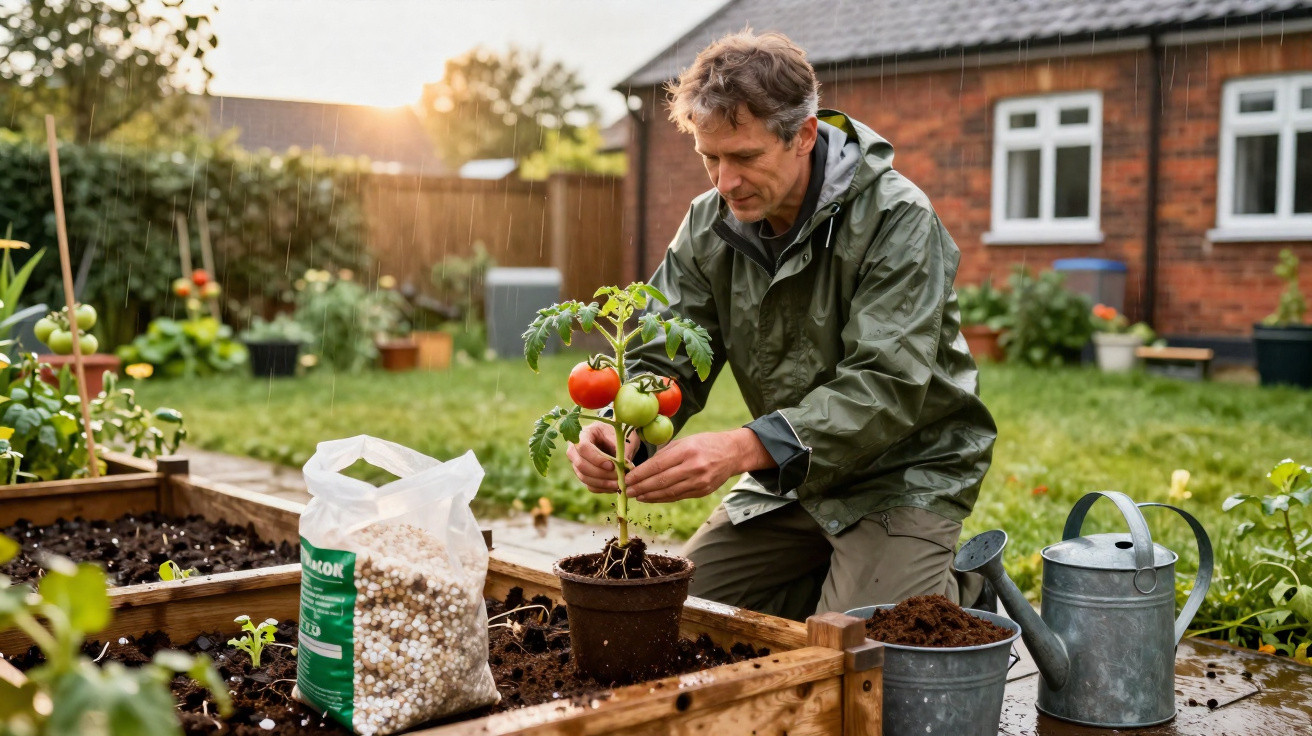
After weeks of drizzle, the ground can turn leaden, roots seem to go on strike, and plants just sit there as if they’ve forgotten what growth is. Online garden chats pin it all on the weather, but nursery growers have a low‑key workaround: a bark‑based, ultra‑airy compost mix that still “breathes” when the rain won’t stop. It looks a bit unusual, feels springy on the trowel, and can turn a miserable summer into a proper burst of growth.
I came across it on a blustery allotment in Salford, on a July morning that reeked of wet nettles and over‑stewed tea. Two lines of tomatoes stood side by side-same variety, planted the same day, under the same slate-grey sky. One set sat in ordinary peat‑free compost, darkened and weighed down after the night’s downpour. The other grew in a pale, speckled medium, dotted with bark and shiny perlite. A retired groundsman called Lew prodded each pot like a baker checking a sponge and laughed. The lighter mix sprang back. Three weeks later, those plants had taken off-while the others lagged.
Why rain stalls tomatoes - and how a breathable mix changes everything
Tomatoes thrive on warmth, light and, crucially, oxygen at the roots-not a constant soak. Extended spells of British rain flood the spaces between particles, forcing air out. Without enough oxygen, roots struggle, and growth drops into slow motion. At first, foliage can still look acceptable; then you notice stems thickening without real height, and flowers hanging back. We all know that moment after a storm when you lift a container and feel the sheer weight, and you can tell the plant won’t be grateful. Restore air alongside steady, gentle moisture and the whole plant shifts up a gear.
On plot 72 in Salford, we did a friendly side‑by‑side last summer: six ‘Shirley’ plants in standard bagged compost and six in what Lew called the “rain‑rush” mix. Everything else matched-feed, staking, and the same grim forecast. The airy group reached first flower at 28 days after planting; the compost group took 47. By week five, the tallest plant in the airy mix measured 86 cm, while the control group averaged 52 cm. It wasn’t a lab study-just neighbourly measuring tape work and a phone photo-but the difference was hard to ignore.
The mechanics are straightforward. Composted pine bark forms a resilient lattice, keeping pores open even when wet, so oxygen can still reach root tips where growth hormones are produced. Coir holds water like a well‑wrung sponge rather than a sodden towel-moisture stays available without suffocating roots. Perlite or pumice contributes permanent air spaces; worm castings support microbes that help make nutrients more accessible; and a small dose of gypsum stabilises calcium so the plant can push upward without blossom end rot kicking off. Put it together and heavy rain becomes much less of a setback.
The little-known mix: the recipe, the method, the small rituals
This is the blend quietly circulating around corners of UK nurseries, adjusted for home growing. By volume: 40% composted pine bark fines (3–8 mm), 25% coir fibre rehydrated with a splash of seaweed, 20% horticultural perlite or pumice, 10% well‑rotted garden compost, 5% worm castings. For each 10 litres, mix in 1 cup of pre‑charged biochar (soaked overnight in compost tea), 1 tablespoon of gypsum for calcium, plus a light sprinkle of basalt rock dust. Combine until the mix looks variegated and bouncy, dampen it so it just holds together when squeezed, then fill containers without packing it down. Tap the pot sides to settle it-don’t compress it like you’re cramming a suitcase.
Plant tomatoes deeply so the buried stem can throw out extra roots into that airy, nutrient‑rich zone, and add mycorrhizal fungi in the planting hole if you use it. Water once to bed everything in, then wait until the top 2–3 cm dries before watering again, even if the sky is threatening. Choose bottomless pots or raised tubs set on bricks so excess rain drains quickly, and during prolonged deluges slide a piece of corrugated plastic over the surface to prevent compaction. Let’s be honest: hardly anyone keeps a perfect watering diary in July-so the smartest move is a mix that tolerates the mess. Tomatoes grown this way behave as if the forecast doesn’t apply.
On wet weeks I keep things basic: feed in small, regular doses, and remove the lowest leaves to improve airflow so rain splash is less of a problem. The mix is already doing the oxygen work; your role is keeping the plant moving forward instead of battling soggy roots. Once the first truss has set, top‑dress with a ring of compost like a slow fuse and lightly scratch it in with your fingertips.
“Air is a nutrient,” Lew told me, tapping the pot. “You can’t see it, but tomatoes can feel it.”
- Composted pine bark fines: ask a nursery or an online supplier for “pine bark fines 3–8 mm”.
- Perlite vs pumice: perlite is lighter and usually cheaper; pumice keeps its structure longer.
- Biochar trick: pre‑soak it in something nutrient‑rich-never add it bone dry.
- Gypsum over lime: supports calcium without driving pH too high in peat‑free mixes.
- Rain shield: a clear lid or mini roof helps keep the surface loose during downpours.
What this unlocks for a rainy island
You begin with a bag of bark and white granules that looks a bit strange-and you finish with ripe fruit weeks ahead of the next plot along. There’s no magic in it, just room for roots to breathe. This mix is valuable because it copes with our stop‑start summers: a sharp squall at 4 p.m., followed by grey skies again. A plant that can breathe keeps its nerve when the weather can’t make up its mind. And when you tip out a pot after a week of rain and see a root ball threaded with fine white hairs, sludge suddenly feels like the past. Share a scoop with the neighbour, adjust it to your own hands and hose, and compare notes. We’re brilliant in the UK at swapping weather tales-maybe we should swap air recipes too.
| Key point | Detail | Why it matters to you |
|---|---|---|
| Rain‑rush recipe | 40% bark fines, 25% coir, 20% perlite/pumice, 10% compost, 5% castings + gypsum, biochar, rock dust | A clear, repeatable formula for quicker growth during wet spells |
| Root oxygen first | Air‑filled porosity stays high even when it rains all week | Fewer growth stalls, earlier flowers, stronger trusses |
| Small rituals that matter | Pre‑charge biochar, don’t compact, bottomless pots on risers | Turns a “good idea” into a visible yield boost |
FAQ
- Can I swap pine bark for wood chips? Use composted pine bark fines rather than fresh chips. Fresh chips rob nitrogen and break down poorly; fines are stable, airy and nursery‑grade.
- Is coir sustainable and does it go slimy in the rain? Buy buffered, low‑salt coir from reputable suppliers. In this blend it holds its structure better than peat‑free compost alone and doesn’t turn to mush.
- Perlite or pumice - which is better for the UK? Perlite is easy to find and light for balcony pots; pumice keeps the mix open for longer in large tubs. Both suit the recipe.
- Can I just lighten my garden soil instead? For containers and growbags, stick with the mix. Garden soil compacts and can bring pathogens in wet summers. Use bottomless containers if you want contact with the ground.
- Do I need extra calcium to stop blossom end rot? Add 1 tablespoon of gypsum per 10 litres of mix and keep moisture consistent. Blossom end rot is about calcium transport, not simply a lack of calcium in the compost.


Comments
No comments yet. Be the first to comment!
Leave a Comment