
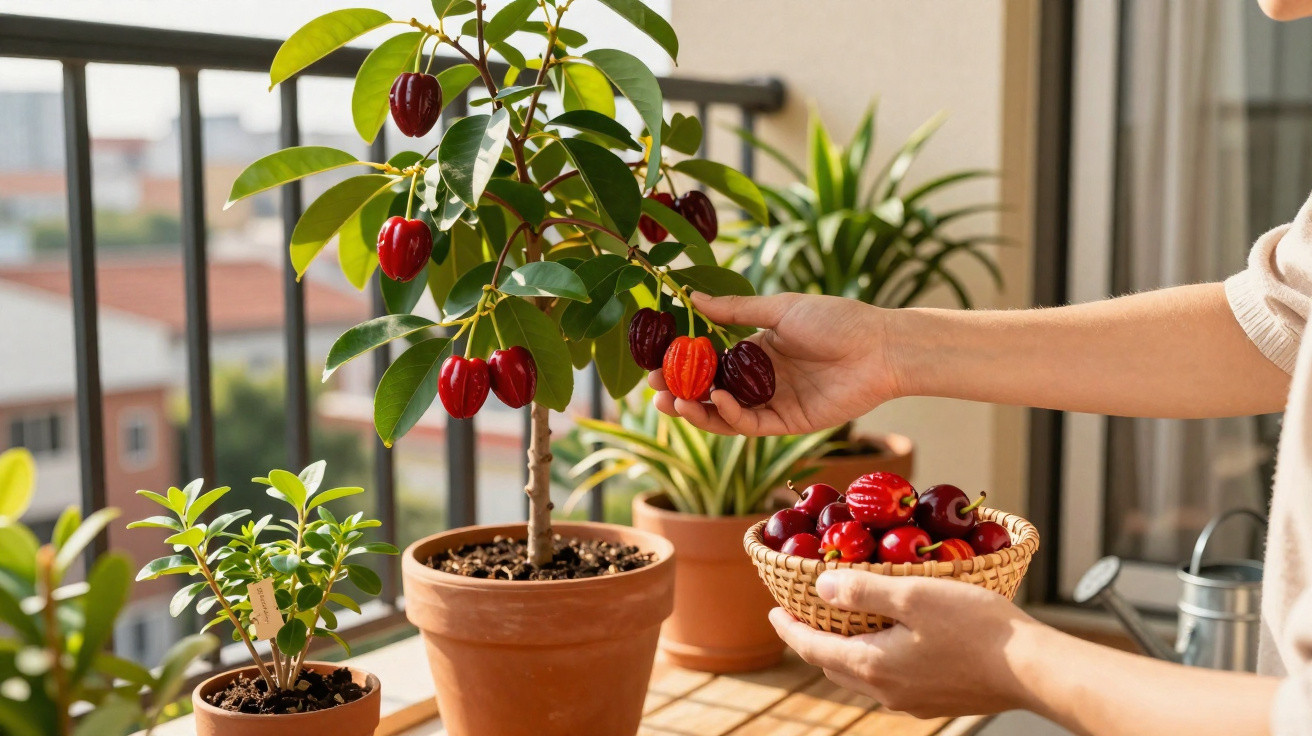
The first time I encountered a pitanga tree in a pot, it seemed unremarkable. It was simply a small green shrub wedged between two geraniums on a fourth-floor balcony, moving in the urban breeze. Then its owner, a retired music teacher, carefully raised a branch to reveal small, ridged scarlet fruits gleaming like polished marbles. She picked one, rubbed it on her sleeve and urged me to try it. It was sweet and sharp, with an almost tropical-sweet flavour - not something you expect to discover above a busy avenue.
A fruit tree in a plastic pot, producing harvests like a hidden secret.
That little South American tree has stayed in my thoughts ever since.
A miniature fruit tree that brings a tiny jungle to your balcony
The plant has a wonderfully lyrical name: pitanga, also known as Surinam cherry (Eugenia uniflora). Indigenous to South America, this compact fruit tree has the habit of a full, leafy shrub and seldom grows beyond 1.5–2 metres in a container. Its foliage is thick and shiny, while fresh leaves often emerge coppery red before maturing to a rich green. On a terrace or balcony, it has the appearance of an ornamental specimen, like a carefully chosen shrub from a specialist nursery.
When spring comes, however, it truly puts on a display.
Tiny white flowers shaped like stars cover the branches and attract every bee that passes. Within a few weeks, the little green fruits swell, gradually becoming orange and then red, sometimes almost black once fully ripe. Watching them develop in a planter is rather like seeing a slow-motion firework display.
One reader wrote to me about their first year growing a potted pitanga in a compact internal courtyard. The tree arrived from an online nursery no taller than a school ruler, its thin stem fastened to a bamboo cane. They nearly felt apologetic, as though they were demanding too much from such a delicate young plant. A year later, they sent a photograph of that same pitanga: now a dense little tree in a 40-litre pot, its branches drooping beneath dozens of vivid, ribbed fruits.
They called their first crop “miniature Christmas in May”.
Neighbours began peering over the fence to ask about the unusual little pumpkins. Friends visited to taste them. A child next door took one into school to show his teacher. Without anyone meaning for it to happen, this unassuming tree in a pot had become a local story.
Pitanga is particularly well suited to container growing for good reason. Its roots remain fairly compact, it responds well to pruning and it quickly adjusts to restricted space provided it receives light, water and a suitable growing medium. It is a member of the Myrtaceae family, alongside guava and feijoa, and many plants in this family naturally cope well with life in containers. You can therefore control its form and size while still enjoying fruit.
It also begins flowering while relatively young, commonly in its second or third year.
You do not need to tend a tree for a decade before seeing any results. In a gardening world of prolonged waits and gradual pay-offs, this little South American shrub follows a different rhythm. It is not instant, but it offers patience on an achievable, human scale.
How to get your pitanga thriving in a pot at home
Growing pitanga in a container is remarkably uncomplicated. Begin with a young plant, preferably 20–40 cm high, and choose a pot at least 30 cm wide so it has sufficient space from the outset. Fill it with a free-draining mixture of half quality potting compost, one quarter compost and one quarter coarse sand or fine gravel. A drainage layer of clay pebbles or broken terracotta in the bottom helps prevent waterlogged roots.
Set the pot somewhere bright where it will receive sunshine for at least half the day.
A balcony, roof terrace, courtyard or even an indoor conservatory beside a large window can work in cooler areas. Water when the top few centimetres of compost are dry, then apply a mild organic fertiliser once each month during the growing season. You are not feeding a demanding orchard tree, but a small tree with considerable ambition.
Most people new to pitanga make the same initial mistake: they care for it a little too enthusiastically. They overwater it, shift it every week “to find the perfect place”, prune without a plan or repot it too frequently. The pitanga may answer with yellowing leaves, sluggish growth or no fruit whatsoever. We have all experienced the moment when enthusiasm quietly works against a plant.
The best routine is almost dull in its simplicity.
Keep it in a consistent position, water regularly without becoming obsessive, repot properly every 2–3 years and prune lightly after harvesting to retain a compact shape. That is all it needs. In truth, nobody manages this perfectly every day. Yet a brief look while watering, or removing a dead leaf by hand, already covers most of the work.
“I love this tree because it forgives my bad days,” confided Ana, a Brazilian gardener now living in Lisbon. “Some weeks I’m busy, I forget to fertilize, I water late. The pitanga doesn’t punish me. It waits, then suddenly covers itself in flowers as if to say: ‘We’re still fine.’”
- Ideal spot
Bright, with morning or late-afternoon sunshine and shelter from freezing winds. Balconies and terraces are ideal. - Watering rhythm
Water consistently through spring and summer, allowing the surface to dry slightly between waterings. Reduce watering in winter, but do not allow the root ball to become completely dry. - Pruning style
Shape lightly once yearly after fruiting to maintain a compact plant, remove crossing branches and promote fresh shoots. - Climate range
It copes with brief dips close to 0°C when protected, but favours a mild climate or winter protection in colder regions. - Harvest tip
Leave fruits until they are fully coloured and just slightly soft. In one extra day on the branch, the flavour can change from “okay” to wow.
This tiny tree transforms the way you view your home space
After a season with a pitanga, what lingers is not only the flavour of its fruit. It is the unplanned daily ritual it creates. You open the window and check the fruits’ colour. You wonder whether the leaves look glossier than they did yesterday. You spot a bud that had escaped your notice. All at once, a balcony is no longer merely somewhere to leave old chairs: it becomes a living corner that responds to you.
For many people living in towns and cities, that is the true luxury.
It is not the exotic name or the photogenic crop, but the sense that even a ledge on the third floor can hold a small piece of South America, quietly getting on with its life while you have your morning coffee. It is a fruit tree reduced to an urban scale while remaining entirely itself.
| Key point | Detail | Value for the reader |
|---|---|---|
| Compact fruit tree for pots | Pitanga reaches 1.5–2 m in containers and accepts pruning | Fits on balconies, terraces and small patios without invading space |
| Simple growing routine | Bright spot, draining soil, moderate watering, light yearly pruning | Accessible even for beginners with busy schedules |
| Early and generous fruiting | Fruits from the second or third year with aromatic, vitamin-rich harvests | Quick reward and unique homegrown flavor, even in the city |
FAQ:
- Question 1 Can I grow a pitanga tree in a pot if I live in a cold climate?
- Question 2 How long does it take before a potted pitanga starts producing fruit?
- Question 3 Does pitanga need a second tree for pollination and good harvests?
- Question 4 What does the fruit actually taste like?
- Question 5 Is pitanga a good choice for beginners who usually “kill” plants?
Comments
No comments yet. Be the first to comment!
Leave a Comment