
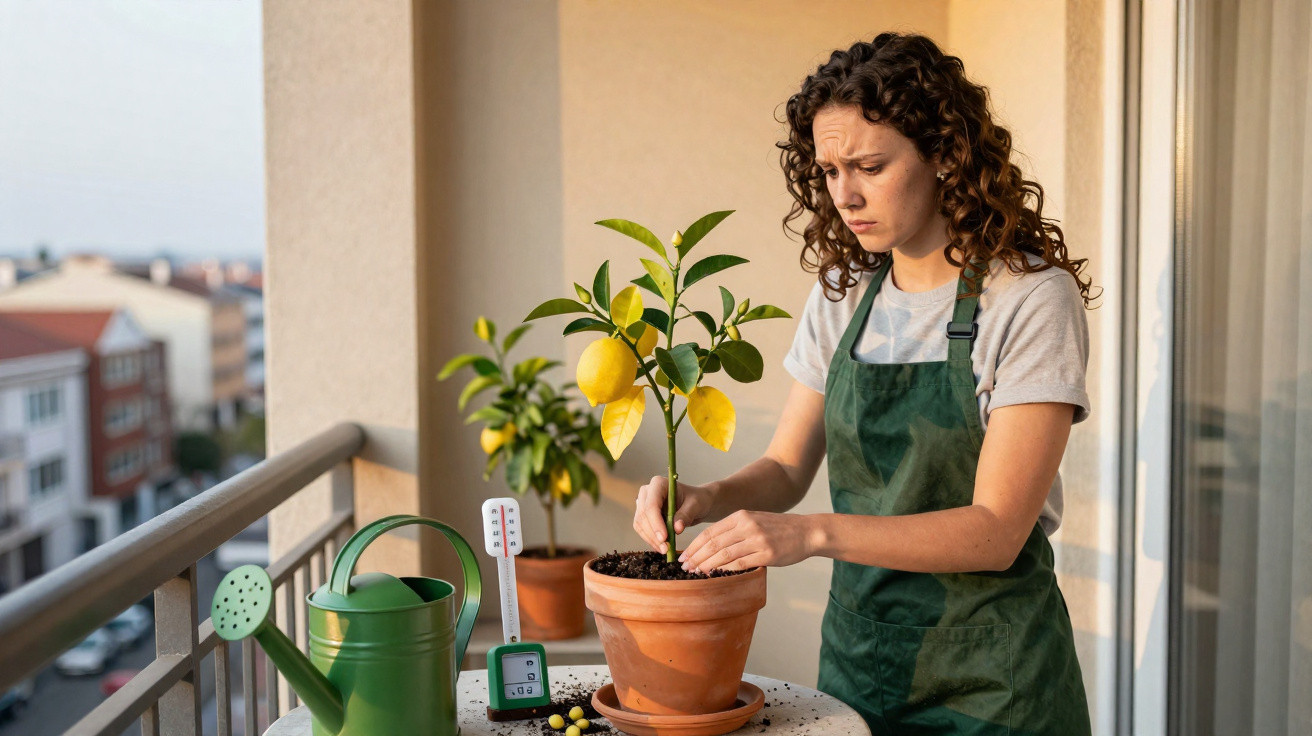
Decisions you make now can have consequences you’ll notice later.
Many hobby gardeners put their container plant outside too early, or reach for the big watering can again. Both seem harmless, yet they hit the plant right in the middle of its flowering period. At this stage, the crop depends on delicate buds and newly active roots.
A false start in March: why a potted tree suffers
That first warm afternoon can be misleading. In many areas, night-time temperatures still hover just above freezing. A lemon tree begins moving sap when it feels sun, then the process is abruptly halted by cold nights. That sudden braking damages cells in buds and flowers.
"Wait before moving it outdoors until the nights have stayed above 5 °C for at least 10 days in a row. A single frosty night will ruin the blossom."
The wood can cope briefly with around -2 to -3 °C. Buds and open flowers, however, can blacken and drop when temperatures are close to 0 °C. On a windy balcony, the pot cools down faster than soil in the ground. A cold rootball slows the roots, which in turn limits the plant’s overall water and nutrient supply.
| Part of the plant | Critical range | Risk | Action |
|---|---|---|---|
| Buds/flowers | 0 to +2 °C | Freezing damage, crop loss | Avoid night frost, use horticultural fleece |
| Wood | -2 to -3 °C | Bark damage | Keep to frost-free overwintering |
| Roots | Compost below 8–10 °C | Growth stops, consequences of waterlogging | Insulate the pot, don’t water when cold |
The real mistake: outside too soon, watered too wet
The usual pattern looks like this: the pot goes outside during the day and then stays out overnight. After that, “summer watering” starts out of habit. That combination wipes out buds and stresses roots.
Before every watering, do a finger test to about 5 cm depth. If it feels cool and damp, keep the watering can away. In a container, a winter routine often means watering only once every 10 to 14 days. Water left sitting in the saucer encourages root rot.
"Never pour cold water into cold compost. Lukewarm water (18–22 °C) is gentler on the roots and helps prevent stress."
Set the container on wooden battens or bricks. Leaving 2–3 cm of air beneath the pot reduces cold bridging and helps avoid waterlogging. With heavy planters, a wheeled plant trolley makes it easier to move quickly if a late-frost warning appears.
How to plan a safe return to the balcony
Aim for a forecast window where night-time temperatures stay reliably above 5 °C for 10 days. Away from mild coastal locations, that is often not until after the Ice Saints in mid-May.
- Week 1: outside in the daytime in a bright, sheltered spot; bring it back in during the evening.
- Sun protection on days 1–3: provide light shade to prevent leaf scorch on overwintered foliage.
- Week 2: trial the first mild nights outdoors if the forecast shows 7–8 °C.
- Only then leave it out permanently and gradually increase sun exposure.
Watering, feeding, pruning: the right rhythm from March to May
Increase watering gradually. Start with small amounts as soon as the top layer has dried out. Only raise the volume once nights turn mild and the compost is noticeably warmer.
Use a citrus fertiliser containing nitrogen, potassium, magnesium and trace elements. Begin in March on a 14‑day schedule while the plant is actively growing. If leaves turn pale green with darker veins, an iron chelate dose can help against chlorosis.
From March to May, remove dead wood and shoots growing inwards. Cut just above an outward-facing bud. Avoid major pruning close to peak flowering so you don’t lose buds unnecessarily.
Repotting is worthwhile every two to three years. Mix 50% structurally stable compost, 30% mature compost or low-humus container compost, and 20% mineral components such as pumice or crushed expanded clay. A pH of 6.0 to 6.5 suits it well. A coarse drainage layer over the drainage hole helps prevent waterlogged roots.
Emergency after frost or waterlogging: what helps now
Promptly cut out frost-damaged flowers and any shoot tips that have turned soft. Move the plant to a bright, frost-free position. Reduce watering sharply for a few days.
If the rootball smells musty, ease the plant from its pot, check the roots and remove any brown, mushy sections. Replant into fresh, open compost and improve the pot’s elevation. A gentle airflow where it stands will dry the surface layer more quickly.
"Loss of blossom in March/April costs the early crop. The summer flowering can still set fruit, provided the tree recovers quickly now."
Common questions, brief and to the point
- Fleece on March nights? Yes-two layers over the canopy and pot can buffer 2–3 °C.
- Do you need hand pollination? In cool spells, a soft brush used in the morning can help.
- Pest checks? Look weekly for spider mites, aphids and citrus leaf miner. Rinse the canopy with lukewarm water and, if needed, use oil-based products according to the label.
- Best position? South-east is ideal in spring. Morning sun warms it up, while the midday peak stays moderate.
- Water quality? Rainwater or low-limescale tap water helps prevent leaf chlorosis.
Extra information that protects your harvest
The Ice Saints traditionally mark the last cold snap around 11–15 May, though the timing and strength don’t repeat identically every year. A minimum thermometer placed by the pot gives dependable, balcony-specific data. If late frosts are common where you live, plan a mobile protection setup using a fleece hood and a plant trolley.
You can also work with microclimates to your advantage. A bright house wall stores warmth and releases it overnight. By contrast, a dark, wet stone floor chills the area significantly. Put a cork or wooden board under the container and you can quickly gain 2–3 °C around the root zone. Those few degrees often decide whether you get blossom-or a fruitless year.


Comments
No comments yet. Be the first to comment!
Leave a Comment