
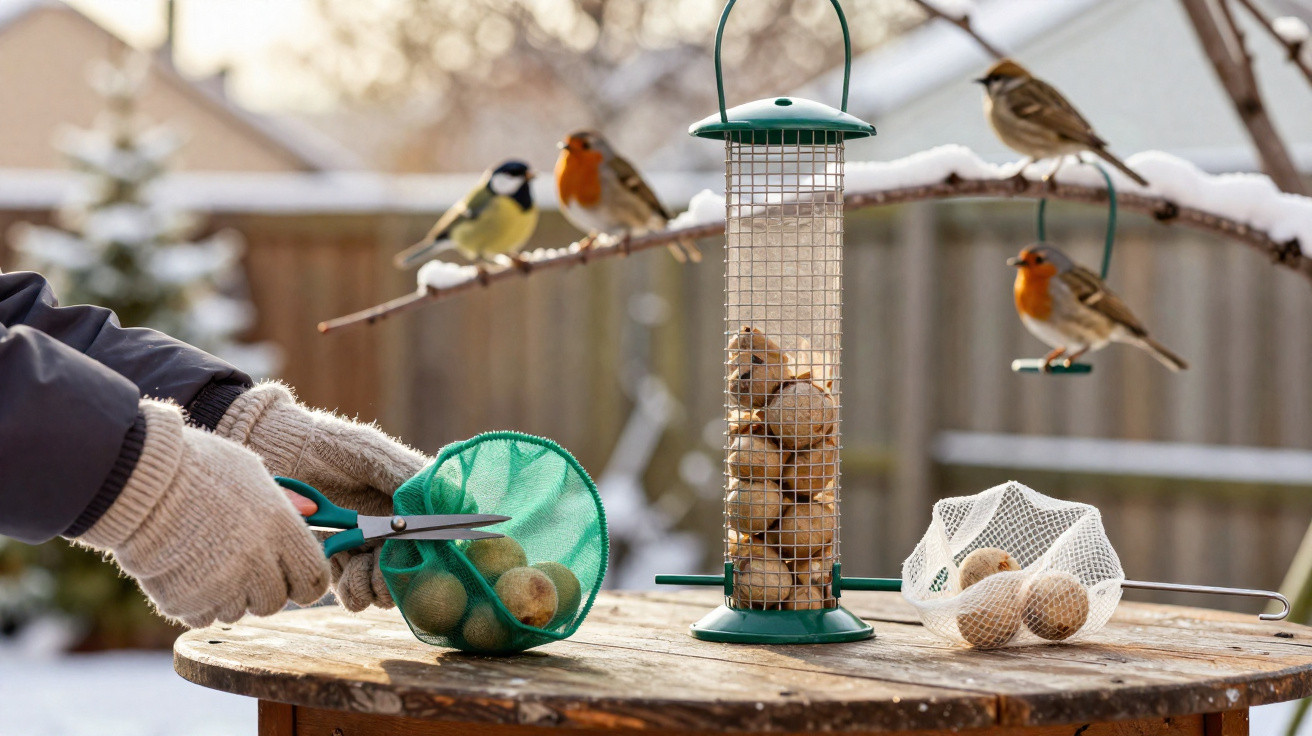
I watched blue tits and robins flit back and forth and felt genuinely pleased with myself for doing something kind. It was only afterwards that I discovered a small, easily missed feature of many shop-bought fat balls that can ensnare birds, cause serious injuries and, in some cases, result in a slow and distressing death.
When good intentions go wrong in the winter garden
Each winter across the UK, Europe and North America, millions of people put out fat balls. Retailers market them as the no-fuss option: large tubs packed with dozens of balls, sold as if they can be hung immediately just as they are.
For gardeners and wildlife enthusiasts, that pitch is hard to resist. There’s no mixing, no making, no cleaning up - simply “instant energy” for small birds trying to get through frost, snow and short days.
"That effortless convenience hides a design flaw that puts fragile bird legs, wings and even beaks at serious risk."
The issue isn’t the fat, the seeds, or the principle of feeding wild birds. The risk comes from the way many of these products are packaged and set up for hanging.
The real culprit: those innocent-looking plastic nets
How birds end up trapped, dangling and terrified
If you’ve bought fat balls lately, you’ll recognise the familiar wrap: a bright green or yellow plastic mesh pulled tight around each ball, finished with a small loop so it can be hung from a branch or hook.
To us, the netting looks like a neat solution. It holds the ball together, provides something to grip, and takes moments to hang. For a bird, it can become a dangerous tangle.
Small garden birds depend on nimble feet and fine claws to hold on to bark, twigs and feeders. When they land on plastic nets, claws that are thinner than a matchstick can slide through the mesh and snag.
"Once a claw is caught in the plastic mesh, panic kicks in. Birds flap hard, twist and pull, turning a simple snack into a violent struggle."
That panicked struggle can result in:
- Broken or dislocated legs
- Torn claws or skin
- Wings injured during desperate attempts to escape
- Birds left hanging by one leg, unable to free themselves
Some garden owners describe discovering birds swinging from an old fat ball net - already dead from exhaustion, cold or being attacked. Cats, corvids and other predators quickly notice a trapped bird that cannot defend itself.
In freezing conditions, the danger increases again. Nets can go rigid or ice over, tightening around claws. Grease can freeze through the plastic threads, and beaks - even tongues - may become stuck.
Invisible pollution in the hedgerow
A second issue appears once the food has been eaten. When the fat ball is pecked away, the mesh is almost weightless. A breeze can lift it from the hook and carry it elsewhere in the garden.
These bits of netting commonly end up:
- Caught in hedges or shrubs
- Blown into ponds and streams
- Torn into smaller strands that are extremely hard to spot
Other birds, small mammals and even pets can get tangled up as well. Over time, sun and rain break the plastic down into tiny fragments that pollute soil and waterways.
"The very object bought “for nature” quietly adds to the long-term plastic load in the local ecosystem."
The one habit that changes everything: cut the net off
Scissors before you step outside
The most effective fix is also the quickest. Before hanging any fat ball, remove the plastic mesh entirely with scissors and throw it away in the appropriate recycling (where accepted) or general waste.
With no net, there’s no fine plastic for claws to wedge into, far less chance of a bird being left dangling, and much less litter drifting around the garden.
"Never hang a fat ball in its plastic net. Remove the mesh indoors, every single time."
Once the ball is free, you can position it using safer options that help birds feed without trapping them.
Safer ways to feed: from metal feeders to DIY ideas
Feeders that work with birds, not against them
Purpose-made fat ball feeders are widely sold and typically inexpensive. They use rigid designs that let birds cling and peck while avoiding entanglement.
Common choices include:
- Metal mesh tubes: Sturdy wire cylinders that hold several fat balls (without nets). Birds cling to the outside and feed through the openings.
- Metal spirals or springs: A coiled metal holder that stretches slightly so you can slide the fat ball in, then grips it with tension.
- Flat trays or platforms: A shallow tray, often under a small roof, where you can crumble fat balls and scatter seed. This suits ground-feeding species and more cautious visitors.
If you prefer making your own, a straightforward homemade approach can work well: hang a shallow wooden tray with drainage holes beneath a small shelter, or use a piece of branch drilled with holes and packed with a homemade suet mix.
Choosing better food: not all fat balls are equal
Once the safety problem is solved, food quality becomes important. Some low-cost fat balls contain bulking fillers such as sand or chalk, which add weight but not useful nutrition.
| Look for | Try to avoid |
|---|---|
| High proportion of vegetable fat or clean beef suet | Unidentified “fats” without clear origin |
| Whole seeds (sunflower, millet, peanuts – unsalted) | Many small grey particles or visible dust-like fillers |
| Short ingredient list with real foods | Long lists with minerals used mainly as bulking agents |
High-energy foods help birds keep warm through long, cold nights. A good-quality fat ball, alongside seeds and a supply of clean water, can genuinely improve their chances of getting through winter.
Foods that seem kind but can harm or kill
Why bread is a bad idea for birds
Many people still throw crusts to ducks, swans or garden birds. Bread fills birds up but provides very little nourishment. It also absorbs water, swells, and can interfere with digestion.
On top of this, processed bread often includes salt, sugar and additives that birds are not suited to.
"Bread, salty snacks and leftovers feel generous, but they increase stress on birds’ kidneys and digestive systems."
Other foods that should never go on the bird table include:
- Salted peanuts and nuts: Only provide plain, unsalted nuts.
- Cooked fats and meat juices: These often contain salt and spices and can smear feathers, reducing insulation.
- Processed meats or savoury scraps: Too salty, too fatty, and often containing ingredients that are toxic to birds.
Turning the garden into a safe winter refuge
Clean feeders, healthier flocks
Any spot where lots of birds feed together can become a centre for disease, including salmonella and trichomoniasis. Feeders coated with droppings and stale food provide ideal surfaces for germs to spread.
Routine cleaning keeps visiting birds in better condition. A simple schedule is effective:
- Every one to two weeks, empty feeders completely.
- Scrub using hot water and mild soap, or diluted white vinegar.
- Rinse well and allow to dry before refilling.
- Shift feeder positions occasionally so droppings don’t accumulate in one patch of soil.
Placement matters as well. Put feeders high enough to be out of easy reach of cats, and ideally close to shrubs or small trees. This offers quick cover for escape, without placing feeders deep inside dense foliage where predators can lurk.
Water: the forgotten winter lifeline
Food tends to get all the attention, but water is just as vital. During cold spells, puddles and ponds freeze, leaving birds with snow - or nothing.
A shallow dish of clean, unfrozen water in a sheltered place can be hugely helpful. Break and remove ice during cold snaps and top it up daily. Birds rely on water not only for drinking but also for keeping feathers clean, so they trap air and insulate properly.
What a safer feeding setup actually looks like
A realistic winter scenario in the garden
Picture a modest suburban garden in late January. The householder uses a metal mesh feeder holding four net-free fat balls, alongside a seed tube and a low tray with crumbled suet and mixed seed. Nearby sits a birdbath, with a rubber ball floating on the surface to slow ice forming.
Twice each month, the feeders are brought indoors, scrubbed, and left to dry on the draining board. Old food goes in the bin instead of being left to spoil on the ground. Each time the tray is put back, it’s moved a few feet to prevent a thick layer of droppings building up in one place.
"In that garden, winter feeding is not a random gesture, but a simple, steady routine that reduces risk while giving birds genuine support."
For us, the shift from “hang the net and forget it” to “cut the net, use a proper feeder, clean regularly” is minimal. For a blue tit weighing less than a £1 coin, it can be the difference between a safe meal and a deadly snare.
So when you next open a tub of brightly coloured, neatly netted fat balls, take a second look. A quick snip with scissors before you go outside may be the small, quiet act that saves the life of the tiny bird you wanted to help.
Comments
No comments yet. Be the first to comment!
Leave a Comment