
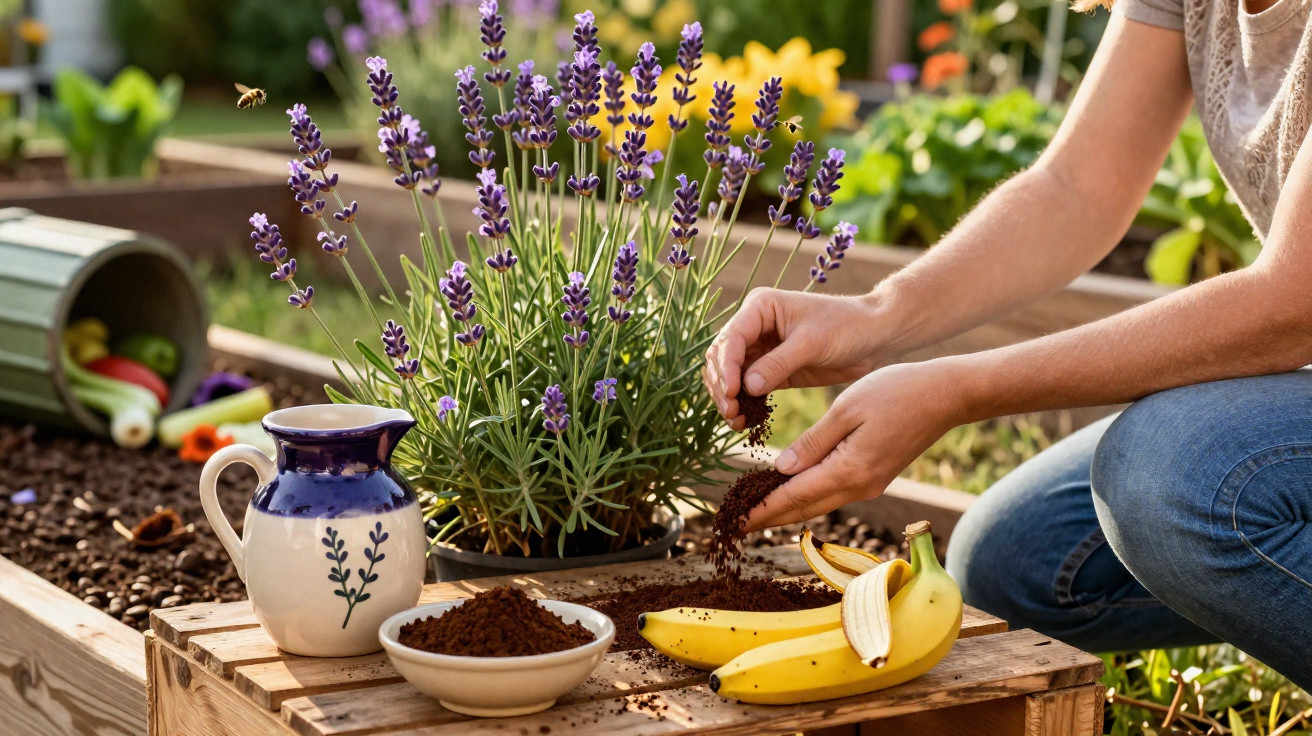
Rather than spending money on pricey fertilisers, more and more home gardeners are turning to things that would otherwise end up in the bin every day. Lavender, in particular, can respond surprisingly well to a few well-chosen kitchen scraps - as long as you use them properly and don’t overdo it.
Why lavender doesn’t need luxury fertiliser
Lavender originates from sparse, stony areas around the Mediterranean. These plants are adapted to coping with low nutrient levels. In many north-west European gardens, they’re more likely to be overfed than underfed.
"Lavender loves lean, free-draining soils - too much fertiliser costs flowers instead of producing them."
If you feed too heavily, you may get lots of leafy growth, but noticeably fewer blooms. In extreme cases, the roots can suffer too: the plant becomes more prone to rot and winter frost damage. That’s why, at most, a very light feed in spring makes sense - right when new growth begins.
This is exactly where kitchen waste can help. Used correctly, it’s more like a small snack for lavender than a lavish three-course meal.
Coffee grounds: a gentle boost for stems and leaves
Used coffee grounds still contain small amounts of nitrogen. In low doses, that can support the growth of stems and foliage without pushing the plant too hard.
How to use coffee grounds correctly
- Let the coffee grounds cool completely and dry slightly.
- Sprinkle only a very thin layer around the lavender (no more than 1–2 tbsp for smaller plants).
- Lightly rake it into the top layer of soil - don’t dig it in deeply.
- Repeat only every 4–6 weeks in spring and early summer.
Important: coffee grounds must not keep the soil permanently damp or form clumps. On heavy soils, it’s best to mix them with a little sand or fine grit. That keeps the ground open and airy so the roots can breathe.
"If you add too many coffee grounds, you can quickly ruin the soil structure - small amounts are perfectly sufficient."
Banana peels: more flowers thanks to potassium
Banana peels are a well-known source of potassium. Potassium strengthens the root system, improves a plant’s resilience, and encourages flower formation. For lavender - where plentiful blooms are the whole point - this can make a visible difference.
How banana peels help lavender
As the peels slowly break down, they release nutrients into the root zone. Instead of a sudden nutrient hit, the plant gets something closer to a gradual, natural drip-feed.
Many gardeners do it like this:
- Chop banana peels into small pieces (about 1–2 cm).
- Bury the pieces shallowly about 10–15 cm away from the base of the plant.
- Don’t place them right against the stem, to avoid rot and mould.
- For a medium-sized plant, one peel every few weeks in spring is enough.
If you’re worried about smells or disapproving neighbours: finely chopped peel is barely noticeable in a bed once it’s lightly covered with soil. In dry, sunny lavender beds, it usually breaks down fairly quickly.
Vegetable scraps as the basis for your own compost
Alongside coffee grounds and banana peels, many vegetable scraps can be used to make a lean, lavender-suitable compost. The key is keeping a balanced mix of moist kitchen waste and drier garden materials.
What can go into lavender compost - and what’s best avoided
| Suitable | Better to avoid |
|---|---|
| Carrot peelings, carrot tops | Cooked food leftovers |
| Lettuce leaves, kohlrabi leaves | Meat, fish, bones |
| Thin onion skins in moderation | Badly mouldy scraps |
| Herb trimmings | Large quantities of citrus peel |
| Dry leaves, lawn clippings (slightly dried) | Heavily sprayed fruit and vegetables |
Compost for lavender should be fairly coarse and not too nutrient-rich. A thin layer as mulch around the plants is more than enough. If you blanket the entire lavender area with rich, dark compost, you’re back to adding too many nutrients.
"Compost made from vegetable scraps gives the soil structure and life - lavender only takes what it needs."
How much is enough? Finding the right amount
Many home gardeners, driven by enthusiasm, end up over-supplying. A simple rule of thumb: it’s better to keep lavender slightly hungry than to stuff it full.
- Feed lightly only in spring and early summer.
- Don’t add extra nutrients in high summer or autumn.
- If plants are already very vigorous and bushy, skip feeding altogether.
If you’re unsure, watch the plant. Lots of long, soft shoots with few flowers points to too many nutrients. Short, firm growth with dense flower buds suggests the balance is right.
Common mistakes that weaken lavender
Fertiliser isn’t the only factor. A few care mistakes can undo any benefit you might get from kitchen scraps.
Frequent problems in the lavender bed
- Waterlogging: lavender hates wet feet. Improve compacted soils with sand or grit.
- Overwatering: water only when the soil feels clearly dry. Established plants cope well with drought.
- Wrong location: lavender needs sun - at least six hours of direct light per day.
- No pruning: if you never cut back, you risk woody, unstable plants with bare patches.
Keep these points in mind and add nutrients only in a targeted way, and you’ll usually have robust plants for years, with a strong fragrance and abundant flowering.
What kitchen scraps can do beyond feeding
Many of the kitchen scraps mentioned also improve soil structure over time. Earthworms and other soil organisms pull the organic material down, loosening the ground and improving air and water movement. On heavy soils especially, that’s a real advantage.
If you separate and apply kitchen waste in measured amounts, you can combine different effects: a little coffee grounds for moderate growth, an occasional banana peel for flowers, and a light compost mulch from vegetable scraps for soil health. The result is a lavender bed that looks cared for - without being overloaded.
Practical examples for the family garden
In many households, this fits easily into everyday life: coffee grounds in the morning, vegetable peelings at lunch, banana peels at the weekend after the children’s post-sport snack. Instead of throwing everything away, some can be collected in a small compost caddy or used directly in a separate section of the bed.
If you garden with children, you can turn it into a simple experiment: one lavender plant with the kitchen-scrap tricks and one without any extra scraps. The difference in summer often brings wide-eyed surprise - and stops anyone quietly chucking the leftovers in the bin.
Risks and limits of the method
Despite the benefits, kitchen scraps should never be the only nutrient source for the entire garden. Heavy feeders such as tomatoes or squashes need more targeted feeding, for example with a dedicated vegetable fertiliser or well-rotted compost. Lavender usually does perfectly well with gentle kitchen help, but roses or hydrangeas respond differently.
If you use a lot of kitchen waste, also keep an eye on pests: in very damp spots, slugs and mice can be attracted. In full-sun lavender beds the risk is much lower, but it’s best to avoid wet, shady compost corners.
Ultimately, with a little know-how and a light touch, everyday kitchen scraps can turn a modest lavender bed into a fragrant, buzzing haven - without harsh chemicals and without expensive specialist products from the garden centre.
Comments
No comments yet. Be the first to comment!
Leave a Comment