
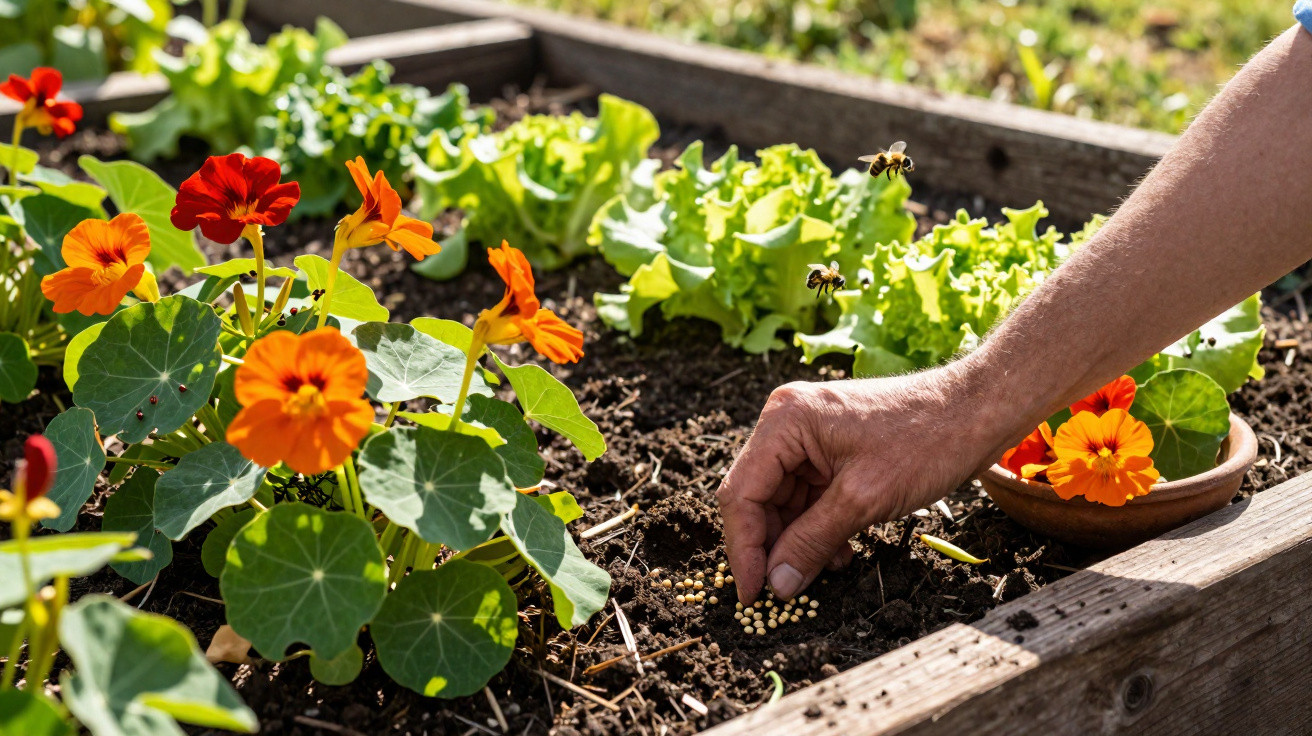
When you sow lettuce, beans or tomatoes in spring with plenty of enthusiasm, one thing rarely crosses your mind: the protection and support that comes from the right companion plant. Yet a single flower can be the difference between seedlings being eaten overnight and a garden that feels as though it is bursting with life, blooms and harvests. And it does it without chemicals, without big expense and without any complicated techniques.
The secret helper in the bed: why gardeners swear by nasturtium
The plant in question is nasturtium. Many people know it as an attractive, edible flower for topping salads or filling window boxes. In the vegetable patch, however, it has a much bigger job. It can act as a shield, an insect magnet and a soil helper all at once.
"Nasturtium is considered one of the most effective and cheapest helper plants for a nature-friendly vegetable garden."
If you are getting your veg beds ready in March, a couple of packets of nasturtium seed can help secure the whole garden in an eco-friendly way. The seeds are inexpensive, germinate quickly, and turn bare soil into dense, lively carpets of leaves and flowers.
Why March is the perfect time to sow
From March onwards, temperatures begin to rise, the soil thaws properly and starts to warm. That is exactly when the main vegetable-sowing period begins. If you plan nasturtium in at this stage, it grows alongside your young vegetable plants rather than arriving too late.
Germinate together, grow stronger together
Sowing nasturtium early in the beds sets several benefits in motion at the same time:
- It develops in step with your vegetable seedlings.
- It forms a protective canopy of leaves early enough.
- It flowers when the first spring pollinators are active.
- It is established before large aphid colonies appear.
If you delay until May or June, you miss this synergy. Sowing early means your protective plant is in place before the problems start.
A natural shield: how nasturtium draws aphids away from vegetables
One of the biggest springtime issues is aphids, especially on beans, peas, tomatoes and cucurbits. They suck sap, weaken new growth and can spread disease. This is where nasturtium shows its particular strength.
The willing decoy plant
Aphids often prefer nasturtium to many vegetable crops. Instead of piling onto your beans or tomatoes, they tend to gather on nasturtium’s soft, tender leaves.
"Nasturtium works like a living bait plant: the pests go for it – and largely leave your vegetables alone."
That creates a clear separation:
- Vegetable plants stay healthier and more vigorous for longer.
- Aphid colonies concentrate in a few predictable spots.
- Control becomes far simpler because it happens in a small area.
Remove cleanly instead of reaching for sprays
Because the aphids are largely sitting on the nasturtium, a very straightforward action is often enough:
- Cut off heavily infested shoots, or remove entire plants.
- Dispose of them in the general waste bin or a tightly sealed container.
- Sow fresh nasturtium seed again if you want to.
That way your vegetables remain untreated, children can snack without worry, and the garden follows a simple rule: pests are allowed - just not in the wrong place.
A magnet for bees and bumblebees: how the flower kick-starts your garden ecosystem
Nasturtium is not only a sacrificial plant; it is also, effectively, an insect hotel in flower form. Its bright blooms are rich in nectar and easy for insects to access.
When everything is still bare, it is already flowering
Many ornamentals take their time to flower, but nasturtium gets going early as soon as conditions are warm enough. That is precisely when bees and bumblebees need quick energy to build their colonies.
"The more pollinators feel at home in your garden, the better the later yields from tomatoes, squash, fruit trees and berries will be."
And they do not stay on the nasturtiums. They move from flower to flower, visiting courgettes, strawberries and apple blossom too - helping ensure flowers turn into fruit at all.
More visits, better yields
These crops in particular benefit from nasturtium nearby:
- Courgettes and squash
- Tomatoes and peppers
- Strawberries
- Apple, pear and plum trees
If you grow any of these, it is worth sowing nasturtium within a reasonable distance. Even a handful of plants can noticeably increase pollinator traffic.
The right spot: edging and companion planting in the vegetable garden
Where should nasturtium go? The answer is: along the edge - and right in among the crops.
A flowering protective barrier around the bed
Bordering your beds with a strip of flowers delivers two benefits at once: it looks attractive, and it creates a first interception line for pests.
Typical places to use it:
- As a continuous edging around the vegetable bed
- Along paths and stepping stones
- By the fence line that marks the plot
Flying-in aphids and other sap-sucking insects often land first in this colourful zone. Your vegetables in the middle start the season with a clear advantage.
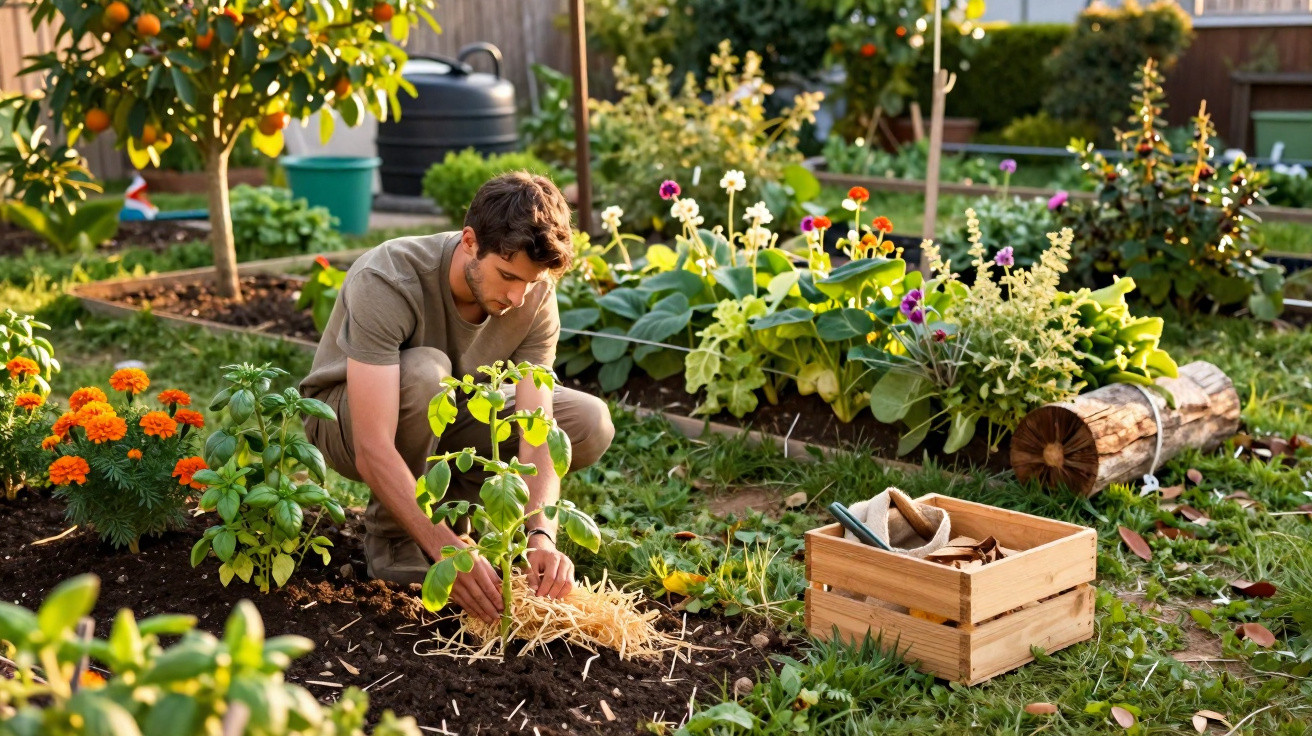
In the bed itself: nasturtium as a companion plant
It gets even more effective when you place seeds deliberately between vegetable rows. Tried-and-tested pairings include:
| Vegetable | Benefit from nasturtium |
|---|---|
| Tomatoes | Distracts aphids, lightly shades the soil |
| Beans | Lower aphid pressure, more pollinators nearby |
| Courgette / squash | Better flower pollination, more active soil |
| Lettuce | Provides shade, slowing soil from drying out |
Nasturtium’s large, round leaves act like small parasols. They help the soil hold moisture for longer and reduce weed germination, without smothering neighbouring plants.
How to sow nasturtium properly: step-by-step
From seed packet to bed
Sowing is manageable even for complete beginners. A rough guide for direct sowing from March:
- Loosen the soil lightly and remove large stones and thick root pieces.
- Place the seeds about 2 to 3 centimetres deep.
- Keep roughly 20 to 30 centimetres between plants.
- Water in gently so the seeds are not washed out.
After around one to two weeks, the first leaves usually appear. The plants then grow quickly and spread out in every direction.
Very little care, but plenty of effects
Nasturtium is undemanding. A few basics are enough:
- Water generously only during prolonged dry spells.
- Shorten very vigorous shoots if needed.
- Pick leaves and flowers regularly if you plan to eat them.
The poorer the soil, the more compact the plant stays - yet it will still produce plenty of flowers. In richly fertilised beds it can become large and lush and may overrun its neighbours more easily, so occasional trimming is worthwhile.
A bonus for food lovers: the flower that shines on the plate too
On top of all the benefits in the patch, nasturtium has another advantage: it is entirely edible. Both leaves and flowers have a mild peppery heat, a bit like cress or young radish.
Popular ways to use it in the kitchen:
- Flowers as an eye-catcher on salads and starters
- Finely sliced leaves in herb soft cheese
- Stuffed flowers as finger food
- Pickled seeds as a budget-friendly alternative to capers
That means the plant combines three jobs: protective shield, insect magnet and edible delicacy. For small gardens, raised beds or narrow rows, this is especially useful because each plant needs to do more than one thing.
What to know first: risks, limits and smart combinations
Helpful as nasturtium is, it will not replace every other measure. Severe slug pressure, fungal diseases or nutrient deficiency cannot be solved by it alone. It works best as one element within a bigger approach - alongside crop rotation, soil care and diverse planting.
When you attract lots of pests, you also tend to draw in their natural enemies: ladybirds, lacewings and parasitic wasps find plenty to eat on nasturtium and may settle in the garden long-term. Over time, this helps stabilise a balance where pests and beneficial insects keep each other in check.
It becomes particularly interesting when you combine nasturtium with other helper plants such as calendula, marigolds or borage. Each species brings its own strengths - from tackling nematodes to providing extra pollen and nectar for solitary bees. Little by little, you build a garden that not only produces plenty of food, but also feels lively, colourful and resilient in the face of setbacks - all sparked by a few unassuming seeds in March.
Comments
No comments yet. Be the first to comment!
Leave a Comment