
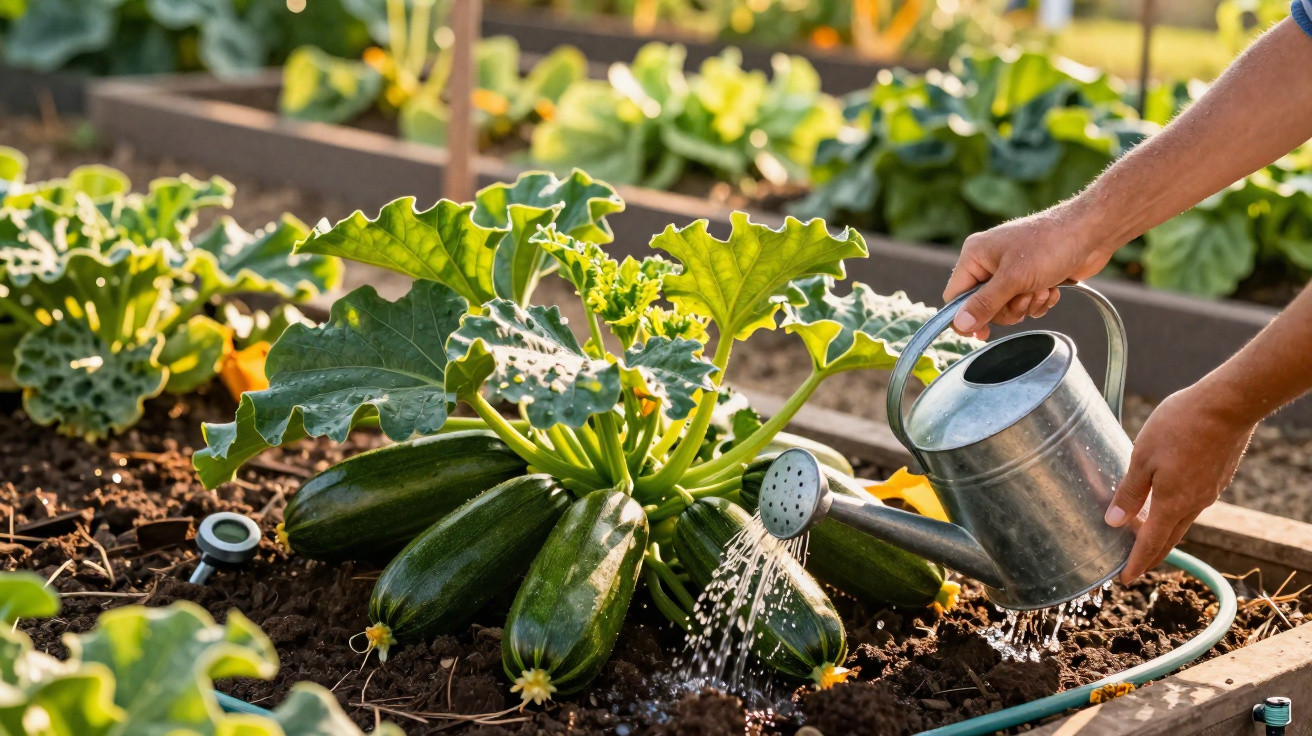
Plenty of hobby gardeners water their courgettes regularly, yet still fail to get the most from the plants. What matters is not simply how much water you apply, but how it actually reaches the soil. A targeted, progressive watering approach builds stronger roots, reduces disease pressure and, in the end, delivers baskets of fruit.
Why courgettes need so much water - and why they still often “suffocate”
Courgettes are heavy feeders: they grow rapidly, produce big leaves and keep setting new fruits. To do that, they need a generous water supply - typically around 5 litres per plant, two to three times per week.
"If you water courgettes precisely and thoughtfully, you can increase the yield per plant to three to five kilos per season."
The catch is how many people water: they tip the whole watering can in one go right at the base. The ground cannot absorb it at that speed, so the water runs off to the sides or sits in puddles. The surface then silts up and forms a hard crust. Beneath that crust, roots get too little air, waterlogging becomes a risk - and conditions become ideal for fungal diseases.
So even with the best intentions, you end up stressing the plant. The result is small, disappointing fruits, rot at the stem and overall weaker growth - the opposite of the lush “courgette jungle” many gardeners are aiming for.
The key idea: water progressively instead of flooding once
The solution is to water slowly and in stages. Rather than applying the full amount at once, you spread it out over several minutes. That gives the soil time to take it in, allowing moisture to move deeper and reach the lower roots.
Watering right on the crown (where the stem meets the soil) also increases the chance of rot. It’s better to apply water slightly away from the stem, across the root zone, and avoid wetting the leaves. Leaves that stay wet in warm weather create perfect conditions for powdery mildew.
A soil “watering bowl”: a small hollow with a big impact
One of the most effective steps is almost ridiculously simple: shape a shallow basin of soil around each courgette plant. This “bowl” catches water and keeps it exactly where the roots can use it.
- Clear a circle around the base of the plant, roughly 30–40 cm in diameter.
- Pull a little soil up around the edge to create a low rim.
- You’ll end up with a shallow dip in the middle where water can pool.
When you water, the water stays in this hollow and soaks in gradually. That way, 5 litres actually reaches the plant instead of running off to the side or evaporating.
"The small watering hollow ensures that every litre arrives where the courgette needs it - at the roots."
How often, how much: the ideal watering rhythm for courgettes
Courgettes don’t like bone-dry soil, but they also won’t thrive in permanently soggy ground. The best schedule depends heavily on your soil type and the weather, but there are useful benchmarks.
Guide values for healthy courgette plants
| Stage | Frequency | Amount per plant |
|---|---|---|
| Early growth stage | 2× per week | 3–4 litres |
| Flowering and first fruits | 2–3× per week | 5 litres |
| High summer, peak cropping | 3× per week (check more often in heat) | 5–6 litres |
More important than fixed figures is checking with your hands: the top few centimetres can dry slightly, but underneath the soil should remain cool and moist. If you only ever moisten the surface, roots are encouraged to stay shallow - and the plant becomes far more sensitive to every hot spell.
Water without rushing: how progressive watering works in practice
Progressive watering doesn’t mean standing over each plant for ages. A simple “rounds” trick with a watering can is enough:
- First round: lightly wet each plant, adding 1–2 litres into the soil basin.
- Move on: “start” all plants in turn the same way.
- Second round: return to the first plant - the soil will have drawn in the water - and add another 1–2 litres.
- Third round: distribute the remainder of the planned amount.
With this method, a few minutes pass between each portion, giving the soil time to absorb the water so it doesn’t run off unused. If you water with a hose, keep the pressure low and let the water gently trickle into the basin rather than blasting the soil.
Mulch, temperature and location: the quiet yield boosters
Water is only one part of the equation. To make the effort pay off, courgettes need the right growing conditions.
Mulching prevents crusting and reduces evaporation
A bare soil surface exposed to sun is one of the most common reasons that dreaded “soil crust” forms. A thin mulch layer can make a huge difference:
- Spread grass clippings, straw or shredded leaves around the plant.
- Keep the watering basin clear, or only mulch it very lightly.
- Top up mulch regularly so it doesn’t turn into a dense, rotting layer.
Moisture stays in the soil for longer, earthworms are encouraged, and the structure remains open and crumbly. With better structure, the soil absorbs water more readily and roots can breathe.
Warmth, not a sauna: getting soil temperature right
Planting or sowing too early holds courgettes back. They need warm ground - at least 12–15 °C. In many areas there is still a risk of frost before mid-May. If you start plants off in pots under cover, wait until after the last spring frosts to plant out, and harden them off first by gradually exposing them to sun and wind.
Secure your harvest: pick correctly so the plant keeps producing
Once the first fruits appear, harvest timing has a surprisingly big effect on total yield. Any mature courgette left on the plant for too long slows the formation of new flowers.
"If you harvest consistently, you keep the plant in ‘production mode’ - and significantly increase the total yield per season."
Courgettes should be well-shaped, firm and still tender. Typical indicators include:
- Length usually between 15 and 25 centimetres.
- Skin still fairly soft and easy to dent with a fingernail.
- The fruit comes away cleanly from the stem with a sharp cut or a gentle twist.
If you cut too early, you’ll get small fruits, but they don’t store as well and they offer less flavour. If you wait too long, you end up with watery, coarse, club-like marrows and you stall the plant. Hitting the middle ground gives the best combination of taste, keeping quality and yield.
Common mistakes when watering courgettes - and how to avoid them
Here are the usual pitfalls seen in many garden beds:
- Watering a little every day: the surface stays constantly damp, and roots never go deep. Better: water less often, but thoroughly.
- Spraying over the leaves: raises the risk of fungal diseases, especially in the evening. Ideally, water the soil in the morning or late afternoon.
- Cold tap water in the midday heat: a temperature shock for the roots. Better: let water warm up in a water butt and avoid watering in the hottest part of the day.
Getting more from the bed: combine watering with other measures
If you pair the soil-basin watering trick with a few other simple steps, reaching three to five kilos per plant becomes far more realistic:
- Compost or well-rotted manure in the planting hole provides nutrients.
- Regularly removing very large, heavily shading leaves lets more light reach the fruits.
- Spacing plants at least 1 metre apart prevents competition for water.
It’s also worth combining this with rainwater collection. Courgettes often respond noticeably better to soft rainwater than to hard tap water. A water butt near the bed shortens the walk and helps reduce the water bill.
Stick to these basic principles and you’ll quickly see a shift in plant health: sturdier stems, more flowers and fewer fruits rotting on the plant. Progressive watering with a soil basin is one of those rare gardening tricks that takes little effort but delivers a clear increase in yield - particularly with courgettes, which can become truly heavy croppers with good care.


Comments
No comments yet. Be the first to comment!
Leave a Comment