
Many home gardeners reach for the same reliable fruit trees every year: apple, cherry, pear - job done. Yet an Asian fruit tree is ready to shake up British gardens, producing fruit that looks like a small apple but tastes like an exceptionally juicy, crisp pear. It’s surprisingly straightforward to plant, needs little ongoing attention, and rewards you with a harvest that’s far more impressive than you might expect.
What’s really behind the “apple-pear” tree
Nashi: the exotic that stays refreshingly down-to-earth
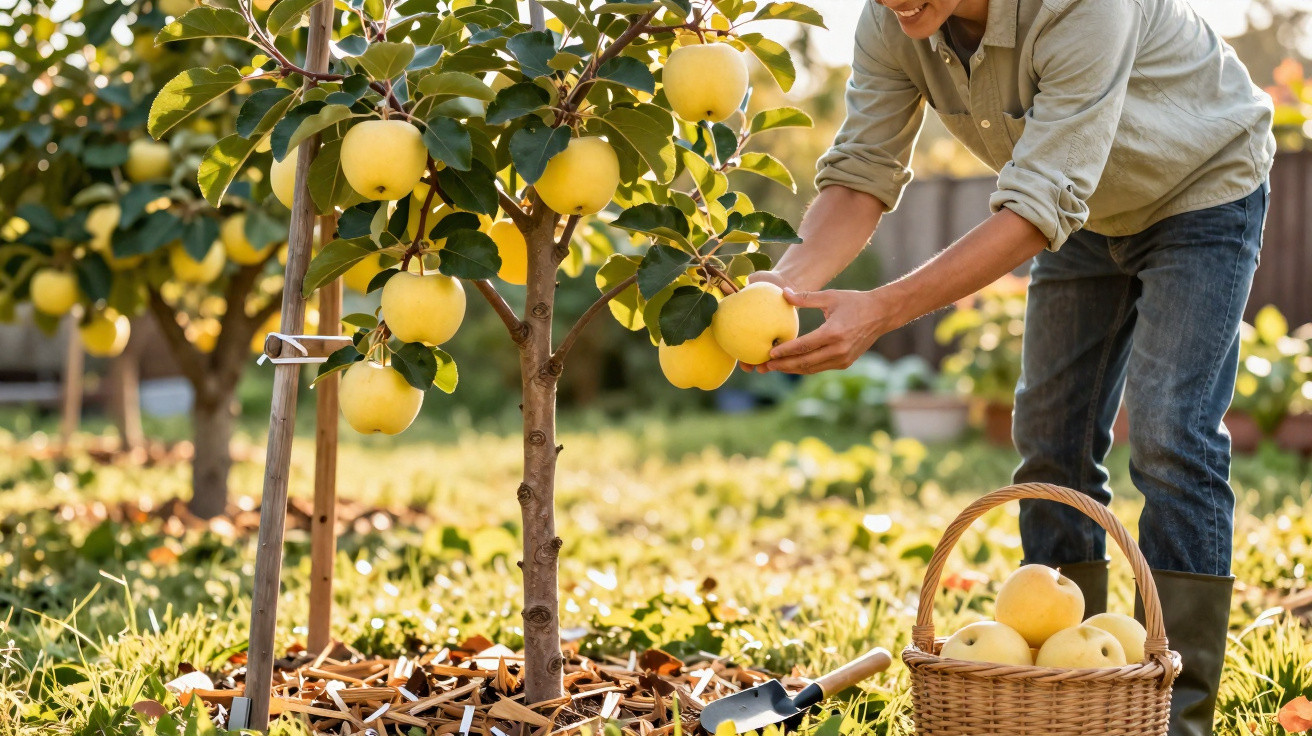
The star of this garden trend is the Nashi, often called an apple pear. The fruit is usually round, pale gold to bronze, with smooth skin - visually much closer to an apple than a pear. Then comes the first bite and the real surprise: the skin gives with a light crack, and the flesh is intensely juicy, sweet and fresh, with a noticeably crunchier texture than most familiar pear varieties.
A Nashi tree in the garden is almost guaranteed to get people talking. In Germany it’s still uncommon in private gardens, even though it’s robust, fairly winter-hardy and strikingly easy to look after. That makes it ideal for anyone who wants more variety in the garden, without needing to turn into a semi-professional grower.
"Nashi combines the bite of an apple with the juiciness of a pear - and that’s exactly what makes it so exciting in the orchard."
Position: plenty of sun and no “wet feet”
If you want the tree to develop its full flavour, it needs one thing above all: light. A spot in full sun is best - ideally against a warm house wall or in a sheltered corner of the garden. It doesn’t take kindly to partial shade: the fruit tends to stay smaller and less sweet.
The soil matters at least as much. Nashi will not tolerate waterlogging. The roots need oxygen; otherwise they begin to rot. The ideal growing medium is loose, well-draining and rich in humus. If you have heavy clay, it helps to work the following into the planting area:
- coarse sand to improve aeration
- well-rotted compost to support nutrients and soil life
- if needed, a little fine gravel in the bottom of the planting hole
If all you have is dense, heavy clay, you can create a raised planting position - or plant into a large, deep raised bed that provides enough rooting depth for a tree.
Planting properly: the best timing and the key steps
Why late spring is the best starting window
The best time to plant Nashi is in late spring, once the soil is no longer icy cold and severe frosts are unlikely. At that point the roots begin to grow steadily without being stressed by heat. This allows the tree to settle in calmly before summer fully arrives.
Dig a planting hole at least twice as wide and twice as deep as the root ball. It’s also worth loosening the sides with a garden fork so fine roots can penetrate the surrounding soil more easily.
| Step | What to do |
|---|---|
| 1. Planting hole | Make it twice the size of the root ball; loosen the soil |
| 2. Improve the soil | Mix in compost and sand; avoid wet patches |
| 3. Position the tree | Keep the root collar at ground level; don’t plant too deep |
| 4. Install a stake | Drive it in before backfilling; anchor it firmly |
| 5. Water in | Use at least 15–20 litres straight after planting |
Without a firm support, the start can quickly go wrong
Young Nashi trees, in particular, tend to have a relatively delicate root system. A strong spring gust can loosen them or pull them off line. That’s why a sturdy stake is essential. Place it on the weather side so it supports the trunk against the prevailing wind.
Tie the trunk on with a soft strap - ideally using a figure-of-eight knot. The strap forms an “8” between stake and trunk so nothing rubs or constricts. This helps the tree grow into a stable, upright shape over time.
No partner, no fruit: Nashi doesn’t like solitude
Why a single tree often flowers but produces very little
In spring, Nashi produces masses of white blossom, but it is usually self-sterile. In other words, a lone tree may look lovely, yet it will set few fruits. For a proper crop it needs pollen from a genetically different tree.
So the practical rule is simple: plan for at least two compatible trees. Bees and other pollinators do the rest, carrying pollen from bloom to bloom.
"If you plant Nashi, you should always think about a 'pollination partner' - without that duo, the fruit bowl stays empty."
Which varieties work well together
Nashi pairs very well with traditional European pear trees. Often, having a classic pear nearby is enough for both to benefit. The key points for a suitable partner tree are:
- a similar flowering period to the Nashi
- a hardy, proven variety
- no more than a few dozen metres away
In a typical home garden, it’s usually enough if the pear tree is in your garden or even next door - as long as bees can reach both trees’ blossoms without difficulty.
Water, mulch, patience: care in the first few years
Watering in is not a detail - it’s survival
Straight after planting, the young tree needs a substantial soak. Pouring on 15 to 20 litres at once is not excessive. That amount ensures the loosened soil settles snugly around the roots, preventing air gaps where roots could dry out.
Over the following weeks, the aim is to check regularly rather than watering by the calendar. Let the top layer dry slightly, but at 5–10 centimetres down it should still feel moist. During hot spells, water less often but more deeply.
Mulch: a shade layer for the soil
A thick mulch ring around the trunk makes upkeep much easier. Suitable materials include bark mulch, chipped branches, straw or leaves. The layer can be 5 to 10 centimetres deep, but it should not touch the trunk itself to avoid rot.
The benefits are significant:
- Water evaporates more slowly, so the soil stays moist for longer.
- Weeds are suppressed, meaning less competition for the tree.
- Over time, humus forms, improving soil structure and fertility.
From the first bite to everyday cooking
When the fruit is ripe - and how it should taste
Depending on variety and location, harvesting usually begins towards the end of summer. A reliable sign that the moment is right: the skin develops a warm golden tone, and the fruit twists off the branch easily without needing to be pulled.
On the palate, it should feel cool, extremely juicy and crisp - almost like a mouthful of water with flavour. Overripe fruits lose that crunch and can turn a little floury, so a light touch at harvest time pays off.
What you can do with Nashi in the kitchen
Nashi isn’t only for eating fresh. The fruit:
- works brilliantly in summer salads with rocket, nuts and cheese
- pairs perfectly with Asian-style marinades
- can be preserved or turned into chutney
- makes an interesting base for juice blends with apple and grape
Because the flesh is firm, slices hold their shape in the pan or oven longer than many soft pear varieties. That opens up room for creative ideas, such as grilled fruit wedges served with meat or cheese.
Why this exotic is worth it in the long run at home
In many cases, Nashi trees prove more resilient to typical pear diseases, including some fungal infections. If you choose an airy site and thin the crown moderately, you usually need very little plant protection. That’s easier on your nerves - and better for insects and soil life.
At the same time, the tree adds diversity to the garden: different flowering times, a different food source for pollinators, and an extra harvest period in late summer. If you’re already considering planting a new fruit tree, choosing Nashi is a step away from the standard options - without demanding specialist care or exotic climate conditions.
If you have a bit of space, a sunny corner and an appetite for new flavours, a Nashi tree offers an intriguing project with manageable risk and a big element of surprise - both in that first bite and in guests’ reactions to these “apples that aren’t apples at all”.
Comments
No comments yet. Be the first to comment!
Leave a Comment