
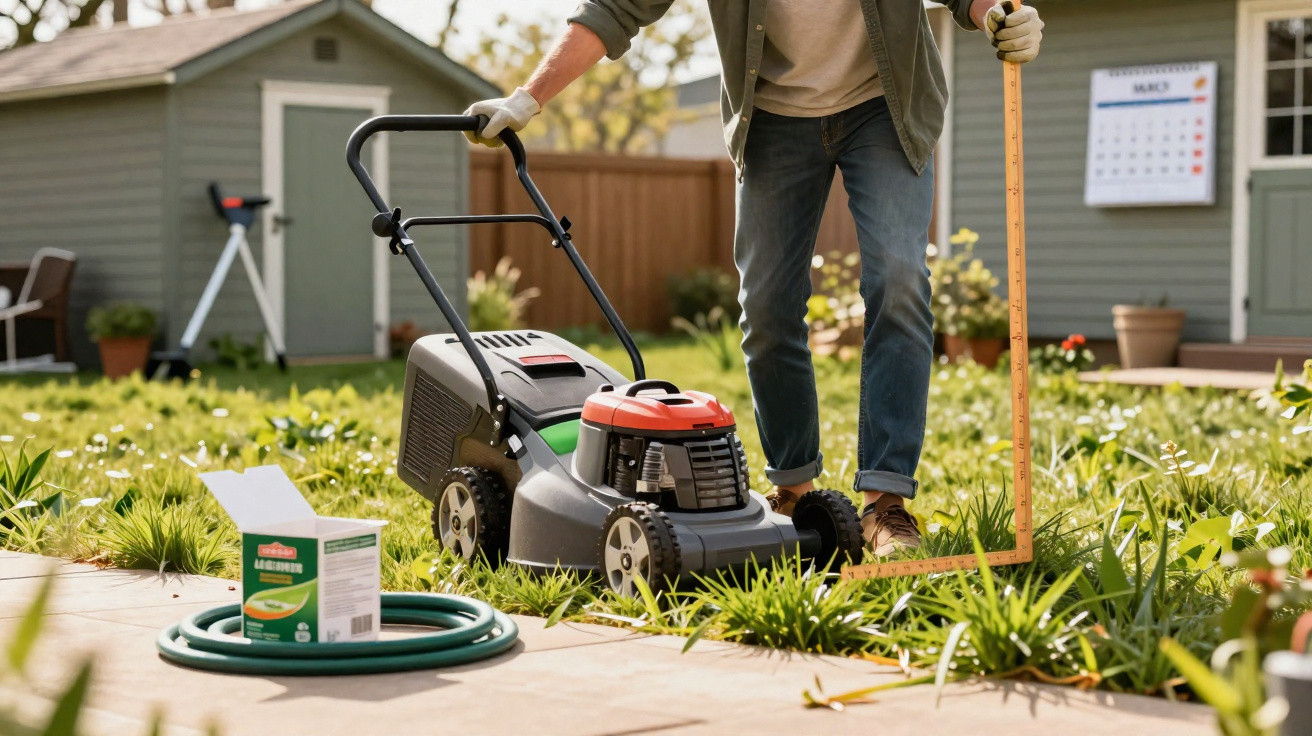
Cut at the wrong time and you’ll weaken your lawn - act wisely and it will become noticeably denser.
After winter, most garden owners want one thing above all: things to look tidy again. They want the grass short and the lawn to appear neat. That’s exactly when a common mistake happens - mowing too early and, worse, cutting far too low. Specialists point to one straightforward but consistently important rule that can turn a tired-looking patch into a thick, resilient lawn.
Why March sets the course for the entire lawn season
Coming out of winter, a lawn is effectively in recovery mode. The grasses have had limited light, and the soil is often still cold and damp. You can see it in pale blades, bare patches and islands of moss. If you set the mower low at this point, you cut the plant where it is still holding on to its reserves.
It helps to think of grass blades as tiny solar panels. The more leaf area there is, the more sunlight the grass can capture and convert into growth. In winter and early spring the sun sits low and the days are short, so the plant needs as much leaf surface as possible to rebuild strength.
"The first mow after winter often determines whether the lawn thickens up again - or whether moss and weeds fill the gaps."
That’s why, in many areas, the first mow is being pushed later and later. A sensible moment is when:
- night frosts no longer occur, or only very rarely
- the soil temperature is around 7 °C or higher
- the grass has reached roughly 8–10 cm in height
Across Central Europe, this window is often more like late March or early April. In milder locations it may arrive earlier; at higher elevations it can be significantly later. Here, the weather and soil temperature matter more than any fixed calendar date.
The most important rule: never remove more than one third
Professionals refer to the “one-third rule”. The principle is simple: in any single cut, remove no more than a third of the current grass height. That keeps the lawn stable, allows the plant to continue photosynthesis, and stops it having to regrow using the last of its stored energy.
A quick example makes it easier to apply:
| Current grass height | Maximum to cut | Recommended remaining height |
|---|---|---|
| 9 cm | 3 cm | 6 cm |
| 12 cm | 4 cm | 8 cm |
| 6 cm | 2 cm | 4 cm |
For the first mow of the year, lawn professionals recommend a cutting height of around 5–6 cm. That can seem high to many hobby gardeners, but it brings clear benefits:
- The soil is shaded more effectively and dries out less.
- Moss and weed seeds struggle to find enough light and space to germinate.
- The grasses branch more strongly and form a denser sward.
"If you mow higher in spring, you often end up with fewer bare patches in summer and a visibly richer green."
How to get your lawn ready for its first March pass with the mower
Before starting the mower, it’s worth doing a quick ground check. If the soil is still frozen or completely waterlogged, keep the mower in the garage. The wheel weight compacts the ground, roots tear more easily, and the turf can suffer long-term damage.
Once the surface is only slightly damp and firm underfoot, a few simple prep jobs help:
- Remove leaves and twigs: this lets light reach the blades and allows the surface to dry.
- Aerate the soil: use a garden fork to make holes in problem areas, or use a lawn aerator so air and water can penetrate deeper.
- Sharpen the blade: blunt blades shred grass; sharp blades cut cleanly and are kinder to the plant.
That first pass with the mower should feel almost like a gentle brush. Choose a higher cutting height, walk slowly, and avoid sharp turns or quick pivots. The aim is simply to take the tips off and prompt fresh growth.
After the first mow: rhythm beats a drastic cut
If you get the start right in March or early April, the next crucial factor is cadence. Many garden owners leave it too long between cuts; the lawn shoots up, and then the only option is another deep, severe cut. That stresses the grass every single time.
A better approach is to mow a little more often while keeping the height moderate. During the main growth period, an interval of seven to ten days is usually enough. If the weather is poor, a longer gap is fine - as long as you still follow the one-third rule.
"A lawn doesn’t become dense through feeding or watering alone, but above all through regular cuts that aren’t too low."
Some gardeners deliberately leave certain sections a bit longer - for example along a boundary or in a corner that isn’t used much. That creates a refuge for wildflowers and insects, while the main area stays short and usable. The idea behind “No Mow March” is exactly this: treating parts of the garden less strictly on purpose.
When scarifying, fertiliser and overseeding make sense
If you can see lots of moss or clear gaps in the turf, correct mowing alone won’t be enough. In spring, gentle scarifying can help - but only once the lawn has regained some strength and temperatures are more settled.
A practical spring order often looks like this:
- first high mow in March or April
- if needed, light scarifying (not too aggressive)
- targeted overseeding on bare patches
- a lawn starter fertiliser to support growth
When you combine these steps with the one-third rule, you give the lawn the chance to thicken from the base upwards. Later on, it tends to look more even, feel softer, and cope better with wear - including from children, pets and garden furniture.
Common spring mistakes - and how to avoid them
Many issues persist all year because the wrong decisions are made in March or April. Typical pitfalls include:
- first cut too low: the grass turns yellow, roots are exposed, and moss spreads.
- mowing on wet ground: ruts, compaction and messy cuts can remain visible for months.
- blunt blades: frayed tips and increased susceptibility to disease.
- no consistent mowing schedule: alternating bursts of growth and stress phases for the lawn.
Once you know these traps, they’re easy to sidestep. Starting the season with a higher cut might cost a few centimetres of “tidy” appearance, but you gain far more substance.
How the right March cut affects summer heat and dry spells
A thick lawn in May and June is about more than looks. A closed sward shields the soil from intense sunlight, reduces evaporation, and holds moisture for longer around the roots. During heatwaves - especially when watering restrictions are in place - that pays off immediately.
If you scalp everything too short in spring, you risk the opposite: the soil warms faster, dries out sooner, and needs much more water to keep the lawn green. A higher cutting height in March acts like insurance against heat damage in midsummer.
For many hobby gardeners, the one-third rule feels unusual at first because the lawn looks a bit more “wild”. After a few weeks, though, the effect becomes clear: the surface looks more even, stands up better to foot traffic, and small gaps often fill in on their own. That’s the real foundation of a proverbial “carpet lawn” - not a millimetre-close cut, but smart timing and a gentle start to the season.



Comments
No comments yet. Be the first to comment!
Leave a Comment