
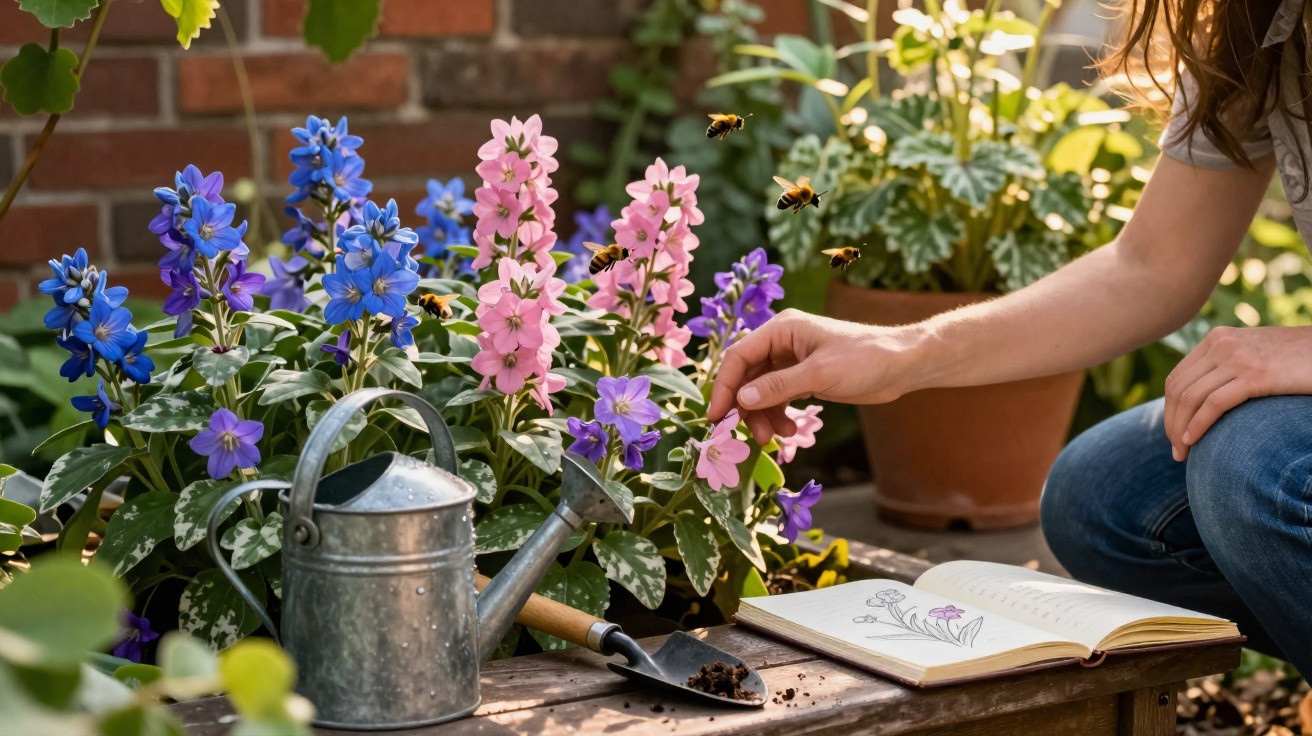
Anyone thinking of insect-friendly spring flowers usually pictures sun-soaked borders. In cooler, semi-shaded parts of the garden, things can feel bleak by comparison. Yet there is a tough woodland perennial that brings those overlooked corners to life - and can make a real difference to the first hungry pollinators of the year.
Why lungwort is a real insider tip for the shade garden
Lungwort (Pulmonaria) is one of the classic perennials for semi-shade, but in many gardens it remains literally in the shadows. At first glance it can seem fairly modest: just 20 to 30 centimetres tall, with broad leaves that are often speckled with silvery markings.
For insects, however, this plant is hugely valuable. It flowers extraordinarily early, often as soon as late February or early March, when borders and lawns still look as if they are frozen in time. That is exactly when bumblebees and solitary bees emerge from winter dormancy and urgently need food.
Early flowering + a shady site + plenty of nectar: lungwort tackles three spring bottlenecks at once.
A distinctive feature is its tubular flowers, which change colour as they age: they open pink, then shift through violet to blue tones. We may simply find that attractive, but to pollinators it acts as a clear signal indicating which blooms are currently offering the most nectar.
How lungwort supports bees, bumblebees and butterflies
What makes this perennial special is the structure of its flowers. The tube shape suits insects with longer tongues - such as bumblebees or many species of solitary bee. They can reach nectar held deep inside, while short-tongued species often miss out.
In early spring, when temperatures swing and late frosts are still a risk, only a small number of insects fly at all. Those that do need rich, dependable energy sources.
- Bumblebees: among the earliest pollinators of the year, and they find reliable nectar in lungwort.
- Solitary bees: many species depend on early flowers because their flight period is very short.
- Day-flying butterflies: take advantage on mild days when they venture out of hiding.
Many well-known bee plants such as borage or phacelia prefer full sun. In shady spots they offer very little. Lungwort fills that supply gap in the cooler parts of the garden.
Where the sun does not reach, lungwort helps entire generations of insects get through.
The ideal position: where lungwort really thrives
Lungwort originally comes from open deciduous woodland. If you mirror those conditions, you gain a perennial that is almost effortless to live with.
The best place in the garden for lungwort
- Semi-shade or light shade, for example beneath deciduous trees
- The north side of walls or hedges, where the sun never beats down
- Edges of shrub belts or shady perennial beds
Morning sun is generally fine. Harsh afternoon sun, by contrast, can scorch the foliage quickly. Under dense conifers with constant deep shade it may survive, but it will flower sparsely - and then provides little for insects.
Soil requirements: humus-rich, moist, well-drained
The best soil resembles woodland ground: loose, rich in organic matter, evenly moist, but never waterlogged. A little preparation before planting pays off:
- Loosen the soil deeply and remove perennial root weeds.
- Work in well-rotted compost to add humus and nutrients.
- If the soil is very heavy, mix in a little sand or fine grit.
A planting distance of 30 to 40 centimetres is sufficient. Over time, the plants spread into small carpets, but without quickly becoming a nuisance.
Low-maintenance and tough: keeping the insect buffet generous every year
If you are short on time, lungwort is an easy choice. With the right site, it needs very little attention.
Watering, feeding, tidying - it rarely needs more
- Watering: during longer dry spells in spring and summer, water regularly so the soil does not dry out completely.
- Feeding: one application of compost a year in early spring is enough. High-nitrogen fertilisers may produce lots of leaf growth, but they reduce flowering.
- Tidying/pruning: remove faded flower stems and yellowing leaves to encourage fresh growth and keep the border looking neat.
The plant is considered winter-hardy even in very cold areas. Late frosts rarely harm the roots. Only the earliest flowers may suffer in severe sub-zero weather - but the perennial usually pushes out replacements quickly.
How to build a continuous flowering calendar for your shade garden
Lungwort is the starting signal, not the entire plan. If you want to attract pollinators for months, plant in waves.
| Season | Plant | Benefit for insects |
|---|---|---|
| Late winter / spring | Lungwort, snowdrops, winter aconites | First energy source after winter dormancy |
| Spring | Myosotis (forget-me-not), primroses | Bridges the gap after the very first blooms |
| Summer | Cranesbill, astilbes, foxglove | Steady food source during the main flight period |
| Autumn | Japanese anemones, late aster varieties | Boosts insects before winter sets in |
Lungwort starts the sequence in early spring - and with smart combinations, the table stays laid for pollinators right through to autumn.
How to use lungwort to lift dreary garden corners
Shady corners are often treated as problem areas: damp edges along walls, the ground under trees, or awkward transitions near neighbouring plots. Lungwort is ideal for turning exactly those spaces into a lively, low-care patch.
One possible planting scheme:
- Plant lungwort in groups at the front, around three to five plants per spot.
- Thread spring bulbs between them, such as crocuses or small daffodils.
- Place taller perennials behind - for example hostas or ferns - to provide structure in summer.
The result is a layered bed that looks active from late winter into autumn while also adding real ecological value.
How to recognise healthy lungwort - and what can go wrong
Although this perennial is generally robust, a few signs show when conditions are off. Pale, soft-looking leaves and few flowers point to soil that is too nutrient-rich or shade that is too dense. Brown, dried leaf tips are more likely to indicate drought stress or too much direct sun.
If a clump has sat unchanged for years, it can be worth dividing it in autumn. This rejuvenates the plant, keeps it willing to flower, and allows you to spread it into new shady areas.
In households with children and pets, toxicity often comes up. In typical garden quantities, lungwort is not considered highly poisonous, but it is also not something to eat unless you can identify it with absolute certainty. Its value lies in ecological benefits, not in the kitchen.
Why lungwort is especially useful for city gardens and courtyards
In densely built-up areas, many insect species struggle to find enough feeding places. Balconies, courtyards, and north-facing sides of buildings rarely offer ideal sunshine - but lungwort can provide valuable stepping stones in an otherwise stripped-back environment.
In larger pots or planters, the perennial also grows reliably in the semi-shade of balconies, as long as the compost never dries out completely. With minimal effort, you can create a small shade habitat that attracts bees, bumblebees and butterflies - and makes the view from the window noticeably more appealing.



Comments
No comments yet. Be the first to comment!
Leave a Comment