
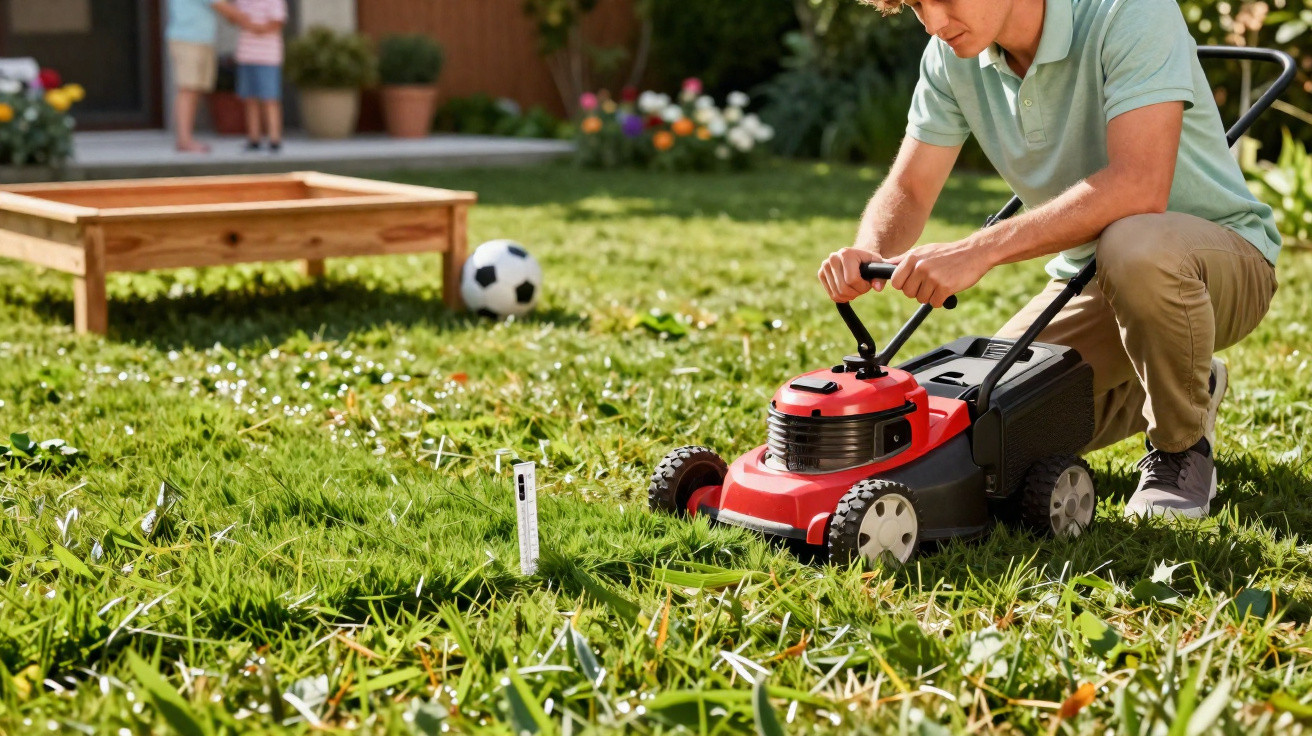
The correct mowing height is what decides whether your garden struggles or your lawn turns into a true green carpet.
Many amateur gardeners fiddle with every possible lever: more feed, fresh seed, pricey specialist products. Yet the most important setting is often overlooked - the cutting height on the lawnmower. Get it wrong and you weaken the roots, warm the soil, and practically roll out the welcome mat for moss and weeds. The good news is that even a difference of a few millimetres can noticeably improve how your lawn performs.
Why mowing height decides whether your lawn thrives or frustrates you
A single blade of grass is more than just “something green”. Its leaf area generates energy through photosynthesis, and that energy keeps the root system going. If you take off too much at once, the grass can no longer produce enough “food”; roots shrink back and the whole sward becomes far more prone to stress.
"If you keep mowing too short, you weaken the lawn, heat up the soil, and create space for weeds and moss."
The most practical rule is simple: never cut more than one third of the current height in a single mow. This “one-third rule” protects the growing point - the area where the blade pushes out new growth. If you cut well below that, professionals call it “scalping”: essentially shaving the lawn bald, which puts lasting strain on the plants.
Cutting too low also brings other knock-on effects:
- the soil gets too much direct sun and dries out faster
- roots stay shallow and are more likely to deteriorate
- deep-rooted weeds take over the area
- moss spreads because the lawn can’t grow densely enough
A better approach is to mow more often, removing only a small amount each time. In spring especially, that can mean mowing every four to seven days. If growth is very fast (over 2.5 cm per week), mowing twice a week can be the sensible option.
Dry grass, sharp blades: how to mow properly
Another classic mistake that harms lawns: mowing when it’s wet. The blades bend over, the cut looks ragged, and the damp clippings mat together.
If mowing wet grass can’t be avoided, a few adjustments help:
- raise the cutting height by one or two steps
- don’t walk on the lawn beforehand or flatten it
- use a grass box so wet clippings don’t form a soggy mat
- switch off the mulching function
- sharpen blades regularly (every 20–25 operating hours)
"Blunt blades tear the grass instead of cutting it cleanly - and that leaves the door wide open to disease."
A lot of issues that later look like “lawn diseases” are, in reality, just the result of dull blades and wheels set too low.
The right height based on lawn type and how you use it
The ideal mowing height depends heavily on how the lawn is used and which grasses are growing there. For most gardens, these guidelines work well:
Family lawns and play lawns
This is the standard lawn area in most front and back gardens.
- recommended mowing height: 3 to 5 cm
- hard-wearing and copes with ball games and regular foot traffic
- a mid-range setting is usually best
Ornamental lawns and front lawns
This type of lawn is mainly about looks and is rarely walked on.
- normal: 2 to 3 cm
- in heat and drought: raise it to 4 to 5 cm
- needs regular feeding and watering
Shade lawns and limited sunlight
Under trees or behind buildings, light levels are low. Here, you need more leaf area left in place so the grass can collect enough energy.
- mowing height all year: 5 to 6 cm
- avoid heavy use, and keep the soil as open and loose as possible
Large, more natural areas
In orchards, verge strips, or little-used corners, you can keep things more relaxed.
- mowing height: 5 to 8 cm
- mow less often, but set the height higher
How high different grasses actually prefer to be
If you know what seed mix you have, you can fine-tune the height more precisely. A rough guide:
| Grass type | Recommended mowing height | Note |
|---|---|---|
| Cold-hardy mixes (e.g. meadow grass) | 6–9 cm | stay nearer the top end in summer |
| Fine fescue types | 7.5–10 cm | generally do best slightly higher |
| Perennial ryegrass | 5–7.5 cm | classic sports and play lawn grass |
| Bermudagrass | 2.5–5 cm | for warmer regions, very hard-wearing |
| Zoysia | 1.3–2.5 cm | can be kept extremely short |
| St. Augustine grass | 6–7.5 cm | prefers a relatively high cut |
| Creeping bentgrass (golf greens) | 1–1.5 cm | only with professional kit and high maintenance effort |
In many home gardens, it’s not even clear which seed was originally used. If that’s the case for you, you’ll be on safe ground treating it like a typical family lawn and staying within the 3 to 5 cm range.
How to adjust mowing height through the seasons
Spring: focus on density, not going ultra-low
In spring, growth really takes off. Setting the mower towards the lower end of the recommended range encourages the grass to produce new side shoots. The result is a denser carpet and bare patches filling in.
"In spring, you can mow a bit shorter - but always stay within the one-third rule."
Summer: raise the height to slow evaporation
When temperatures climb, every extra millimetre helps. Longer blades shade the soil and keep moisture in for longer.
- raise the cutting height to at least 5 to 6 cm
- extend mowing intervals slightly to reduce stress
- late evening or early morning are the best times to mow
Autumn and winter: taper off gently
In autumn, you can gradually lower the setting again. The aim is a stable sward that isn’t too long going into winter, so fungal diseases don’t develop under a damp, tall canopy.
In winter, a few high cuts are enough - only on frost-free, dry days. It’s best not to mow on frozen or waterlogged ground, as blades snap easily.
Young lawns and problem areas: when you need extra care
First cuts on newly sown lawns
Newly seeded lawns require patience. Only mow once the blades have reached roughly 8 to 10 cm.
- first mowing height: 5 to 6 cm
- ease down gradually rather than jumping straight to your target height
On overseeded or repaired patches, many professionals recommend doing it in two stages: first from 8 cm down to about 5 cm, then later to around 3 cm once the area looks dense and stable.
Coming back from holiday: what to do with a 20-centimetre jungle
If you return after two weeks away to knee-high grass, don’t simply “blast it down to normal height”. That can wreck the structure of the sward.
"Always bring tall areas down in several stages to the target height - and if needed, start with a brushcutter first."
From around 15 to 20 cm, it’s worth doing an initial pass with a strimmer/brushcutter or by using the mower on a high setting. Then do two to three further cuts a few days apart until you reach the desired height - always respecting the one-third rule.
How to set your mower height properly - without guesswork
Many mowers show numbers or icons for height adjustment, but don’t give clear centimetre measurements. You shouldn’t rely on those markings alone.
A practical way to dial it in:
- Place a piece of cardboard or a board on the lawn.
- Mow a short strip using your chosen setting.
- Push the cut clippings aside.
- Measure the actual grass length with a ruler or tape.
- Adjust the setting until it matches your target height.
If you take the time once, you’ll know your “go-to settings” for spring, summer, and autumn - and afterwards you can simply click into place instead of guessing.
More than looks: why the right mowing height saves water and stress
A mower set correctly doesn’t just make the garden look better. Longer, healthier blades reduce water demand because the soil doesn’t dry out as quickly. At the same time, a dense sward naturally suppresses many weeds, often making chemical treatments unnecessary.
With heatwaves becoming more common, it’s worth shifting your mindset: away from the golf-lawn look with millimetre edges, and towards a slightly higher - but far more resilient - green carpet. It feels just as good under bare feet, rides out summer more calmly, and needs fewer time-consuming repairs.
And if you also pay attention to sharp blades, dry mowing conditions, and realistic mowing intervals, you can get a surprising amount out of your lawn - without specialist fertilisers and without expensive miracle products, simply by choosing the right click on the height adjustment.






Comments
No comments yet. Be the first to comment!
Leave a Comment