
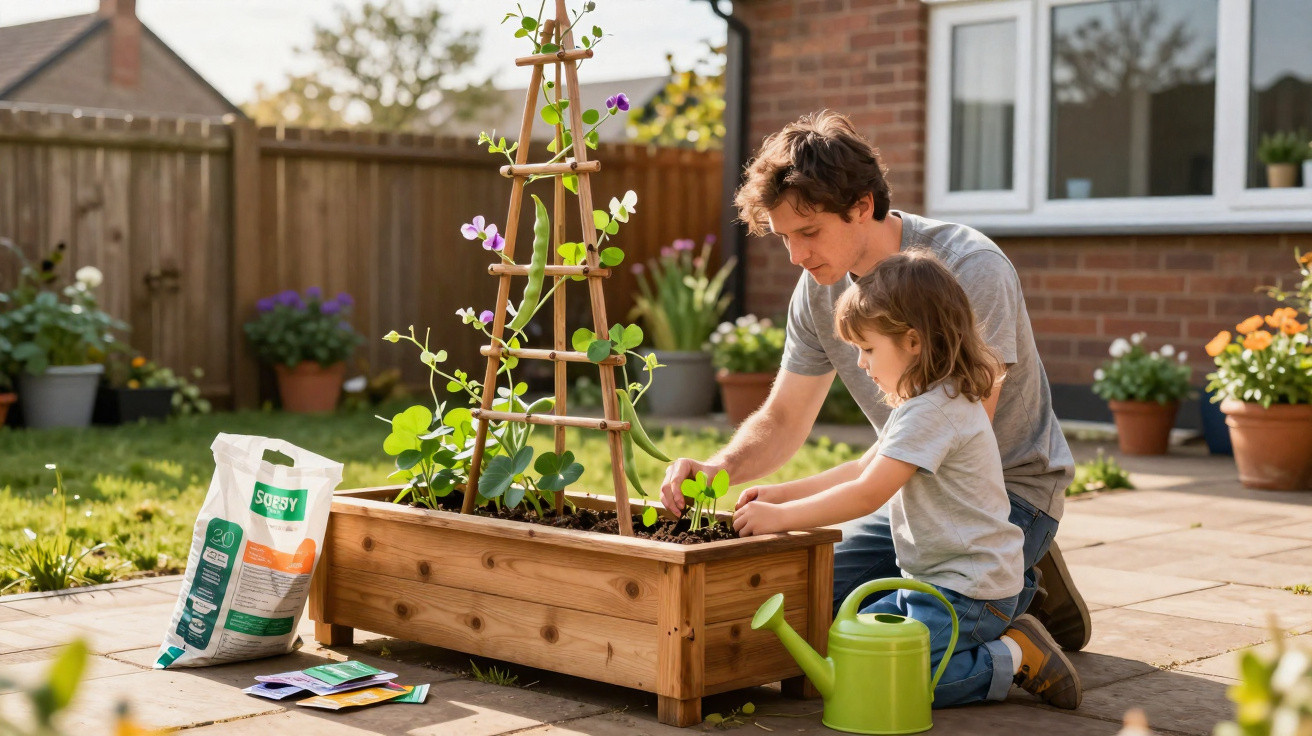
With its new planter with trellis, Lidl is bringing into stores a garden piece that tackles several common small-space headaches at once: too little greenery, limited privacy and hardly any room to spare. It’s particularly relevant for anyone planning to spend spring on a balcony, terrace or in a tiny garden - without sinking a fortune into bulky outdoor furniture.
What’s behind the Lidl planter trend
From 12 March, Lidl’s UK stores will be stocking the “Parkside Planter With Trellis” for £29.99. The idea is straightforward but smart: a sturdy wooden planter box at the bottom for compost and plants, topped with a firm trellis that doubles as decoration and a privacy screen.
A single piece gives you space for herbs, flowers and climbing plants - turning bare areas into a green wall.
The planter holds around 20 litres of soil and supports up to 30 kilograms. That means it’s not just for a few scattered blooms, but also for fuller, denser planting. Measuring 60 centimetres wide, 28 centimetres deep and roughly 1 metre tall, it makes a visual impact without swallowing half your balcony.
The wood comes pre-treated with a water-based stain and, according to the retailer, is weather-resistant and UV-resistant. There’s also a fitted plastic liner to protect the timber from constant moisture and make replanting less messy. Screws and assembly instructions are included, so - in typical discounter fashion - it’s designed to be up and running quickly.
Why small gardens benefit most
Many city homes offer only a narrow balcony or a tiny terrace. Traditional raised beds and large planters can feel outsized in those settings. This Lidl planter follows a different logic: minimal footprint, more height.
- Very little floor space needed thanks to the 28 cm depth
- Vertical greening instead of pots scattered around
- The trellis creates privacy without putting up a solid fence
- Easy to reposition because it isn’t a fixed, permanently bolted-in structure
It’s especially useful for renters who aren’t allowed to alter balcony railings or the building façade. Rather than installing a permanent screening panel, a movable option does the job - and can simply come with you when you move. If you live on a busy road, fast-growing climbers on the trellis can soften the view of traffic and concrete.
Family factor: a mini bed for small hands
This planter isn’t only about looks - it can also be a gentle way to introduce children to gardening. Because it’s raised, children don’t have to kneel on the ground, yet they can still easily reach the soil, watering can and leaves.
A small bed of their own gives children a sense of responsibility - without the garden ending up looking like a freshly dug building site.
Parents can create a clear division of space: the lower section as a “children’s area” with quick growers, and the upper trellis trained with a mix of fragrant or vividly coloured climbers. It reduces stress because the whole lawn or flowerbed doesn’t become an experimental zone.
Examples of what children can plant in it
- Nasturtium: easy to sow, edible flowers, strong colours
- Sugar snap peas: climb well and provide small snacks straight off the stem
- Mini sunflowers: bold blooms and a clear, rewarding growth journey
- Cherry tomatoes: ideal when there isn’t room for a full-sized bed
Many parents are surprised by the psychological effect: children tend to water far more reliably when “their” bed is clearly defined. The trellis strengthens that feeling because the project resembles a small stage where changes become visible week by week.
How to get the maximum from 20 litres of soil
With limited space in the planter box, it pays to plan. Rather than planting at random, a considered blend of herbs, flowering plants and climbers works best.
| Plant type | Best for | Benefit in the Lidl planter |
|---|---|---|
| Rosemary, thyme | Sunny balconies | Stay fairly compact, strongly scented, adds value in the kitchen |
| Mint (used in a pot within the planter) | Partial shade | Grows vigorously but stays contained, great base for iced tea |
| Nasturtium | Children’s and family projects | Climbs and trails, edible flowers, colourful privacy screen |
| Sweet peas, clematis, small climbing rose | Longer-term greenery | Makes full use of the trellis, looks like a living wall |
For the trellis, climbers that produce foliage relatively quickly are a good match. Sweet peas, clematis, nasturtium or climbing beans can soon cover the wooden frame with greenery. If you prefer perennials, you’ll need appropriate winter protection - for instance an insulating layer of mulch, or horticultural fleece on very frosty days.
Care: low effort, clear routines
Even though the timber is pre-treated, it’s worth thinking about long-term maintenance. Regular watering, occasional feeding and re-staining the wood every one to two years can significantly extend its lifespan.
Simple rituals - like a fixed evening “watering window” - keep plants healthier for longer and stop the planter becoming dried-out decoration.
Practical everyday tips:
- Use a saucer or felt pads so the base of the planter isn’t left standing in puddles.
- In summer, water in the morning or late evening so it doesn’t evaporate immediately.
- Apply liquid feed at a low dose every two to three weeks, particularly for heavy feeders such as tomatoes.
- Remove spent flowers regularly so the plant puts energy into new buds.
If you’re short on time, mix water-retaining granules into the compost or add a thin layer of expanded clay beneath the soil. That creates a small water buffer and forgives the occasional missed watering.
Privacy hack: turning the trellis into a green screen
Many people buy expensive plastic or fabric privacy screens first and only think about plants afterwards. This Lidl planter flips that approach: privacy comes from growth, not from materials.
A realistic scenario: a roof terrace sits directly next to a neighbour’s flat, and conversations and barbecues can be overheard from five metres away. Instead of lining the entire balustrade with bulky items, a row of trellis planters along the critical edge can be enough. Within one to two months, climbing plants can form a semi-transparent, living barrier. It won’t block sound much, but it does disrupt sightlines noticeably.
In high summer, there’s an added benefit: dense foliage creates light shade that can cool the area behind it a little. Air still moves more freely than it would behind a rigid plastic screen, which can make small balconies feel more comfortable.
Risks many people underestimate
As handy as the design is, a few points deserve attention. The stated load capacity is 30 kilograms - and soil, plants and stored water can reach that range surprisingly quickly.
- Balcony load limits: in older buildings, it’s wiser to spread weight out rather than concentrating everything by a corner of the railing.
- Wind load: with a trellis, the structure can behave like a small sail. In exposed spots, securing it to a wall or railing can help.
- Water drainage: drainage holes in the liner shouldn’t end directly over the balcony edge, otherwise water may drip onto a neighbour.
- Pests: densely planted areas can attract aphids or slugs at times; regular checks help prevent outbreaks.
By taking these points seriously, you can avoid unnecessary friction with neighbours and building management. In blocks of flats in particular, it’s worth checking house rules briefly to prevent disputes about dripping water or weight on the railing.
How the planter fits different living situations
Depending on your lifestyle, the same product can serve different purposes. In a single-person flat it might become a stylish statement piece with fragrant jasmine. In a family home it can function as a teaching project and a privacy screen towards neighbours. In a terraced house garden, it can extend the terrace visually and soften the transition to the lawn.
One workable set-up is placing two or three planters in a row behind the outdoor dining table. After a few weeks, you feel as though you’re sitting in a green nook. Guests no longer look straight onto wheelie bins or a car park, but onto leaves, flowers and, now and then, a bee passing by.
Why products like this have trend potential
The strong interest in compact, flexible gardening solutions is closely tied to city living: limited outdoor space, renting rather than owning, and tighter budgets. A planter with trellis hits that nerve because it bundles several functions into one item without feeling complicated.
Retailers also benefit from a psychological effect: the price feels attainable, the use is easy to grasp, and the results are visible - often within a few weeks. That combination is exactly what helps products spread quickly on social media. A before-and-after photo of a grey balcony transformed into a green corner is effectively ready-made advertising.
For anyone wanting more greenery, more structure and a bit more privacy on their balcony this spring with manageable effort, the Lidl planter can be a very clear starting point. The rest comes from compost, water, a few seeds - and the patience to watch things grow.


Comments
No comments yet. Be the first to comment!
Leave a Comment