
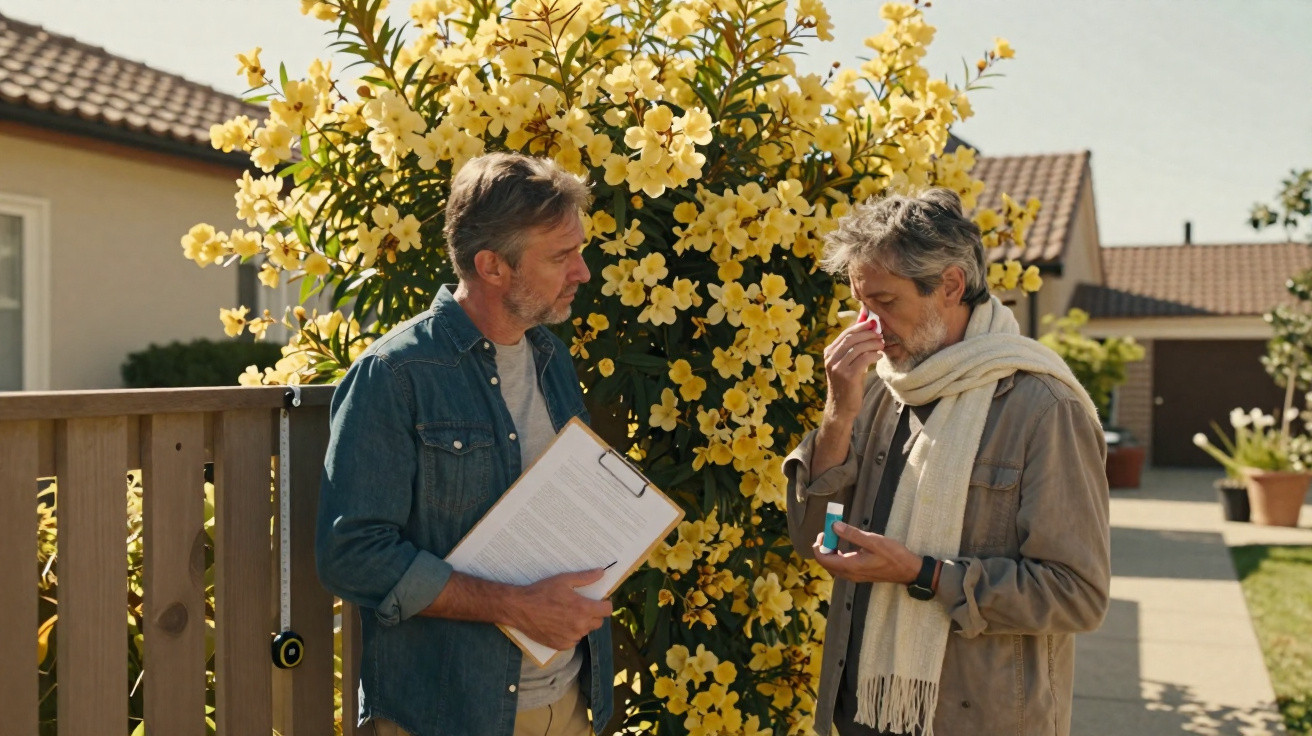
If you’ve planted a tall hedge to screen off your patio, you’re probably thinking about peace and privacy - not court papers and legislation. Yet when pollen from your own garden triggers allergies or asthma next door, that leafy calm can quickly turn into a real legal dispute, potentially involving pruning orders, removal, fines and compensation.
When a hedge makes someone ill: how allergies become a neighbour dispute
Millions of people across Europe live with hay fever, allergic asthma or persistent rhinitis. Many are particularly reactive to pollen from trees, shrubs and hedge plants.
Common choices include cherry laurel hedges, thuja or cypress. A number of these species release exceptionally fine pollen that can travel well beyond the boundary of the garden where it was grown. If those particles enter a neighbouring home through open windows or ventilation gaps, they can significantly aggravate existing symptoms.
A single hedge planted as one uniform species can create a particularly high concentration of allergens right outside a home - exactly where people live and breathe.
If the neighbour develops constant coughing, a streaming nose or shortness of breath, the allegation can escalate fast: “Your hedge is making me ill.” What may sound like an exaggeration can, in fact, be supported medically - for example through allergy testing and a pollen-symptom diary kept with a specialist.
Legal foundations: distances, height and consideration for health
Across many European legal systems, the underlying idea is similar: ownership is not unlimited where it infringes other people’s rights. That applies not only to noise or smoke, but also to plants whose pollen has a substantial impact on a neighbouring property.
Typical distance and height rules for hedges
Where there are no specific local or regional rules, courts often look to established distance conventions. Common principles include:
- Hedges or trees over 2 metres tall: minimum distance of 2 metres from the boundary
- Plants up to 2 metres tall: minimum distance of 0.5 metre from the boundary
- Height is measured from ground level to the highest point
- Distance is measured from the centre of the trunk or main stem
If these distances are not met, a neighbour may be able to demand that the plants are reduced in size or removed. In some places, local custom or long-established planting can create exceptions - but what matters most is always the specific facts on the ground.
Health outweighs ownership: when a hedge becomes unreasonable
In many disputes the key question is this: at what point does the health impact become so serious that it is no longer legally acceptable? Lawyers often describe this as an “unlawful interference with the neighbour’s sphere” or a situation that has moved beyond a “normal neighbour relationship”.
Typical factors include:
- Severity of symptoms (for example, serious asthma attacks rather than mild sneezing)
- How long and how often symptoms occur during the pollen season
- Evidence showing a link between the hedge and the health problems
- Whether the burden can be reduced in a straightforward way (pruning, changing plants)
Where a neighbour’s health is demonstrably affected, the right to plant your land entirely according to personal taste comes to an end.
What the neighbour may ask for - and what they may not
Even if someone believes a hedge is harming their health, they cannot simply take matters into their own hands with a saw. A proper legal approach typically follows several steps.
Step 1: Conversation and a written request
Ideally, it starts with a calm discussion. Garden owners often have no idea their planting is causing trouble. Sometimes trimming particular branches or removing part of the hedge resolves the issue.
If that goes nowhere, the next move is often a formal letter, commonly sent by recorded delivery. It will usually refer to the relevant distance rules and the health impact, and it will set a deadline for removal or pruning.
Step 2: Expert reports and medical evidence
To support their position, many affected neighbours have their symptoms documented by an allergist. This can include, for example:
- Allergy tests for the relevant pollen
- Confirmation of asthma or chronic rhinitis
- Records showing when symptoms occur and how severe they are
Where the facts are contested, a court will often appoint an independent expert to assess whether the hedge in question is, to a legally significant extent, bringing pollen onto the neighbouring property.
If the owner refuses: court action, coercive fines and compensation
If the hedge owner ignores requests and deadlines, the matter can quickly end up in the competent court. The court will look at plant height and distance as well as the health consequences.
Possible court orders
Courts have a wide range of options. For example, they may:
- cap the hedge at a specific height
- require a minimum distance from the boundary
- order the removal of particular plants that are especially problematic
- in serious cases, require complete removal
- require replacement with less allergenic species
To prevent an owner from simply waiting it out, judgments are often backed by a so-called coercive payment. In practice, this means a sum of money accrues for every day the order is not complied with.
Anyone who digs their heels in risks not only losing the hedge, but also substantial additional costs through ongoing coercive payments and compensation.
Compensation for health impacts
If the court concludes that the hedge is responsible for a proven deterioration in health, payments to the affected neighbour may also be possible. They may claim, for instance, the cost of medication and medical appointments, or even damages for pain and suffering.
Which plants are particularly sensitive - and what alternatives exist
Not every hedge triggers allergies to the same degree. Some species are considered especially problematic, while others are often better tolerated.
| Plant | Allergy risk | Note |
|---|---|---|
| Cypress / thuja | high | fine pollen that can travel long distances |
| Cherry laurel | medium | popular privacy screen, not suitable for all allergy sufferers |
| Hornbeam | medium | pollen is relevant, but often still acceptable |
| Privet | medium to high | can be strongly scented and irritate some people |
| Hedge rose / mixed hedge | rather low | often better tolerated and supports biodiversity |
If you are planting from scratch, it is worth thinking beyond appearance and maintenance and considering potential allergies too. A mixed hedge made up of several, less allergenic species can spread the pollen load and is usually much easier for neighbours to live with.
Practical tips to avoid a dispute from the outset
To ensure the dream of a green privacy screen doesn’t become an ongoing argument, a few simple principles help:
- have a quick word with your immediate neighbours before planting
- plan from the start to comply with boundary distances and height limits
- if you know allergy sufferers live nearby, avoid high-risk species
- trim hedges regularly to keep their height under control
- if complaints arise, talk early and offer workable compromises
Many disagreements only intensify because no one speaks up for years and resentment builds. Acting early - and being willing, occasionally, to sacrifice a little screening - can save money, stress and time in court.
Why pollen can be so problematic
Pollen is simply the fine plant material used for reproduction. For allergy sufferers, however, the immune system misidentifies it as a harmful intruder and overreacts.
That reaction causes typical symptoms such as:
- sneezing fits and a runny nose
- itching in the eyes, nose and throat
- coughing and breathing difficulties
- tiredness and problems concentrating
People who already have asthma can, during heavy pollen periods, experience serious attacks that may be life-threatening in extreme cases. This health dimension also matters legally: the more severe the impact, the more likely a court is to intervene in favour of the affected neighbour.
Takeaway for garden owners: a hedge is fine - with sense and consideration
A hedge remains a popular way to create privacy and a cosy garden feel. If you respect boundary distances, any height restrictions and your neighbours’ health, you are unlikely to run into trouble. Problems tend to arise when allergies are dismissed, conversations are shut down and legal guidance is ignored.
Those who plan their green screen carefully, choose less allergenic plants and respond openly to concerns are most likely to keep everything they want: privacy, good neighbourly relations - and the hedge.

Comments
No comments yet. Be the first to comment!
Leave a Comment