
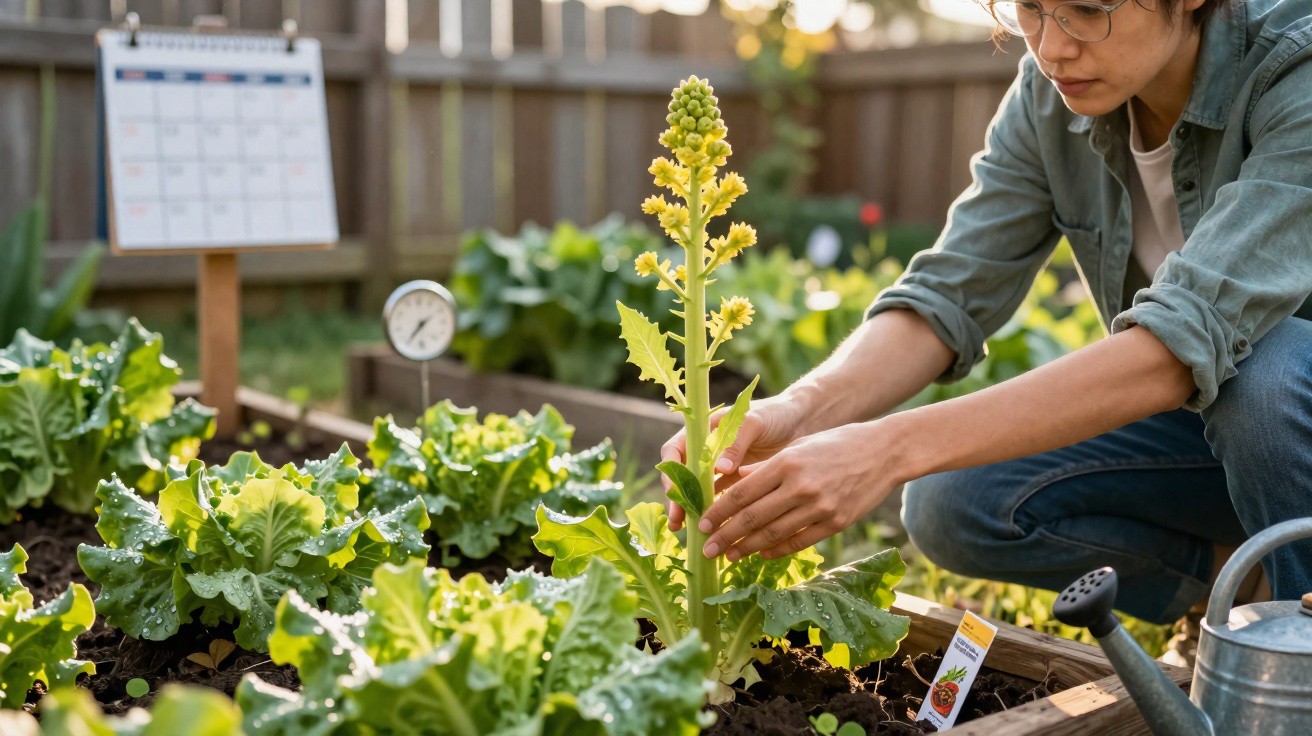
The lettuce is looking at you as if you’ve let it down. The day before yesterday it was still a neat, compact rosette; today it’s suddenly all long stems, tiny leaves and buds that look more like a roadside weed than crisp head lettuce. You’re standing in the garden, watering for the third time, with that quiet sense of defeat only hobby gardeners truly understand. After all, you did everything “properly” - or so you thought. And then the lettuce shoots upwards, as if someone has fired an invisible starting pistol. Meanwhile, your neighbour is still picking juicy green heads, and your beds look like a trial plot for ornamental thistles. Something is happening here that doesn’t match what you expected. The only question is: what, exactly?
When lettuce suddenly decides it wants to be asparagus
The first time you watch a seemingly perfect lettuce head bolt, it’s easy to assume disease or pests. The leaves turn firmer and more bitter, losing their soft, delicate texture. Instead of staying as a round rosette, a tall stem forms and grows a little more every day. It can feel as though the plant is slipping out of your meal plan and following a plan of its own. In reality, that’s precisely what it’s doing. Your lettuce is deciding: “Enough leaf production - it’s time for flowers and seed.”
Sometimes it happens in a matter of days. You were in the garden at the weekend and everything looked fine. Five days later you return and wonder whether someone has secretly swapped your plants. We all know that moment: you take the first bite of home-grown lettuce - and it tastes unpleasantly bitter. That’s not a catastrophe, but it is a very clear signal. Your lettuce is already thinking about reproduction, not dinner. And in that respect, it’s ahead of you.
From a biological point of view, bolting is simply the shift into the reproductive phase. Lettuce is one of those plants that reacts strongly to day length and temperature. Once certain thresholds are crossed - usually too much warmth combined with long days - the plant switches gears. A leaf-making machine becomes a flower producer. That makes perfect sense for the plant, but rather less for us gardeners. We want leaves for as long as possible; the plant wants to secure its genes as quickly as it can. That clash of interests plays out right in your bed, unseen, until that long, stubborn stem suddenly appears.
Heat, stress, timing: why your lettuce plants really bolt
Heat is the most common trigger for bolting lettuce. Classic “summer lettuce” in July, baking in full midday sun, sounds idyllic - but for many varieties it’s a minor nightmare. From roughly 22–25 °C onwards, especially alongside long, bright days, lettuce receives a clear message: “Things are getting serious - prepare to flower.” Watering also matters a great deal. If the soil repeatedly dries out, the plant experiences stress. And stress, from the plant’s perspective, means: better make seed quickly before conditions get worse. That combination is exactly what can send your plants skyward like rockets.
A typical scenario goes like this: you sow in May because all the neighbours are doing it too. The seedlings grow slowly at first; then an early heatwave arrives - perhaps with a long weekend when nobody waters. You come back, drench everything with a guilty conscience, and not long afterwards the centres of the plants start to stretch. Flower buds appear and the leaves toughen up. If you then wait “until the heads get bigger”, you miss the moment entirely. Lettuce is surprisingly unforgiving once it has decided it’s time to grow up.
Spacing is another factor. When plants are too close together, they compete for light, water and nutrients. Lettuce responds with a kind of upward escape: it stretches. This is especially common in beds where you “quickly” set out too many young plants because they all look so weak and small. Let’s be honest: hardly anyone thins every lettuce row strictly according to the packet. Later on, it comes back to bite. Plants enter stress earlier, heat up faster, get less air movement - and seize any opportunity to sprint towards flowering. The frustration isn’t caused by “bad hands”, but by a predictable plant response.
How to slow down your lettuce’s internal turbo
The most effective lever against bolting lettuce is timing. Many varieties are classic spring or autumn crops. They thrive on cool nights, moderate days and steady moisture. If you want lettuce in midsummer, you either need heat-tolerant varieties or you need to use a simple trick: choose a part-shaded position. Morning sun with afternoon shade can noticeably lower temperatures in the bed. A thin mulch layer of grass clippings or straw helps keep the soil cooler and evenly moist. That keeps the plant in “leaf mode” for longer, rather than tipping into “flower mode”. And you’ll harvest crisp heads for longer - instead of tall stems.
It’s also worth being more selective at sowing time. Many seed packets indicate (in small print) whether a variety tends to bolt or not. If you sow in June or July, you’ll do far better with types specifically labelled for summer and good bolt resistance. Lettuce for a hot balcony or patio can be planted into larger pots with a light-coloured surface that won’t overheat as easily. In containers, it’s also simpler to keep watering regular. Another point that’s often underestimated: harvest earlier. Waiting for the perfect, swollen “picture-book head” often ends with nothing but bitter leaves. It’s better to cut a touch too soon than a day too late.
A bit of calm can help as well. Not every bolted lettuce is a total write-off. The younger, outer leaves are often still usable even if the centre is starting to elongate. And if you enjoy experimenting, you can leave plants in place and collect seed. In doing so, the plants show you very clearly how they “think”. A gardener I know likes to say:
“Lettuce doesn’t bolt to annoy you. It bolts because you’re telling it: summer is short - hurry up.”
- Harvest early instead of waiting for XXL heads
- Use cool spells for sowing and planting
- Choose varieties advertised for bolt resistance
- Keep the soil evenly moist and soften heat spikes
- Use part shade and mulch as a natural air-conditioning system
What your lettuce is really telling you about your garden
When lettuce bolts, you’re not just looking at a “failed” plant. You’re seeing an honest little comment on the conditions in your bed. Too much heat, too little water, the wrong timing - all of that is written into that long stem. If you pay attention, you can learn more about your garden from these near-misses than from any perfect harvest. You suddenly get a feel for which corner turns into a frying pan by June, and where moisture lasts the longest. Frustration can turn into curiosity.
Many hobby gardeners notice after one or two “lettuce disasters” that they need to adjust their approach. More sowings at shorter intervals rather than planting everything at once. Trialling more varieties instead of clinging to one favourite. Perhaps growing lettuce in boxes that can be moved on extremely hot days. Over time, “I can’t do this” becomes a quiet confidence: the plant isn’t taking it personally - it’s simply following its programming. And you can learn to work with that programming rather than fighting it.
In the end, every bolted lettuce tells a small story about timing, weather and attention. Sometimes it’s about too much ambition; sometimes it’s about too little time. If you read those stories as feedback rather than failure, your garden will be different next year. Maybe not perfect - but more alive, better thought through, and closer to what your patch of ground can genuinely deliver. And that’s where the moment begins when you take a bite from a head that isn’t bitter, but tastes like a quiet, well-practised conversation between you and your bed.
| Key point | Detail | Benefit for the reader |
|---|---|---|
| Heat and day length | High temperatures and long days trigger the switch to flower formation | Understand when lettuce is most likely to bolt and how to avoid those periods |
| Stress factors | Irregular watering, tight spacing and nutrient shortage encourage bolting | Identify practical day-to-day levers and adjust them |
| Variety and site choice | Bolt-resistant varieties, part shade and mulch extend the harvest window | Practical tips to keep harvesting crisp lettuce even in summer |
FAQ:
- Why does my lettuce suddenly taste bitter? The bitterness develops when lettuce moves into the flowering phase. The plant produces more bitter compounds to protect itself from being eaten - a clear sign it is bolting and no longer behaving purely as a leaf crop.
- Can I still eat bolted lettuce? The outer, younger leaves are often still usable, especially finely shredded in a mixed salad. The inner area with the stem is usually tough and very bitter, so it’s more often discarded or put on the compost.
- How do I stop my lettuce bolting in summer? Choose bolt-resistant summer varieties, use part-shaded spots, keep moisture consistent and harvest a little earlier. A mulch layer helps keep the soil cooler.
- Is head lettuce more prone to bolting than pick-and-come-again lettuce? Many head lettuces react more sensitively to heat and day length. Pick-and-come-again and cut-and-come-again lettuces often stay in the leaf stage longer, suit staggered sowings, and are usually more reliable in summer.
- Is it worth saving seed from bolted lettuce? Yes, especially with open-pollinated varieties. If you let a few plants flower fully and dry, you can collect your own seed. Over time, it can even adapt better to the conditions in your own garden.
Comments
No comments yet. Be the first to comment!
Leave a Comment