
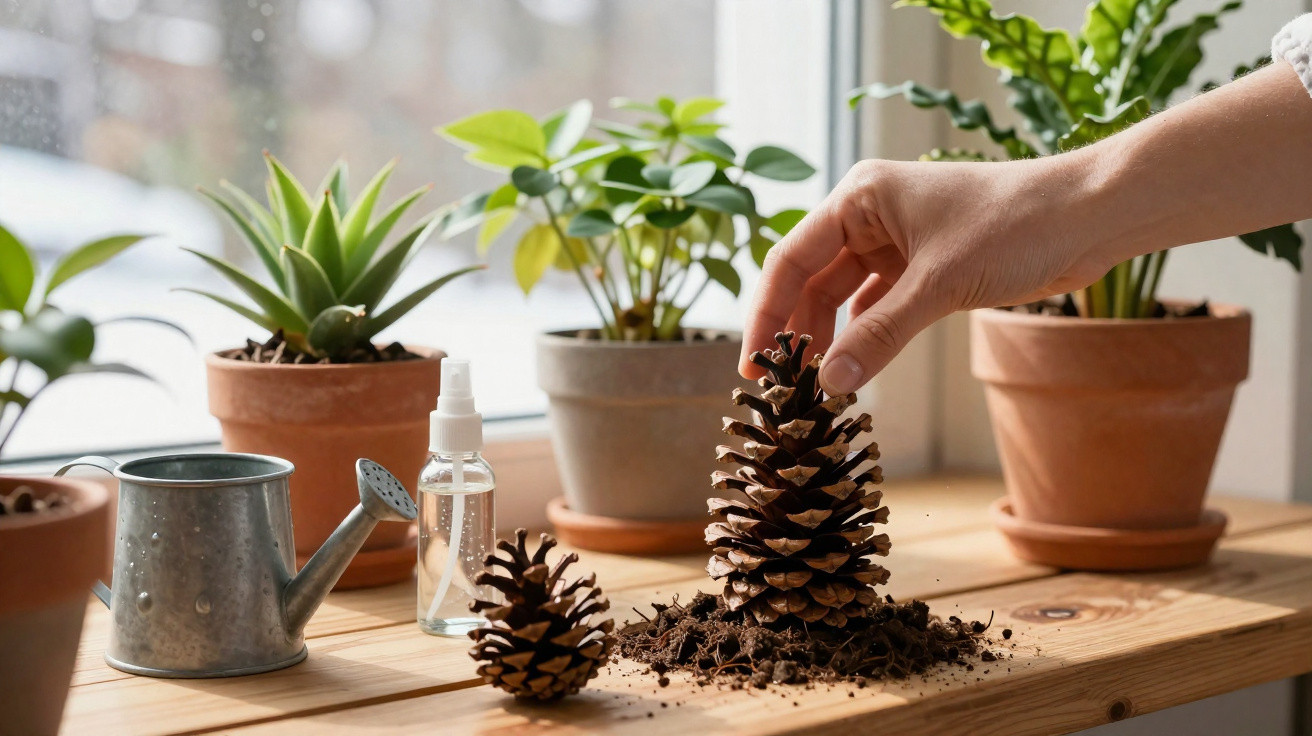
Central heating, shut windows, poorly ventilated compost: during the colder months, living rooms develop conditions that put roots under serious strain. That’s why an old piece of gardening wisdom is making a return - a single fir cone placed on the soil can make the difference between a plant thriving or dying in its pot.
Why houseplants die so quickly in winter
As soon as there’s frost outdoors, the heating goes on indoors. Comfortable for people, but a real test for potted plants. Warm, dry air rapidly dries the top of the compost. It looks as though the plant is desperate for a drink - and that’s exactly where many people go wrong.
So the watering can comes out more often. The surface may appear dry, but underneath, water can still be sitting there. Inside the pot, a damp, almost airless layer forms where roots can barely breathe. The result is a risky combination of waterlogging and oxygen deprivation.
On top of that, windows often stay closed in winter. With little airflow over the soil, moisture evaporates more slowly. The surface of the growing medium stays clammy for longer - ideal conditions for fungi and mould spores.
Waterlogging combined with poor air exchange is the most common reason for rotting roots in houseplants during winter.
The plant can then look as if it has dried out: leaves turn yellow, droop limply, and drop. Many people read this as a lack of water and add even more - a vicious circle that often ends with the plant being lost completely.
The fir cone as a natural “moisture brake”
The fix is, quite literally, found in the woods: an ordinary fir cone. Its woody structure draws in water and releases it again - professionals describe this as hygroscopic behaviour. In plain terms, the cone acts like a small, reusable sponge.
Placed on the compost in a plant pot, it absorbs excess moisture from the top layer. This helps keep the area around the root collar - the junction between stem and roots - drier and better aerated.
The fir cone stops the top of the compost from feeling constantly wet and clammy - exactly the area where mould usually appears first.
The cone also provides a gentle barrier: when you water, the stream hits the cone and disperses, so the compost is less likely to compact and turn sludgy. The surface stays looser, the soil’s microstructure improves, and oxygen reaches fine root tips more easily.
A built-in moisture gauge: how the cone “talks” to you
Perhaps the most interesting part is that a fir cone visibly responds to humidity. It becomes a kind of analogue moisture sensor right there in the pot.
Open scales: the plant can breathe
When the cone’s scales are spread wide, the surrounding area is on the dry side. Air can circulate freely, and the surface of the compost isn’t overly wet. For most common houseplants, this is an excellent state.
At this point, depending on the species, you can water again - deliberately, not “just in case”. If you tend to overwater, this visual cue is a helpful guide.
Closed cone: red alert in the pot
As soon as the cone draws in noticeably and looks almost smooth, moisture levels are high. The scales close because they absorb water from the air and the immediate surroundings.
A closed cone means: stop - no watering can! The compost is still too wet.
In this situation, the pot mainly needs one thing: time. If you can, move the plant to a slightly brighter spot, encourage a bit of air movement, and wait until the cone opens again. Only then does more water make sense.
How to bring a cone from the woods to your windowsill
If you go for a walk, you can collect the “material” for free: parks, woods, and even urban edges usually have plenty of fir cones. To make sure they genuinely help your plants, do a quick check first.
- Only pick up cones that are dry and well opened
- Avoid any with a visible resin layer or sticky patches
- Give the cone a quick shake to dislodge insects
- Store it at home for a few days somewhere warm and dry
- Before use, brush off any coarse dirt
Then simply place the cone on the compost, ideally close to the stem without crowding the plant. With large pots or long planters, using several cones can be useful so you can keep an eye on different sections.
Which plants benefit most from the trick
In general, a cone is most useful for plants that react badly to waterlogging - which includes a surprising number of living-room favourites.
| Plant type | Reaction to waterlogging |
|---|---|
| Ficus, rubber plant | Quickly drops leaves |
| Monstera, Philodendron | Leaf spots, rotting roots |
| Succulents, cacti | Base rots, plant topples over |
| Orchids in potting mix | Root rot, hardly any new flowers |
| Herbs on a kitchen windowsill | Mould on the surface, stunted growth |
Especially with sensitive species such as succulents or orchids, a cone can prevent you from accidentally “watering them to death”. If you keep lots of plants in an urban-jungle style collection, you also gain an early-warning system: several closed cones at once make it obvious that your overall watering routine is too generous.
A natural shield against fungi and mould
When the surface of the compost is wet less often, fungal organisms have far fewer opportunities. Those familiar white coatings on potting soil are usually a sign of persistently damp, poorly ventilated growing media.
A cone doesn’t just absorb water - it also creates tiny air channels around itself. That small change is enough to shift the microclimate at the surface. Fungi need long, uninterrupted damp periods; that’s precisely what the cone helps to shorten.
As a result, chemical products from garden centres can often be avoided entirely. For households with children or pets, that’s a clear advantage, because fewer treatments also mean less risk if someone comes into contact with soil or plants.
Common winter watering mistakes - and how the cone reveals them
Many winter problems develop gradually. A glance at the cone can help you spot patterns early:
- Watering out of habit: if you water rigidly “every Saturday”, permanently closed cones show the interval is too short.
- Too little light: in a very dim spot, compost stays wet for longer. The cone closes and barely opens again - a sign to rethink the location.
- The wrong pot size: in an oversized pot, lots of compost remains unrooted and wet. Several closed cones are a clear hint.
If you respond to these signals, you’ll understand your plants far better and adjust watering to real conditions, rather than relying on guesswork or fixed rules.
Other natural helpers and sensible combinations
A cone won’t replace every other aid, but it works well alongside them. Useful companions include:
- Saucers where excess water is poured away after 15 minutes
- Humidifiers or bowls of water on radiators, so plants get moisture more from the air than from the soil
- Coarse sand or expanded clay on the top layer of compost to help the surface dry faster
If you grow very sensitive plants, you can push an inexpensive moisture meter into the compost and use the cone as a visual extra. Over time, you’ll build a reliable feel for how different plants behave in your own home.
Why this small woodland find greatly improves survival
Many houseplants don’t die because their owners neglect them, but because they try too hard. The fir cone tempers that enthusiasm. It indicates when there’s already enough water in the system and helps keep the compost surface drier and healthier.
If you set one or more cones on your pots through winter, you’ll often reach spring with noticeably stronger plants. New leaves grow more robustly, flower buds develop with fewer issues, and the typical living-room “winter slump” often fails to appear.
So on your next walk, it’s worth looking out for more than pretty twigs or moss. A few unassuming fir cones can become remarkably reliable little guardians for your houseplant collection.
Comments
No comments yet. Be the first to comment!
Leave a Comment