
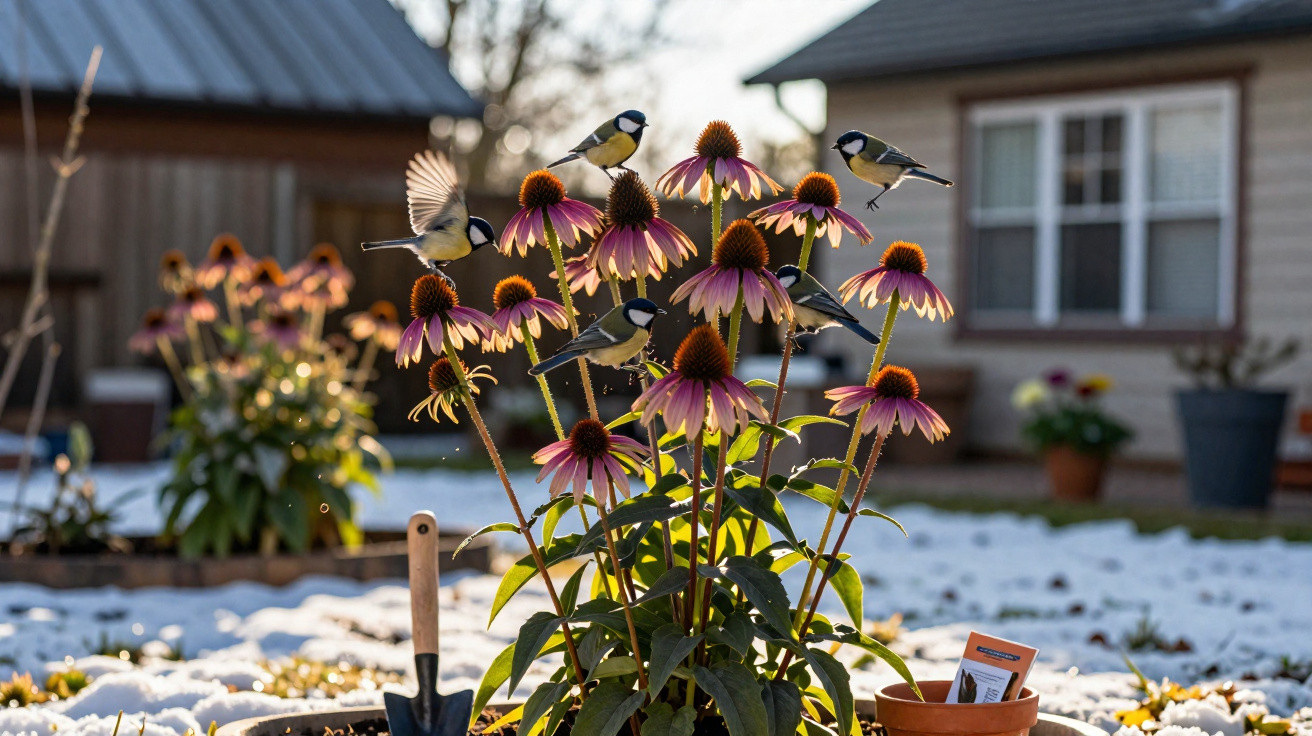
Many garden owners diligently top up their bird feeders in winter, then wonder why only the occasional bird appears. The real lever sits much earlier in the year: March and April. If you plant one particular, almost forgotten perennial now, you set up a natural bird buffet that lasts right through winter - without constant refilling and cleaning.
Why a “natural bird buffet” makes such a difference
Bird feeders have their place, no question. But they take time, cost money, and can even create issues in the first place: spoiled seed, germs, and rats drawn in by spillages. A bed planted with the right species, on the other hand, works like a self-service restaurant that largely runs itself.
“Whoever plants smartly in spring saves themselves many worries in winter - and gets a lively bird theatre right outside the window.”
The concept is simple: instead of scattering bagged seed alone, you offer birds structurally rich plants that provide seed, shelter and safe perches. One perennial stands out because it meets several needs of typical garden birds at once - from high-energy food right through to a secure landing spot.
The secret helper: Purple coneflower (Echinacea purpurea), a tough perennial with energy-rich seeds
The plant in question is Purple coneflower, botanically Echinacea purpurea. Many people recognise it from pharmacy products, but walk straight past it in the garden centre. From the perspective of tits and other seed-eaters, that’s a missed opportunity.
The slightly domed centre of the flower turns, after flowering, into a firm, dark cone. Packed into it are countless small nutlets known as achenes. Each one contains an oil-rich seed, loaded with fat and protein. That exact mix is what birds need to maintain their body temperature when frost bites.
- High fat content: helps combat the cold
- Protein: important for muscles and feather maintenance
- Stiff, sturdy stems: ideal perches at a safe height
- Long winter presence: a food source when everything else is bare
Typical visitors to the seed heads include, for example:
- Blue tits and great tits
- Other small songbirds such as finch species
- The occasional sparrow, depending on region and the specific garden setting
The perfect timing: why March is so crucial
Purple coneflower doesn’t like establishing in soil that is too wet, nor does it cope well with getting started in excessive heat. That’s why the weeks from mid-March to the end of April are considered ideal. The ground is already slightly warmed, while still evenly moist. Young roots can spread steadily before the first real burst of heat arrives.
If you plant later in the year, the perennial often needs a lot of watering and recovers less well from hot spells. If you begin in March, you can often expect the first bird families to be clambering around the dry seed heads in the very first winter.
“March and April are the months in which you decide how lively your garden will feel next winter.”
Location, soil, number of plants: how to set up the tit buffet properly
The best spot in the garden
This perennial thrives in full sun. Aim for at least six hours of direct light per day. Ideally, choose a position you can easily see from a window or the patio - after all, you’ll want to enjoy the bird activity later.
Suitable spots include, for instance:
- Along the edge of a perennial border in front of hedges or ornamental shrubs
- In a loose group within the lawn
- In a sunny front-garden bed close to the house
How to prepare the soil
It doesn’t demand pampering, but it is sensitive to waterlogging. Free-draining soil matters more than exceptionally rich soil.
- Loosen the soil to around 20 cm deep.
- In heavy, clay soils, mix in some coarse sand plus grit or gravel.
- Dip the root ball in water until no more air bubbles rise.
- Plant at the same height as it sat in the pot.
- Water in well so the soil settles snugly around the roots.
As a rule of thumb, allow 40–50 cm between plants. For a striking “bird strip”, you can plant up to five perennials per square metre. The tighter the planting, the more seed heads you’ll have available in winter.
How to care for the perennial - and why you should leave spent flowers standing
In the first summer, water only during prolonged dry periods. Once established, Purple coneflower is notably resilient and can cope with hot spells.
One point matters in particular: many hobby gardeners automatically cut down faded stems to keep things “tidy”. This is exactly where valuable bird food is thrown away. The dry heads are the real treasure.
“If you rein in the scissors and your love of tidiness in autumn, you give birds a bursting food source for months.”
So leave the seed heads in place until late winter. Birds will take what they need. Only when winter is easing - or in very early spring - should you cut the stems down close to the ground, so new shoots can get light and air.
Natural seeds vs bird feeders: what truly benefits birds
Bird conservation organisations have been pointing out for years that artificial feeding stations are popular, but not entirely without drawbacks. Where many birds feed in a small area, disease can spread more quickly. Damp seed can go mouldy, and dirty feeders can become a source of germs.
By using seed-rich perennials in the border, you sidestep a large part of these risks:
- Birds spread out across several plants instead of crowding together.
- Seeds stay dry in the open air and rarely spoil.
- Less food ends up on the ground - making it harder for rodents.
- The garden keeps a natural structure that also benefits insects.
Feeders can still be a useful addition, especially during longer periods of hard frost. With a perennial bed as your foundation, however, you create a robust baseline food supply that is much closer to the animals’ natural needs.
Extra benefits for people: flowers, insects and health
Purple coneflower isn’t only attractive to tits. It brings plenty of advantages for the gardener too.
- Attractive flowers: From summer into autumn, the large pink-to-purple blooms add strong colour.
- Insect magnet: Bees, bumblebees and butterflies find ample nectar and pollen.
- Longevity: In the right place, the perennial can stay in the same spot for ten years or longer.
- Medicinal tradition: The plant has a role in herbal medicine, even if in the garden its ornamental and nature value is what counts most.
In wildlife-friendly or insect-conscious gardens in particular, it fits perfectly. It combines ornamental appeal, biodiversity and practical value for birds.
How to combine the perennial with other bird magnets
The effect is even stronger if you mix Purple coneflower with other seed-rich perennials and grasses. That way you create a year-round feeding area with seeds ripening at different times.
Good choices include, for example:
- Coneflower types in other colours
- Tall asters with late blooms
- Fine-textured grasses such as switchgrass or fountain grass
- Native wild perennials that produce plenty of seed heads
Plantings like these provide more than food; they also offer cover. Birds feel safer when they can quickly dive into dense structures of grasses and perennials if danger appears.
Practical tips for beginners without green fingers
If you’ve only ever had lawn and a few container plants, start small. Even a strip of 2–3 square metres is enough to see the first results.
- Begin with three to five Purple coneflower plants.
- Pick a place you rarely pass with the lawnmower.
- Add a thin mulch layer of bark chips or gravel around the plants so the soil dries out less.
- Mark the area with a small cane so you don’t accidentally mow down new shoots in spring.
If you’re unsure about spacing or which varieties to choose, ask for advice at a local perennial nursery. They usually stock robust, proven varieties that cope well with the local climate.
As the years pass, the clumps bulk up, produce more flowers and therefore more seed. After a few years you can divide the perennials and move sections to other parts of the garden - gradually building a whole network of natural bird buffets.

Comments
No comments yet. Be the first to comment!
Leave a Comment