
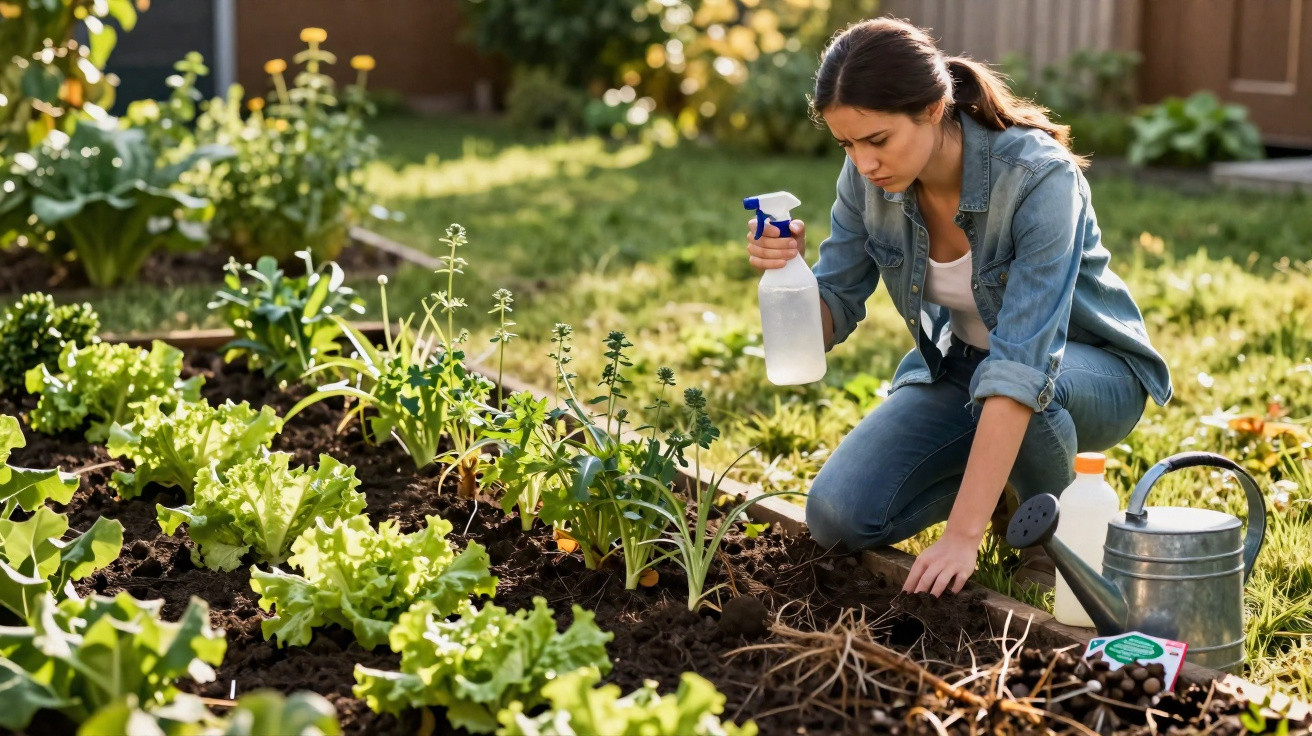
On a quiet suburban road one Saturday recently, three neighbours stood by their front fences, each clutching the same item: an old spray bottle containing a cloudy white mixture. On one bottle, “WEED KILLER” had been written in black Sharpie. The scent of vinegar reached across the pavement. Within minutes, the first dandelions and crabgrass beside the path began to shrivel and twist, their leaves taking on a miserable brown colour in the midday heat. The gardeners were pleased: the internet trick had done its job.
They could not see the damage taking place beneath the soil.
Why the viral vinegar weed hack has gardeners suddenly on edge
Browse Facebook or TikTok gardening groups and the same DIY formula appears repeatedly: white vinegar mixed with salt and washing-up liquid. Captions claim, “No chemicals,” and “Safe for pets and kids.” Gardeners apply it between paving slabs, across gravel driveways and even around vegetable-bed edges. It seems inexpensive and ingenious, a modest pushback against branded herbicides.
Then specialists began to weigh in, and attitudes changed quickly.
On a UK gardening forum, a retired horticulturist shared photos that unsettled many confident users of homemade weed killers. In the first image, weeds on a driveway treated with the vinegar–salt–soap mixture had died within a day. In the second, captured five weeks later, the scene was different: soil around the edges was bare, light-coloured and crusted. No seedlings had emerged. The moss had disappeared. Nearby ornamental grasses had scorched-looking tips, as though a lighter had singed them.
A Canadian extension service then issued a restrained but stark warning concerning “acetic acid and sodium build-up”, while the comments below it were far less restrained. “Have I poisoned my soil?” one woman asked. “I’ve been spraying this ‘natural’ stuff for three summers.”
Behind this apparently wholesome kitchen remedy is straightforward chemistry. Most household white vinegar contains roughly 5% acetic acid, which burns soft leaf tissue on contact. Washing-up liquid helps the solution stick and strips away the protective waxy layer that prevents plants drying out. Add salt, and the mixture becomes a harsh combination that draws moisture from plant cells while remaining in the ground.
For a plant, it is effectively a three-part assault: burning, stripping and dehydration. For soil, the effect resembles gradual, unseen poisoning.
The hidden damage: what really happens in your soil
Using it can appear harmless. A fast spray along the patio, a gratifying sizzle in hot weather, and weeds are drooping before lunch. Yet the liquid does not remain neatly confined to “bad” plants. It drips, flows and seeps into cracks inhabited by tiny weed roots and fungal strands. It saturates the surface where earthworms and beneficial nematodes travel and feed.
Salt and acid make no distinction between “good plant / bad plant”.
Gardeners who have tested soil after several seasons of using the homemade mixture are beginning to see the extent of the damage. One French allotment holder explained that her gravel path, sprayed monthly with vinegar and salt, had become a dead strip. “Nothing grows there at all now,” she wrote. “Not even self-seeded poppies, which usually sprout everywhere.” A small soil test found high salinity and a damaged structure that shed water rather than taking it in.
Most of us recognise the point when a shortcut seems preferable to getting down on our knees and pulling weeds by hand. The bottle is then used repeatedly, month after month, as harm accumulates quietly below ground.
The scientific reason is troubling but clear. Salt ions do not simply disappear after a weed dies. They attach to soil particles and accumulate, particularly in places without enough rainfall to flush them away. As salinity increases, soil microbes struggle to survive. Fungi that carry nutrients to plant roots recede. Earthworms leave. The ground becomes less like a living sponge and more like an exhausted crust.
Even household-strength vinegar can acidify the surface layer, putting delicate root hairs and germinating seeds under strain. Applied week after week, it gradually makes the topsoil hostile to life. Not toxic enough to be classed as hazardous waste, but harsh enough that life starts to thin out.
How to fight weeds without turning your garden into a dead zone
Gardeners who have abandoned the vinegar–salt–soap mixture tend to report the same approach: returning to the fundamentals. Rather than spraying, they alter the growing conditions. Thick ground cover between paving stones, layers of woodchip or bark mulch over beds, and straightforward sheets of cardboard beneath gravel all block light, which annual weeds need to germinate. Reduced light means fewer weeds emerge in the first place.
A spray may feel like an immediate victory, but these gentler techniques apply gradual, consistent pressure.
For persistent growth in cracks and along fence lines, the answer can feel old-fashioned and mildly frustrating: remove it manually. A slim weeding knife, crack weeder or even an old butter knife can free roots so that they come out whole rather than breaking. Pouring a kettle of boiling water directly onto a clump in a driveway is severe, but the heat is quickly neutralised by the soil. Unlike chemical treatments, hot water leaves no lasting residue.
Realistically, nobody keeps up this routine every day. Life is busy, backs ache and weeds do win some battles. However, spreading the work out and dealing with one strip at a time helps keep a garden living rather than gradually salting it.
Experts studying soil health are forthright about the price of shortcut sprays, whether they are synthetic or homemade.
“People hear the word ‘natural’ and they relax,” says Dr. Hannah Mills, a soil ecologist who advises community gardens. “Vinegar, salt and soap all sound safe because we cook and clean with them. In concentrated form, and repeated across seasons, they can strip life from the top few centimetres of soil. By the time you see bare, crusting patches, you’ve already lost a lot of invisible allies.”
To change their routines, many gardeners keep a compact “weed toolkit” beside the back door:
- A hand-held crack weeder or old knife for gaps in paving
- A bucket of woodchip or shredded bark for replenishing thin mulch areas
- A kneeling pad and gloves to make brief weeding sessions easier
- A watering can kept for boiling-water spot treatments on hard surfaces
- A bag of clover or low-growing ground-cover seeds for places where weeds continually emerge
A different way to see weeds, and what’s really at stake in your soil
Once the below-ground effects of that “harmless” vinegar cocktail are understood, they are difficult to ignore. The curled weeds on a patio are merely the visible evidence. Beneath them, mycelium threads fray, bacterial communities decline and soil particles harden into lifeless plates. A garden that appears tidy from the path may be quietly becoming starved below the surface.
There is another approach: accepting certain weeds as living indicators rather than treating them solely as enemies, and regarding soil as a habitat instead of a surface to sanitise.
Some gardeners now allow soft clover, alyssum or creeping thyme to occupy spaces they previously sprayed. Planting strips narrow driveways. The ideal of a perfectly weed-free space gives way to a softer, more living garden. This is not about being purist or saintly. It means asking one straightforward question whenever the bottle comes out: am I killing this plant, or am I slowly killing the place it grows?
The next time a viral hack promises to “nuke weeds naturally,” it may be worth pausing briefly to imagine the soil beneath your shoes. That pause is where another kind of garden can begin.
| Key point | Detail | Value for the reader |
|---|---|---|
| Vinegar mixtures damage soil life | Acetic acid and salt harm surface-level microbes, fungi and earthworms | Helps readers avoid gradually sterilising their garden without noticing |
| Salt accumulates over time | Repeated “natural” spraying increases salinity and prevents new plants thriving | Clarifies why sites treated for years become bare, crusted weed deserts |
| Gentler methods are effective long-term | Mulch, boiling water, hand weeding and ground covers cut weed growth without residue | Offers practical, realistic options that safeguard soil health and biodiversity |
FAQ:
- Can plain white vinegar be used on its own as a weed killer? Household vinegar without salt or washing-up liquid burns foliage on contact, particularly in sunny weather, but it can still put soil life under stress and will generally not kill deep-rooted perennials. Although less harmful than the full viral mixture, repeated use may still acidify the surface layer.
- Is rock salt or table salt genuinely so harmful to soil? Yes, if it is applied repeatedly. Salt accumulates rather than vanishing. High salinity dehydrates plant roots and disrupts soil microbes, eventually creating affected areas where very little can grow.
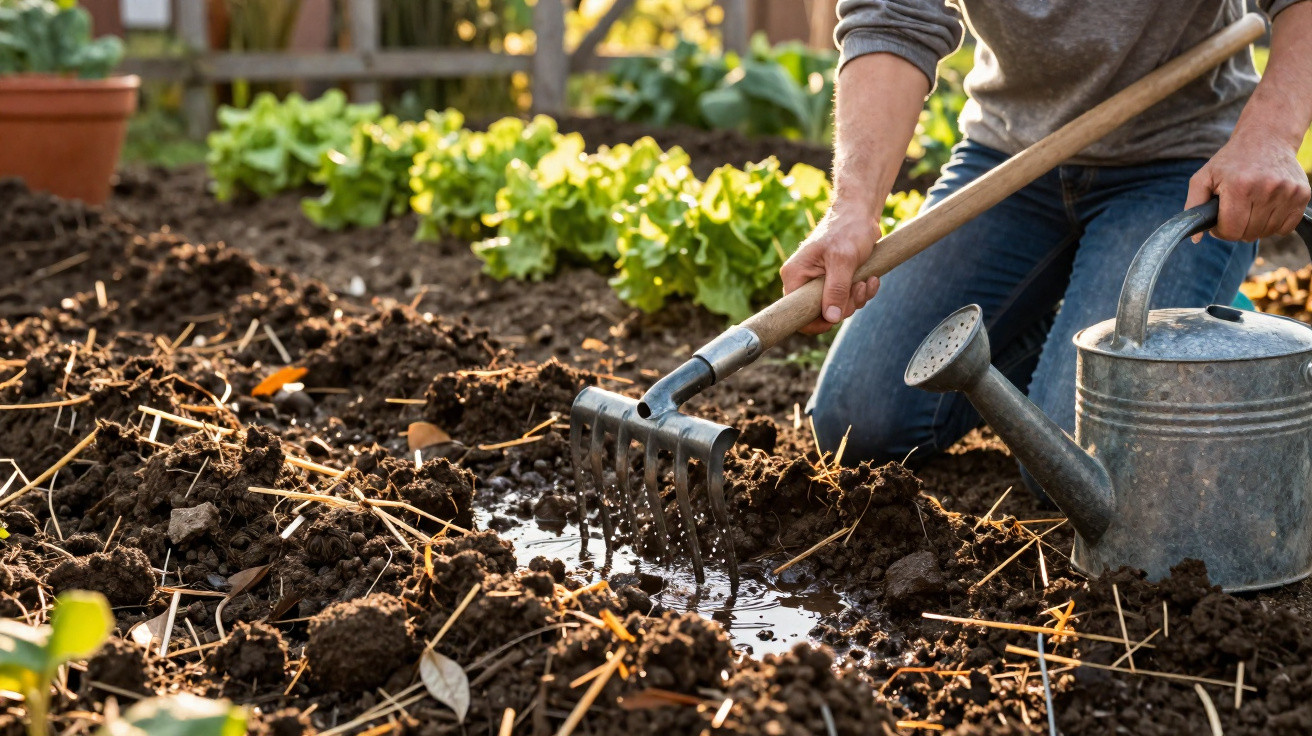
- What if I have already used vinegar and salt for years? Stop applying further salt-based mixtures and begin restoring life to those spots. Add organic matter such as compost, leaf mould or well-rotted manure, mulch lightly and water deeply to help flush excess salts where drainage permits.
- Are commercial ‘natural’ herbicides safer? Certain products using acetic acid or plant oils still burn plant tissue on contact, and strong formulations may harm soil life when overused. They can be safer than salt cocktails, but they are not permission to spray without restraint.
- What is the best approach for weed-filled paths and driveways? Use both mechanical removal and design changes: scrape or knife out existing weeds, apply boiling water to stubborn spots, then install a weed barrier, such as cardboard, beneath fresh gravel or plant low-growing ground covers in wider joints to outcompete fresh seedlings.

Comments
No comments yet. Be the first to comment!
Leave a Comment