
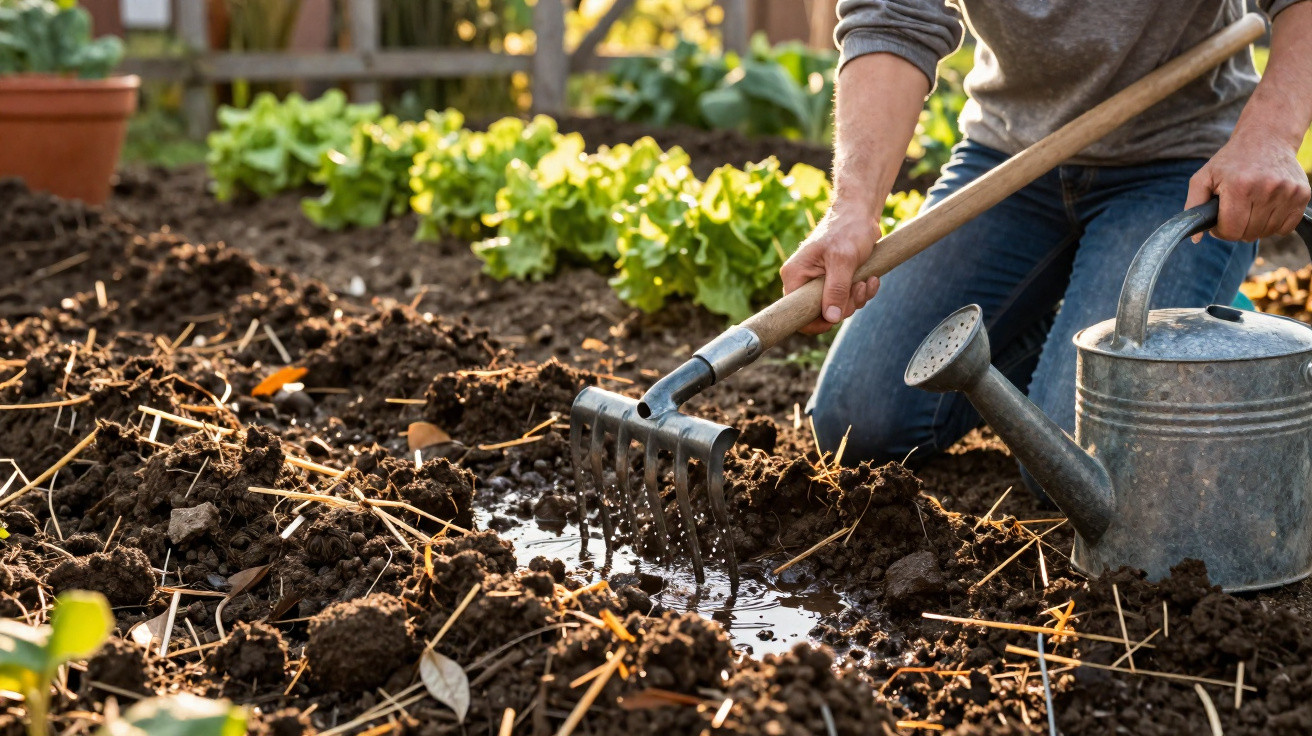
The first raindrops strike a freshly raked bed, turning its surface dark like coffee soaking into a sponge. For a moment, it seems encouraging. Then, almost predictably, the water forms beads, darts sideways and rushes towards the path, while the soil itself remains almost dry. The gardener steps away, annoyed, having spent an hour levelling the bed so it would “look clean”.
Two months on, the same bed is uneven, speckled with old root channels, partly decayed mulch and worm casts. This time, nobody has bothered to level it. When rain arrives, water slips into the tiny dips and vanishes with a quiet, rather smug effect.
Something that feels almost magical has taken place.
When you stop ironing your soil like a carpet
Watch a neat, completely level vegetable bed for five minutes during heavy rain and the issue quickly becomes clear. Water has no obvious route in. It sits on the surface, gathers in puddles and travels sideways in fine sheets, carrying away the smallest particles and creating a crust-like seal.
Compare that with an “ugly” bed-the sort of space unlikely to feature in a glossy gardening catalogue. It has little ridges, old footprints and scattered leaf litter, somewhere between untidy and appealing. Across this miniature landscape, raindrops collect in micro-hollows, enter old root channels and gradually move downwards. What appears neglected is often simply… functioning.
A retired teacher with a small suburban garden outside Leeds discovered this almost accidentally. One spring, troublesome knees meant she stopped levelling her beds. There was no raking or pressing the ground down with her heels: only a gentle pass with a fork to loosen the soil, followed by compost.
By the next autumn, she noticed an unusual contrast. Following a week of nearly continuous rain, her neighbour’s billiard-table-flat lawn held standing water, with small reflective pools across it. Her own “lazy” beds, covered by a thin mulch and left uneven, had no puddles whatsoever. The soil broke apart rather than forming clumps, and she could push her hand into it up to her wrist. The only meaningful difference was unplanned: she had stopped pressing everything flat.
This is not magic; it is physics and biology working together. Levelling soil squeezes out air spaces and damages the delicate tunnels created by roots, insects and worms. The resulting surface is smoother and denser, encouraging water to run away rather than soak through.
When the surface is left slightly rough, its irregularities become miniature reservoirs and routes into the ground. Water slows, falls into cracks and follows existing channels further down. Microorganisms flourish where air and organic material are available, binding soil particles into stable crumbs. This crumb structure is what makes hard soil drink water rather than drown in it.
The simple act of stepping back from the rake
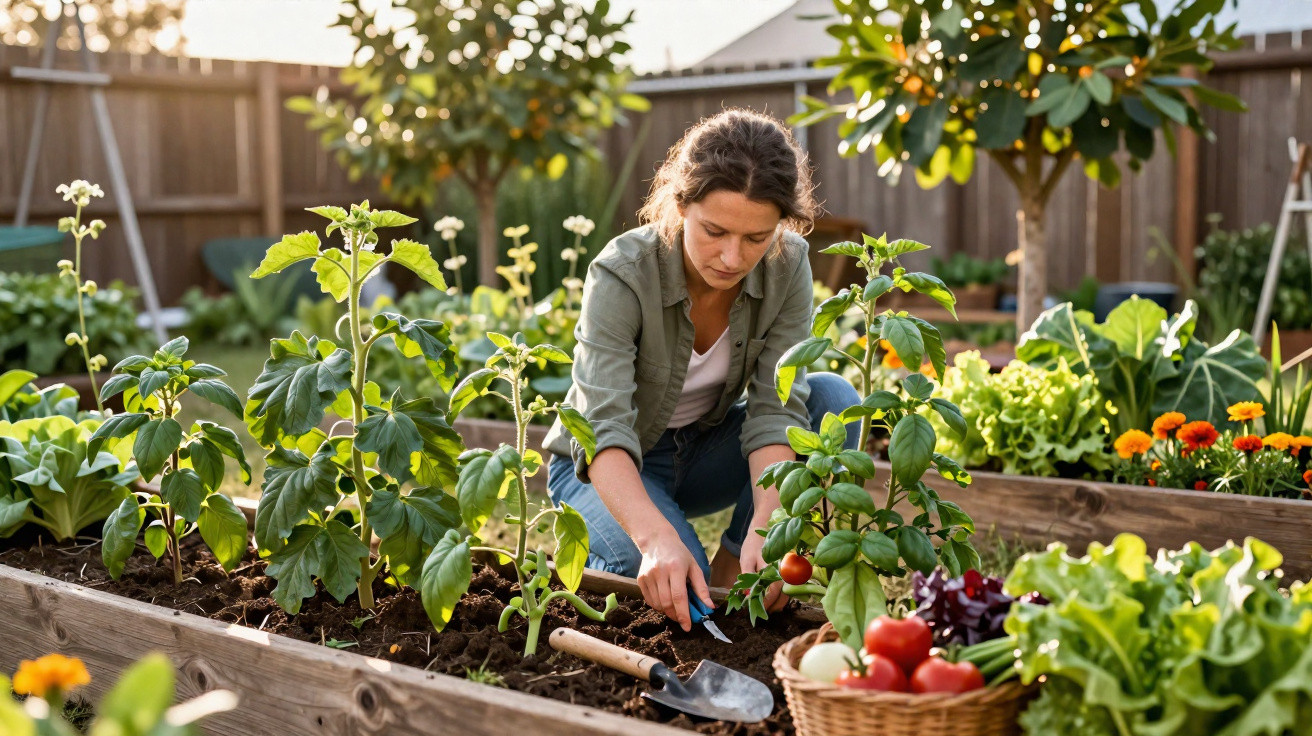
To test this effect in your own garden, the first “technique” is simply doing a little less. When preparing a bed, stop once you have loosened the soil using a fork or broadfork. Apply a light layer of compost or well-rotted manure, spreading it roughly with your hands, and avoid the temptation to make the surface flawlessly smooth.
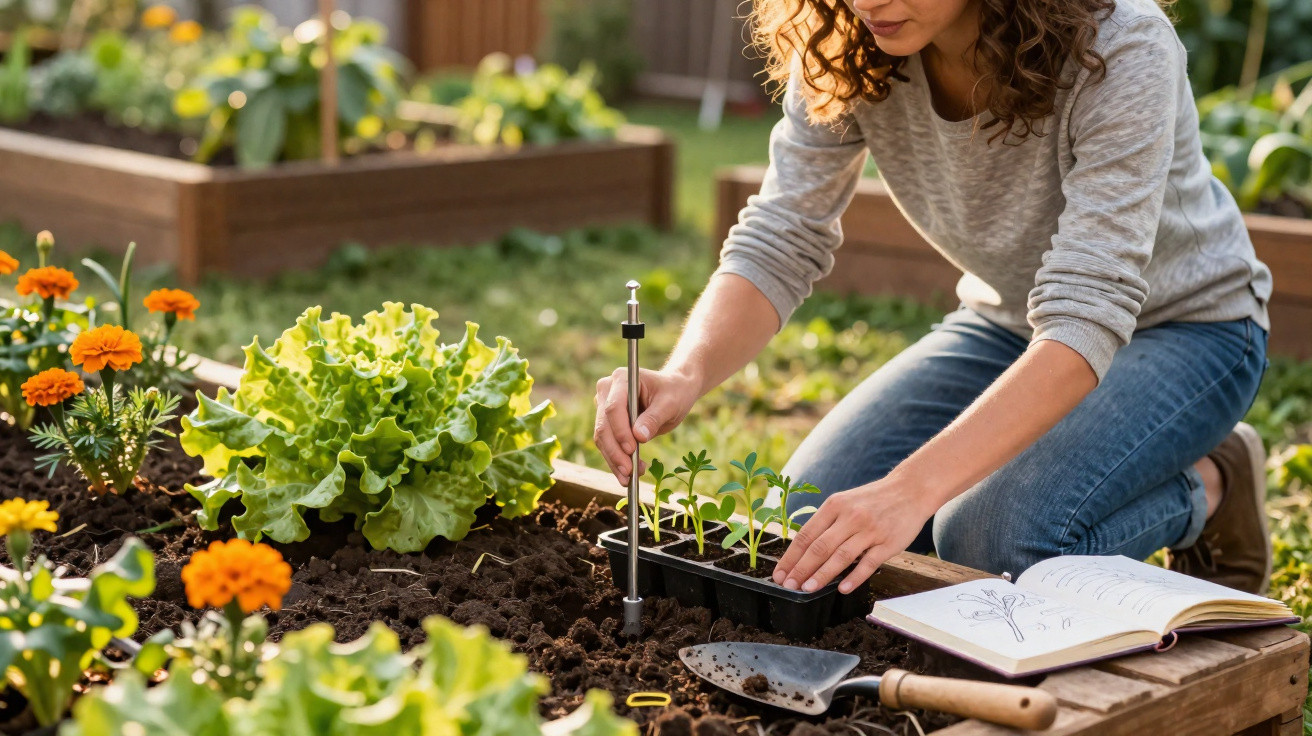
Sow or plant straight into the uneven bed. With very small seeds, make only a narrow, shallow drill using a finger or stick instead of levelling the entire area. Water gently just once, preferably with a rose attachment or drip hose, so that the structure you have protected is not battered down. Afterwards, allow rainfall and the life below ground to take over.
Most gardeners level beds through care and habit rather than lack of knowledge. We have been taught that crisp edges and level soil demonstrate a job well done. Soil, however, does not read gardening magazines. It responds to pressure, compaction and whether plant roots have room to breathe.
A frequent mistake is to walk repeatedly across the growing area, then attempt to “repair” the harm by raking it level. That is rather like ironing a shirt while still wearing it. A better approach is to establish clear paths and use them, keeping boots off the bed itself. Realistically, no one manages this every day. Yet doing so even 70% of the time gives soil an opportunity to restore its hidden plumbing.
“Once I stopped obsessing over flat beds, I realized my biggest irrigation problem had been my own rake,” laughs Marco, a city gardener who grows tomatoes on a windy rooftop. “The water infiltration improved in one season, and I didn’t buy a single gadget. I just stepped away from the soil a little.”
- Keep the surface rough – Once the soil has been loosened, leave behind small clods, worm casts and plant remnants. They disrupt water flow and encourage infiltration.
- Use organic cover – A light mulch of straw, shredded leaves or grass clippings cushions the impact of raindrops and nourishes soil life from above.
- Make permanent paths – Keep foot traffic on woodchip, stepping stones or fixed rows, allowing growing areas to remain open and well aerated.
- Watch after heavy rain – Note where water remains and where it drains away quickly, then alter paths or bed edges rather than attacking the soil surface.
- Rely on natural structure – Roots, worms and fungi continually reshape the soil below. Your primary role is to stop working against their architecture.
Letting soil look “wrong” so it can behave properly
After seeing rain disappear into an uneven, living bed, it becomes difficult not to notice the contrast elsewhere. You may begin to spot how each area of the garden responds: the compacted lawn beside the crumbly border, the bare level patch beneath a swing compared with the mulched herb corner. It becomes clear how much gardening involves simply staying out of the way.
There is also a subtle emotional change. Giving up the pursuit of perfectly flat beds means accepting a little more wildness in the garden’s appearance, and that can be freeing. Small rises and dips, scattered mulch and the occasional worm cast reveal that natural processes are under way without intervention. Water infiltration improving “by itself” is merely the visible evidence. Beneath the surface, roots are travelling deeper, microbes are multiplying and earthworms are working through the night.
Some people will test this approach and see a difference within one season. Others may have heavy clay soil and require a few years of organic matter and patience. The principle remains consistent: less trampling, less levelling, more cover and more life. The soil becomes darker, softer and more giving. The hose is needed less frequently. When the next major storm arrives, you may find yourself by the window, not concerned about flooding but quietly encouraging every uneven patch of soil prepared to drink.
| Key point | Detail | Value for the reader |
|---|---|---|
| Stop levelling soil surfaces | Retain a mildly rough, uneven texture containing clods, channels and micro-hollows | Helps rainwater slow down and infiltrate rather than run off |
| Protect living structure | Reduce compaction with light tools, organic mulch and permanent paths | Supports lasting soil health, improved drainage and stronger root growth |
| Observe after rain | Identify where water puddles or vanishes rapidly, then adapt your practices | Makes straightforward, low-effort changes possible without costly equipment |
FAQ:
- Question 1 Will my seeds still germinate well if the soil surface isn’t perfectly flat?
- Question 2 Is this method suitable for heavy clay soils that already drain badly?
- Question 3 Won’t an uneven surface make watering by hand more difficult?
- Question 4 How long does it take to notice better water infiltration after I stop flattening?
- Question 5 Can I combine this approach with raised beds or containers on a balcony?

Comments
No comments yet. Be the first to comment!
Leave a Comment