
The first sign is never glamorous. You are stooping to pull yet another dandelion from a cracked patch of bare earth, asking yourself when gardening became unpaid work on your knees. The sun is blazing, your lower back is beginning to protest, and the beds you proudly prepared in spring already seem worn out, parched and prematurely old.
Meanwhile, your neighbour next door is wandering about with a coffee and no tools whatsoever. Their borders look full, peaceful and nearly self-managing. There is no exposed soil or dusty ground: only a soft layer of mulch, with plants growing together like long-standing friends.
You begin to wonder whether the answer is not simply working harder.
Perhaps it is about covering the soil and letting it do the work for you.
Why bare soil always bites back
Take a look around any garden that demands constant attention and one thing soon stands out: plenty of open earth. Straight after weeding, it can appear neat, rather like a newly swept floor, but the effect is short-lived. Within a few days, weeds return, moisture disappears and the soil feels almost like concrete beneath your fingers.
Bare soil is an open invitation. Wind carries in seeds, while rain reshapes the surface. You are not only tending plants; you are trying to manage chaos.
Now compare this with gardens belonging to people who have quietly learned how to cover their soil. I once met a retired teacher in Kent whose beds had not been bare for ten years. Her borders were built in layers: perennials, creeping thyme, self-sown calendula and a generous mulch of shredded leaves.
She said that, at the busiest point of the season, she spends perhaps one long afternoon each month on maintenance. The rest of her time goes on deadheading, harvesting or simply strolling with secateurs in her pocket. She is not pursuing weeds or hauling hoses around every evening. The edges beside her paths revealed the difference: hardly any volunteer weeds, only a gradual, continuous carpet of cover.
The reason is straightforward. Cover soil with mulch, living groundcovers or low-growing plants and less sunlight reaches weed seeds, evaporation slows and sudden temperature changes are reduced. Microbes and worms remain active, while roots grow further down instead of gripping the surface crust.
Exposed ground has the reverse effect. It bakes, splits and loses its structure. Shallow-rooted, opportunistic weeds move in, leaving you as the full-time clearing crew. Good soil is like skin: exposed all the time, it burns and ages fast.
How to let soil cover do the hard work for you
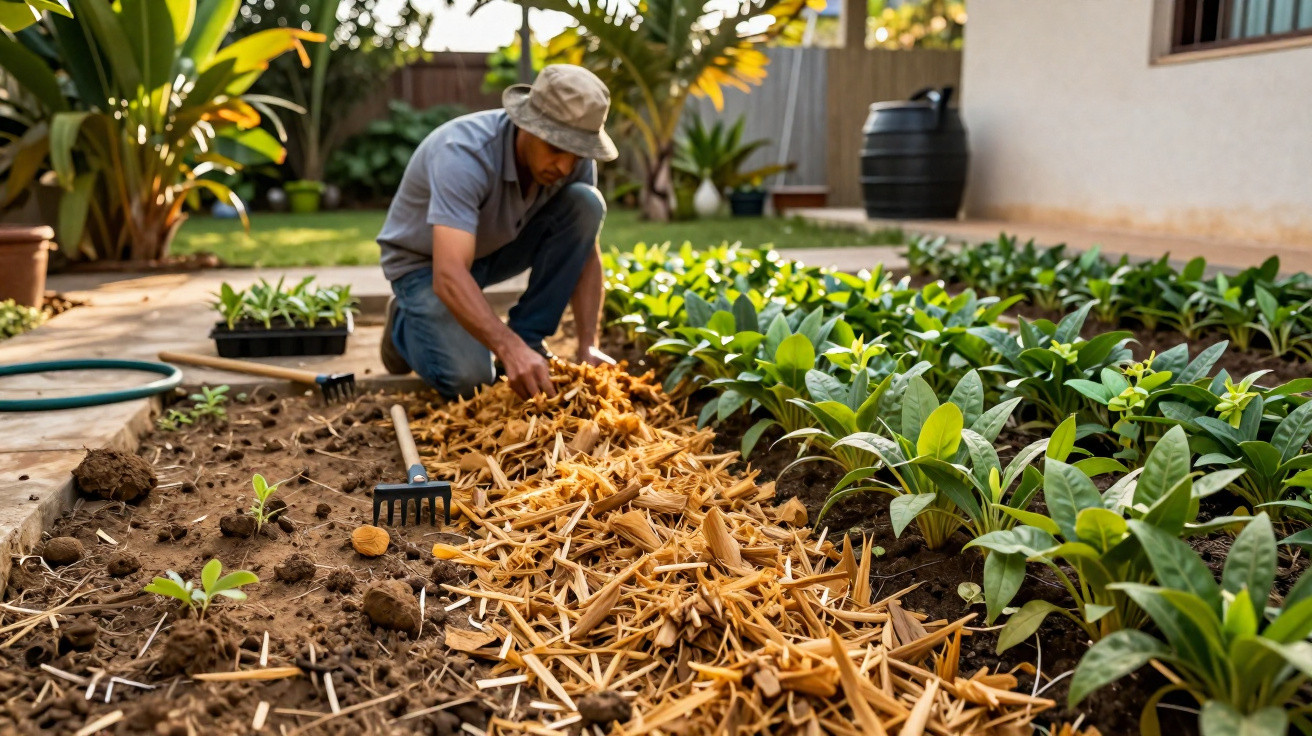
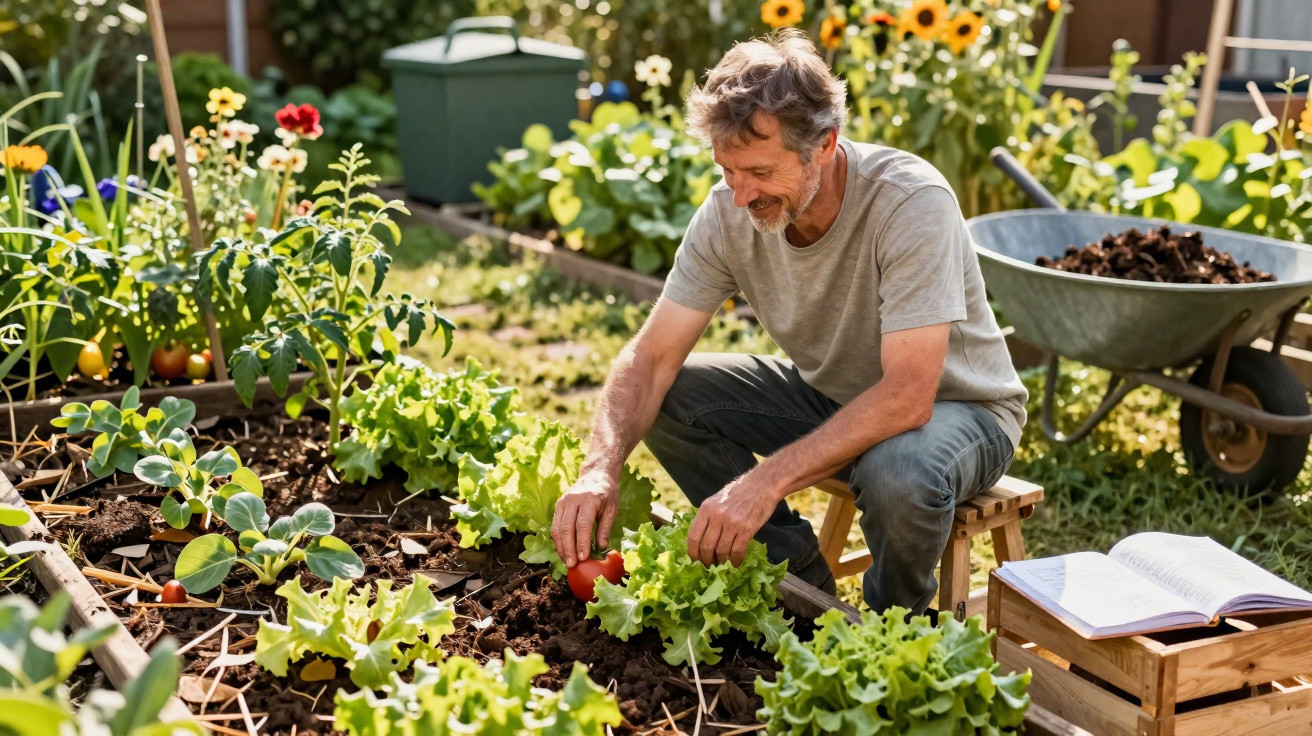
Begin on a modest scale. Choose one bed, or even a narrow section beside a path, and make one decision: this patch will no longer be left bare. Weed it once, then spread a 5–8 cm layer of organic mulch, such as shredded leaves, composted bark, grass clippings combined with leaves or well-rotted compost.
Ease the material around plants rather than burying their crowns. Keep a small clear ring around stems so they can breathe. In vegetable beds, wait until seedlings reach 10–15 cm in height, then place mulch between the rows as though laying down a blanket.
From then on, the central job changes from “pull weeds” to “keep the blanket topped up”.
Many people attempt this once and then conclude, “Mulch doesn’t work, my weeds came back.” The mistake is treating soil cover as a single task, like painting a wall, rather than an ongoing practice. Mulch decomposes, and groundcovers need a season or two to grow together into a proper mat. During the slightly awkward middle stage, you will still need to remove a few unwanted plants by hand.
This is the point at which plenty of gardeners abandon the approach and return to bare soil and irritation. Go easy on yourself during that period. You are altering a whole system, not merely changing its surface. Let’s be honest: nobody really does this every single day. The direction matters more than perfection.
“Once I stopped seeing mulch as decoration and started seeing it as armor,” a young urban gardener in Leeds told me, “everything changed. The weeds slowed down, the soil stayed crumbly, and suddenly my Sundays belonged to brunch again, not the hoe.”
- Choose organic mulch
Shredded leaves, compost, straw and wood chips nourish soil life, which then helps nourish your plants. - Build layers without smothering plants
A sensible depth performs best; heaping mulch against stems can encourage rot and pests. - Combine mulch with living cover
Low herbs, clover or sedums can grow between bigger plants and reduce the weeding burden. - Top it up once or twice yearly
Add new material once excessive amounts of soil begin showing through. - Pay attention to drainage
Covered soil takes in and retains rainfall, so alter watering to prevent beds from becoming waterlogged.
Shifting from “gardening muscles” to “gardening minds”
The most important change is not practical but psychological. Soil cover encourages you to think like a woodland rather than a factory. In forests, you do not find immaculate stretches of exposed ground: every fallen leaf and twig plays a role in the wider system. Once gardeners adopt that principle, something falls into place. They plant more closely, welcome self-seeders and allow small, ground-hugging plants to fill the gaps.
The garden starts to resemble a settled community that only occasionally needs a gentle nudge, rather than a list of chores.
That does not mean abandoning order or visual style. Some of today’s most design-led landscapes pair clipped forms and bold lines with deeply mulched beds and dense planting underneath. Their tidy appearance comes from assured structure and repetition, not bare soil.
The work itself changes. There is less scraping out weeds and more selective editing of plants. There is less watering and more observation. In time, this means fewer hours spent with your knees in the soil and more time enjoying what you have grown.
Gardens that put soil cover first also mature more successfully. As mulch decomposes, the soil becomes deeper and darker. Earthworm numbers increase. Drought has slightly less impact, and heatwaves bring a little less stress. It is understated resilience rather than a showy shortcut.
And that is the simple reality: the gardeners who appear effortlessly at ease on summer evenings are often those who decided, at some point, never to leave their soil bare again.
| Key point | Detail | Value for the reader |
|---|---|---|
| Soil cover reduces weeding | Mulch and groundcovers prevent light reaching weed seeds and make conditions less welcoming for invaders | Less time bent over and more time to enjoy the garden |
| Covered soil retains moisture | Mulch slows moisture loss and moderates temperature fluctuations around plant roots | Reduced watering and healthier plants in heat and drought |
| Organic cover nourishes soil | Breaking-down mulches improve structure and support helpful microbes and worms | Richer soil that is easier to work, plus stronger plants over time |
FAQ:
- How thick should my mulch layer be? Generally 5–8 cm is sufficient for most beds. Make it slightly deeper in heavy, weed-filled areas, but leave mulch a little clear of trunks and stems.
- What’s the best material to cover soil with? In most home gardens, compost, shredded leaves, straw or bark chips are effective choices. Vary the textures over time to nourish the soil and retain a natural appearance.
- Will soil cover attract slugs or pests? Thick, wet mulch can provide shelter for slugs. Keep the layer moderate, do not mound it around plants and maintain some open air around slug-prone crops such as lettuces.
- Can I use stones or gravel as soil cover? Mineral mulches, including gravel, can reduce evaporation and weeds, particularly in dry gardens, but they do not feed the soil. Many gardeners use gravel alongside pockets of organic mulch around important plants.
- How long before I see less maintenance? Weeding should become easier within several weeks, though the main benefits appear after a season or two, once soil structure, moisture levels and plant health begin working in your favour.
Comments
No comments yet. Be the first to comment!
Leave a Comment