
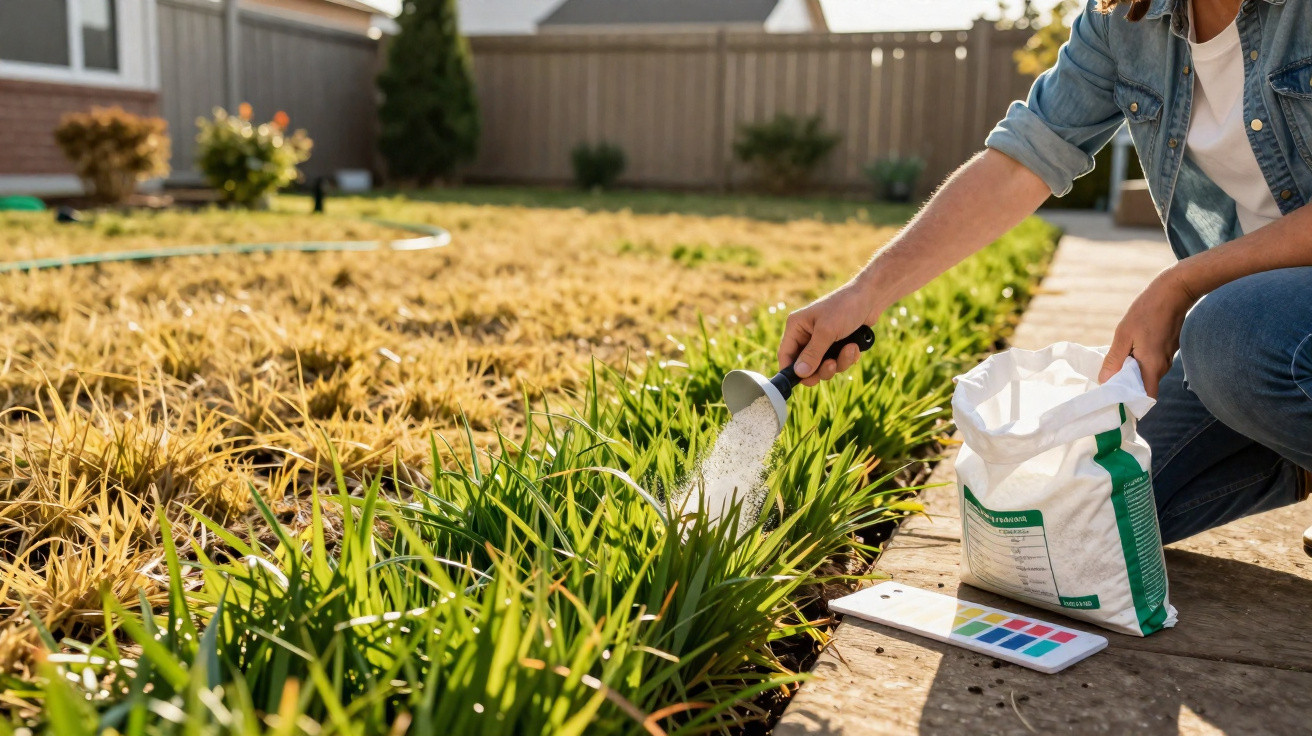
Homeowners often respond on instinct by reaching for even more lawn fertiliser, specialist blends or pricey “miracle” products. Two seasoned lawn professionals point to a different culprit: it isn’t that the fertiliser is missing - it’s that the soil has become unbalanced. One targeted step in spring or autumn can be enough for the lawn to grow back noticeably greener and thicker.
Why your lawn turns yellow even though you fertilise
When a lawn stays yellow despite regular care, it can look like a straightforward nutrient deficiency. In many gardens, though, the underlying issue is the soil’s acidity level - the pH value. If the soil is too acidic, it effectively locks nutrients away.
The key nutrients for a healthy lawn are:
- Nitrogen (N): drives growth and deep green blades
- Phosphorus (P): supports and develops the root system
- Potassium (K): improves resilience against disease and drought stress
When the pH is too low, these nutrients may be present in the ground, but the roots can barely absorb them. The result is a lawn that starves even though the “fridge” is full.
“Overly acidic soil is like a locked larder: the fertiliser is there, but the lawn can’t get to it.”
Lawn experts stress that repeatedly adding more fertiliser tends to treat the symptom rather than the cause. Only within the right pH range can fertiliser deliver its full effect.
The simple soil trick: why lime makes such a difference
This is exactly where experienced gardeners’ advice comes in: lawns that look tired, yellow and are affected by moss often benefit from a targeted application of lime. Garden lime raises the pH when the soil is too acidic and restores a more balanced growing environment.
That change leads to several improvements:
- nutrients such as N, P and K become easier to access
- grass roots can take up more nutrients again
- moss and many weeds are less comfortable
- the lawn looks denser, tougher and significantly greener
A well-known lawn specialist retailer describes garden lime as a “natural soil improvement”: the soil becomes more attractive for grass and less welcoming for moss. The turf can recover without you constantly having to try new products.
Which types of lime are suitable for lawns?
Experts broadly distinguish between two options that have proven themselves in gardens:
| Product type | Characteristics | When is it useful? |
|---|---|---|
| Calcium lime | works relatively quickly, raises the pH rapidly | when the soil is clearly too acidic and you want a faster response |
| Dolomite lime | also contains magnesium, works a little more slowly | when the lawn looks pale green and a magnesium deficiency is possible |
Both are aimed at stabilising the soil and “opening up” the nutrients that are already there.
How to tell your soil is too acidic
Not every keen gardener has a soil test kit to hand. Even so, many signs can be spotted with the naked eye. Typical warning signals of overly acidic soil include:
- dense moss pads across the lawn
- yellow or straw-like patches despite regular fertilising
- very slow growth, especially after mowing
- weeds such as sorrel or buttercup spreading
If you want certainty, basic pH soil tests from DIY stores are a practical option. They tend to show fairly reliably whether the pH is well below the ideal range for lawns (in many gardens, roughly between 5.5 and 6.5, depending on soil type).
How to apply lime properly
For lime to work as intended, timing, dosage and even coverage all matter.
The best time of year
Lawn professionals mainly recommend two windows:
- Spring: after winter the soil is often depleted, and moisture helps distribute the lime.
- Autumn: temperatures are mild, the soil usually stays damp for longer, and the pH can settle before the new growing season begins.
Midsummer heatwaves and frozen winter ground are both poor choices. The grass is already under stress then, and lime cannot perform optimally.
A simple method for application
A spreader helps you apply lime evenly. For very small areas, a hand spreader can be enough; for larger gardens, a push spreader makes the job far easier.
- Read the manufacturer’s dosage guidance and adjust it to your soil conditions.
- Put on protective gloves and, if it’s windy, wait for calmer weather.
- Spread the lime evenly in overlapping passes, lengthways and then crossways.
- Then wait for rain or lightly water so the material can move into the soil.
If you have scarified beforehand or removed thatch and matted debris, you make it easier for the lime to reach the upper soil layers.
“Don’t apply lime ‘blindly’: only act once you suspect or have confirmed overly acidic soil - and then do it in measured amounts.”
Without the right care, lime won’t help much either
Lime on its own does not magically create a perfect lawn. What it does is get the soil back on your side. After that, a few straightforward habits usually matter more than the next specialist fertiliser.
- Mow at a higher setting: avoiding scalping helps protect soil and roots from drying out and heat.
- Water less often, but more deeply: longer watering sessions encourage deeper roots and make the lawn more resilient.
- Light mulching: finely chopped clippings can act as a natural nutrient source, provided you don’t leave too much behind.
With this combination of liming, sensible mowing and adjusted watering, the lawn copes far better with stressful periods such as hot weather or heavy use.
Risks, limits and sensible additions
Overdoing it can harm the soil. Too much lime makes the ground overly alkaline. Then the problem simply flips: some nutrients become difficult to access again, micro-organisms fall out of balance, and certain trace elements can become scarce.
That is why, if you are unsure of your starting point, a simple pH test or a soil analysis is worth considering. Many garden centres sell kits, and some local authorities or laboratories will test soil samples for a small fee.
It is also worth remembering that lime is not a replacement for regular lawn fertiliser. It improves the conditions so that fertiliser can work at all. Many lawn enthusiasts plan liming as a long-term measure - for example every few years or only when needed - while still applying fertiliser seasonally.
If you are reseeding or renovating an older area, the correct pH can help there too. In well-balanced soil, grass seed germinates more evenly, roots develop more strongly, and young plants cope better with dry spells.
For home gardeners, that is the real essence of the trick: rather than continually hunting for new products, it pays to look at what is happening in the soil. A targeted dose of lime restores the balance - and turns a tired, yellow patch back into a lawn that truly earns the name.






Comments
No comments yet. Be the first to comment!
Leave a Comment