
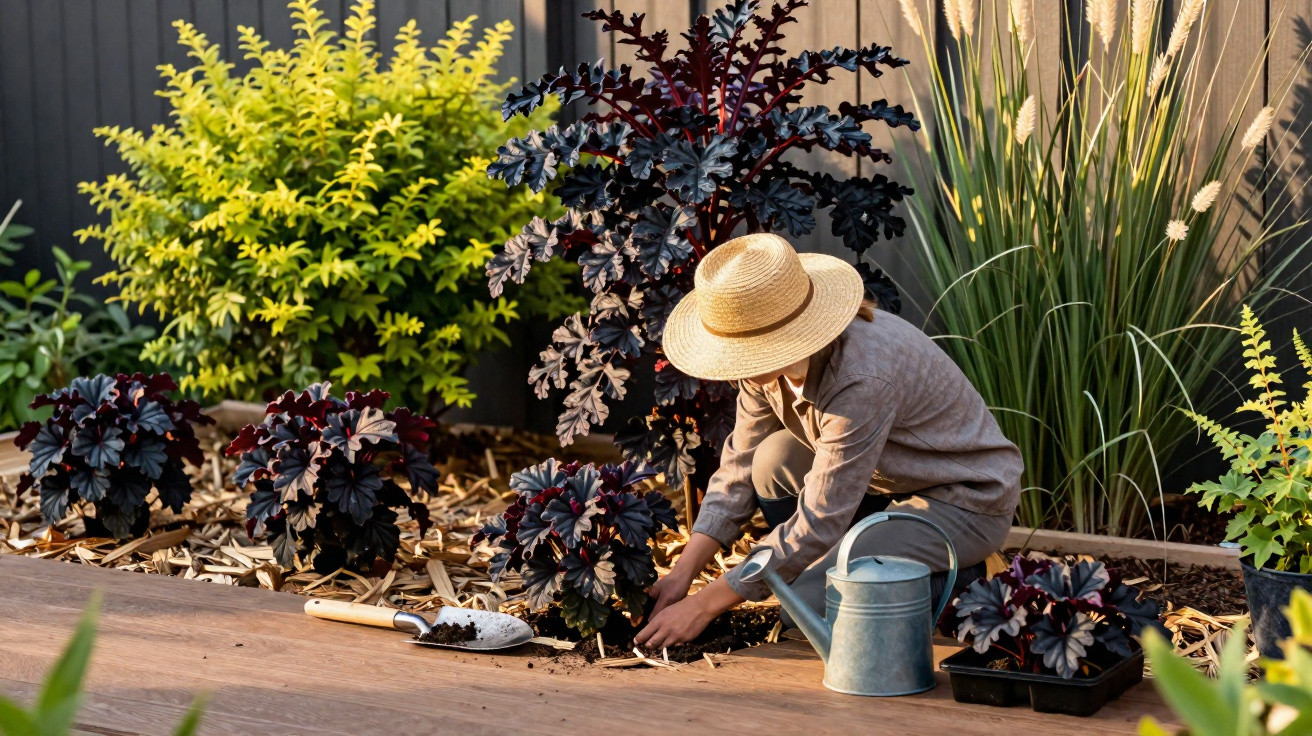
Plenty of keen gardeners reach the end of winter and stare at their beds in mild irritation: everything is sort of green, sort of tidy, yet somehow lacking any real wow factor. At the same time, aphids, sap-sucking insects and other garden nuisances are poised to surge again as spring gets going. One surprisingly simple answer tackles both problems at once: plants with near-black foliage. It may sound like a Gothic styling choice, but it’s actually a contemporary statement with very practical benefits.
Why dark planting schemes are suddenly everywhere
An end to endless, uniform green
In most gardens, one colour rules: green. Of course green signals life, but when it’s all you see, it can look flat and uninspiring-especially under the washed-out light of late winter. Deep, almost black leaves cut through that sameness immediately.
"Black or very dark foliage adds depth to a bed and makes lighter plants glow, without you having to rebuild anything."
It’s much like interior design: a dark feature introduces definition and shape. The same principle works outdoors. Your eye finds clear focal points, planting looks more layered, and the surrounding colours appear richer. A simple perennial bed can suddenly look like a professionally designed spread from a garden magazine.
Strong, graphic impact without expensive changes
Dark-leaved plants act like a bold line in a drawing: they frame, emphasise and bring order. Whether you’ve got a small terrace garden or a city balcony, a few well-placed dark accents can shift the whole mood.
- In small gardens, they serve as visual anchor points.
- In larger gardens, they break up long borders and soften transitions.
- On balconies, they add a modern edge among terracotta, timber and concrete.
The clever part is that you don’t need new paths or pricey ornaments. The transformation comes purely from choosing the right foliage colour.
These two plants make the garden suddenly look “black”
Black elder as an airy centrepiece
One standout in this trend is black elder, with cultivars such as ‘Black Lace’. It forms finely cut, dark leaves that can resemble Japanese maples, but it’s noticeably tougher and easier to care for.
So where does it work best?
- As a specimen in a lawn to create a clear focal point.
- At the back of a perennial border to add height and depth.
- In a loose hedge to frame colourful or green shrubs.
Its habit stays light and see-through, so it doesn’t feel heavy or oppressive. In early summer, it adds another layer: pink, strongly scented flower heads that sit on the dark foliage like a lace overlay.
Coral bells ‘Obsidian’ as a velvety ground cover
For the front of the border-or container planting-another leading option is coral bells (Heuchera), especially the very dark cultivar ‘Obsidian’. It remains low, forms dense clumps, and carries glossy, almost black leaves throughout the year-ideal for bed edges, steps and pots.
"Coral bells lay down a dark carpet that presents pale flowers, grasses and stones like they’re on a stage."
Useful places to use them:
- Under shrubs, so bare soil disappears.
- In large containers, paired with grasses or small standard roses.
- Repeated through a border to create a clear, consistent colour theme.
Fewer pests thanks to dark leaves
How colour can put insects off
The deep colour in these plants isn’t accidental. It comes from high levels of anthocyanins-pigments that help protect leaves from UV radiation. For many sap-suckers such as aphids, those leaves can be tougher, unfamiliar in taste, or simply less appealing.
There’s also a second benefit: minor nibbling and small feeding damage is far less noticeable on dark foliage. Your garden continues to look well kept even when you intervene less.
"Less visible damage, less temptation to use chemicals – dark foliage makes the garden more relaxed."
How black-leaved plants support balance in the garden
With its flowers, black elder draws in a whole entourage of beneficial insects: wild bees, hoverflies, ladybirds and other helpers that feed on aphids, caterpillars and eggs. The more you include shrubs like this, the more resilient the overall balance becomes.
A healthy “dark” area in the garden can:
- indirectly keep aphid numbers down.
- increase the variety of insects and birds.
- significantly reduce the need for plant protection products.
In other words, the garden does more work for you-not the other way round.
Why late winter is the best time to begin
Plant now, benefit in summer
The period around February and March is ideal for planting shrubs and perennials. The soil is gradually thawing, and plants aren’t yet in full growth. That gives roots time to settle in calmly before heat and dry spells arrive.
A simple rule of thumb: plant now and you’ll spend less time with the watering can later. The elder sends roots down strongly, while coral bells quickly cover the soil surface with foliage, helping the bed hold moisture.
Low-maintenance rather than high-drama: the small amount of care required
A welcome side effect of this look is that the featured plants are considered straightforward. They tolerate the odd mistake, cope with many soil types, and need little attention once established.
Basic care for the first few months:
- Water regularly in the first weeks after planting.
- Add a layer of mulch at the base to reduce evaporation.
- For elder, give a light prune at the end of winter so it stays dense and shapely.
After that, a quick weekly check is usually enough-rather than hours of emergency measures with sprays.
How to stage the contrast properly
Dark leaves need partners to shine
On their own, black leaves can feel weighty. Pair them with pale or golden-yellow plants, though, and something striking happens: the darker tone makes neighbouring plants look even brighter. The border feels more dynamic, almost as if it’s gently “shimmering”.
Good companions for dark foliage include:
- golden-yellow shrubs such as yellow-leaved spiraeas or variegated, pale-leaved privet.
- silvery plants such as lavender, lamb’s ear, or some Artemisia varieties.
- light ornamental grasses with blond or white-striped leaves.
- bold spring flowers such as daffodils, tulips or primroses.
"The combination of black, gold and silver in a border looks like a deliberate design, even if only a few plants are involved."
A garden style that works all season
By planting dark-leaved varieties now, you set up a colour scheme that runs through the year. Spring bulbs appear more vivid, summer perennials look more refined, and even plants past their best lose less appeal because the dark background holds the overall picture together.
It becomes especially interesting as autumn approaches: many dark-foliaged cultivars keep their colour for a long time. Combined with autumn asters, dahlias or ornamental cabbage, you can create beds that stay engaging right up to the first frost.
More ideas for making black work in the garden
Other dark plants worth considering
Beyond elder and coral bells, there’s a wide range of plants with near-black foliage. A few examples:
- Black hollyhock for a cottage-style garden.
- Dark-leaved maple for larger spaces.
- Black tulips or almost black irises for spring displays.
- Dark ligularias or hostas for part-shade positions.
You can add these gradually until a repeating colour motif runs through the whole garden.
Risks, limits and sensible combinations
Despite the advantages, black foliage needs a careful touch. Too many dark areas in a small space can feel oppressive, particularly in compact city gardens or heavily shaded corners. It’s better to work with a handful of bold focal points and always plan in lighter partner plants.
If you have very hot, south-facing positions in full sun, pay attention to water supply. Dark leaves warm up more, which can lead to stress during dry periods. A thick mulch and avoiding overly tight spacing act as a safety net.
Used well, though, the result is exactly what many people want: a garden that looks modern, needs less effort, and doesn’t invite pests so much as slows them down-achieved simply through a colour that was long considered “unusual”. Black in the border stops feeling gloomy and starts looking surprisingly full of life.


Comments
No comments yet. Be the first to comment!
Leave a Comment