
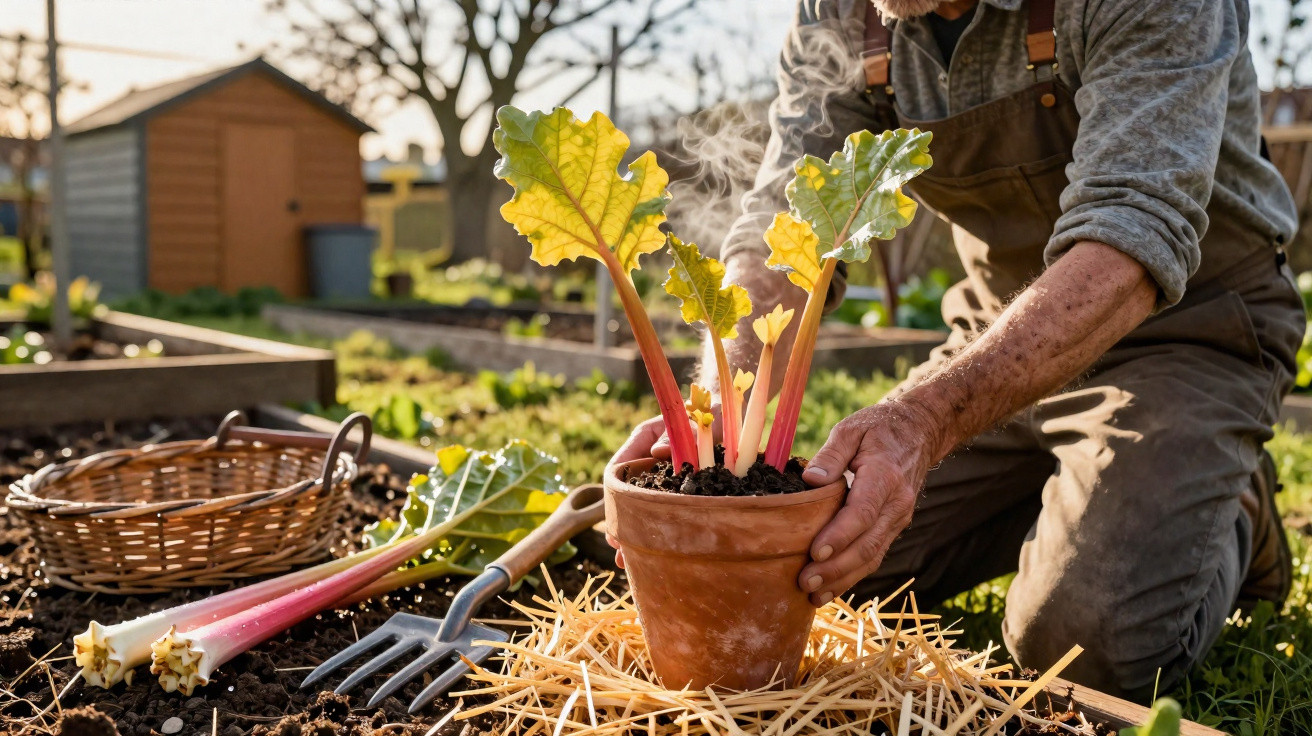
Many amateur gardeners don’t realise just how much potential sits in their rhubarb patch. Using an old, almost forgotten kitchen-garden technique, you can produce tender, rosy stalks from late winter onwards, with far less sharpness-ideal for cakes, compotes and puddings.
What the method is all about
Gardeners call this trick “rhubarb forcing”. In practice, it means growing the plant in darkness, which shifts its whole growth pattern. It pushes up new stalks more quickly, and they come out longer, softer and noticeably less acidic.
"If you force rhubarb, you bring the harvest forward by several weeks-and you also get more aromatic, less stringy stalks."
In a normal year, the rhubarb season begins in April and finishes in June. After that, the oxalic acid level in the stalks rises so much that they really shouldn’t be eaten. Forcing often moves the first harvest into March, and in mild winters it can even start in late February.
Why rhubarb improves in the dark
Out in the garden, rhubarb grows through photosynthesis: the leaves turn sunlight into energy. That energy drives the stalks upwards and also feeds the thick rootstock-known as the rhizome.
When you force rhubarb, you deliberately take light away. Even so, the rhizome is still packed with reserves built up during the previous season. Because the leaves can’t supply fresh energy, the plant has to dip into those stores to keep growing.
The result is that the stalks stretch in search of light, turning softer, developing fewer fibres and storing fewer acids. At the same time, chlorophyll doesn’t form-creating the characteristic pale pink to vivid, bright-pink stems that stand out the moment you put them on the worktop.
The job of the dark cover
To force rhubarb, you place a lightproof cover over the crown. Commercial growers use purpose-made forcing pots (often terracotta), but in a home garden you can usually make do with what you already have.
The cover does two things:
- Darkness: It blocks daylight completely, triggering the altered growth mode.
- Warmth: It traps a little heat, so the soil cools less and the plant gets moving earlier.
Tall, wide containers are best, as they leave room for the new stalks to lengthen. In many gardens people use:
- a large terracotta pot turned upside down (seal the drainage hole)
- a black builder’s tub or bucket
- a sturdy plastic barrel
- an old metal or plastic dustbin
The key point is simple: no light must get inside. If your container is pale, wrap it in dark polythene, or even an old hessian sack.
Step-by-step: how to force your rhubarb
1. Choose the right moment
Start at the end of winter, while rhubarb is still dormant or only just showing buds. The ground should no longer be deeply frozen; a bit of frost won’t hurt. If you begin too late, you lose the advantage, because the plant will already be taking in energy through its leaves.
2. Prepare the root zone
Loosen the soil lightly around the crown and clear away weeds. Then give the root area a small boost:
- work in a handful of well-rotted farmyard manure or compost
- spread a thick mulch layer-such as leaves or straw-around the plant
Mulch helps hold warmth in the ground and protects the crown from sharp temperature swings, which further encourages early growth.
3. Create complete darkness
Now place the cover directly over the crown, ideally so it sits on the soil all the way round. If there are small gaps, pack them with soil or mulch to stop any stray light getting in.
"The ideal spot for forcing is sheltered from wind. That keeps the temperature under the cover more stable, and stops the container blowing over in the first storm."
If you like, add extra mulch or a board on top of the cover. This adds weight and can improve the heat-retaining effect.
How long does forcing take?
From here on, it’s a waiting game. Depending on the weather, rhubarb usually needs around three to five weeks to reach the best length. During this period, avoid lifting the cover repeatedly-keeping it dark is the whole point.
A quick look from the side, or a brief lift, is enough to check progress. Once the stalks are roughly 20 to 30 centimetres long, you can take your first harvest.
Harvesting properly and protecting the plant
When harvesting, don’t cut the stalks. Instead, twist them out at the base: grip as low down as you can, rotate gently, and pull outwards at the same time. This leaves a smaller wound and helps the crown recover more quickly.
Typical signs that forcing has worked well:
| Feature | Forced rhubarb | Normally grown rhubarb |
|---|---|---|
| Colour | pale pink to strong, vivid pink | often green with red tones |
| Texture | very tender, barely any fibre | sturdier, with more noticeable fibres |
| Taste | milder, less acidic | much sharper |
| Harvest time | from late winter / early spring | from April |
After harvesting, remove the cover. The plant needs the rest of the season to grow fresh leaves and rebuild reserves in the rhizome.
How often can you force a crown?
Forcing is more demanding than normal growth, because the plant relies heavily on stored energy. For that reason, a single crown shouldn’t be forced every year.
Good practice in a home garden:
- use older, vigorous plants-at least three to four years old
- force one crown and let another grow normally
- give the forced crown a break the following year
If you have several plants in a bed, you can rotate which one you force each year, keeping the patch healthy and productive over the long term.
Which varieties are especially suitable?
In principle, any rhubarb variety can be forced. However, naturally red-stemmed types often produce the most appealing results in both looks and flavour. Under a cover they develop an intense, almost luminous colour and a very mild taste.
Green-fleshed varieties benefit as well: the stalks become softer and the acidity drops noticeably, even if the colour is less dramatic.
Common mistakes-and how to avoid them
- Forcing for too long: Very over-extended, pale stalks can turn soft and unstable. It’s better to harvest earlier, and then pick again.
- Light leaks: Even small gaps reduce the effect. Sealing them is worth the effort.
- Forcing young plants: First-year or weak crowns need their reserves for building strength and should be left to grow naturally.
- No feeding after forcing: Forced plants respond well to a dressing of compost and regular watering in spring.
What to do with it in the kitchen
Forced rhubarb is particularly good for delicate puddings where too much acidity would dominate. Popular ideas include:
- gentle compotes for yoghurt or porridge
- cakes with less sugar, because the stalks are milder
- rhubarb crumble or streusel-style traybakes
- chutneys to serve with cheese or grilled foods
Because the stalks are so tender, they break down more quickly during cooking. Shorter cooking times help preserve both texture and colour.
Practical additions for day-to-day gardening
If you’re new to forcing, begin with just one crown and combine that early crop with normally grown rhubarb later on. This effectively stretches the season: first the tender, mild stems from the dark, then the more robust stalks from the open bed.
It’s also worth keeping an eye on the leaves. They aren’t for eating, but they can be used to make plant teas and extracts that help deter aphids in the vegetable patch. That gives rhubarb a double role in the garden: early sweetness for the kitchen, and natural support for pest control.


Comments
No comments yet. Be the first to comment!
Leave a Comment