
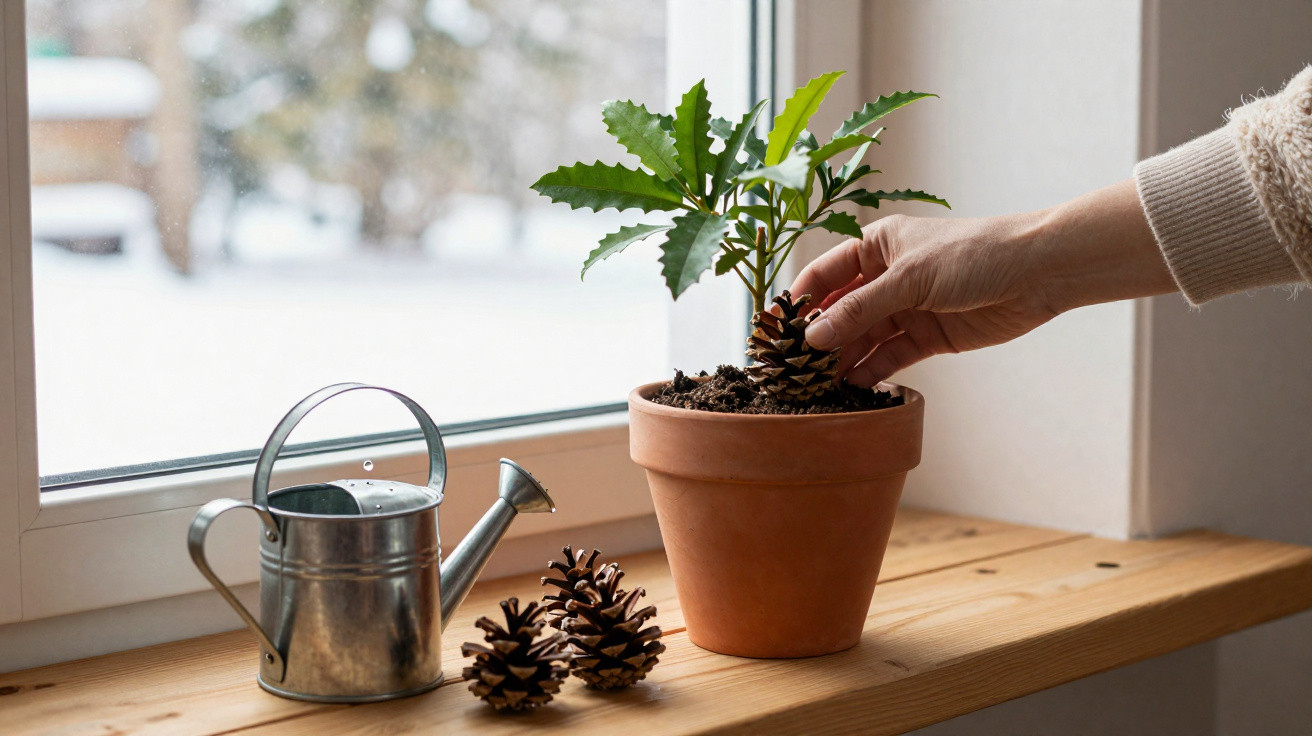
In January, many people look at their living room plants and see the same scene: monstera, ficus or a rubber plant with drooping leaves; some turning yellow; others suddenly looking soft and depleted. A common reflex is to reach for the watering can - and make things worse. Yet a simple pine cone collected outdoors can help right here, acting as a natural aid that supports the potting compost, the roots and the microclimate inside the pot.
Heating on, roots under pressure: why plants go limp in winter
Indoors it’s pleasantly warm while outside it’s freezing - and for houseplants this combination of central heating and weak winter light is genuinely demanding. Warm, dry air pulls moisture from the leaves. At the same time, many plants slow their metabolism in winter as they enter a resting period. Growth reduces, and with it the need for water and nutrients.
This is where the classic mistake happens: the surface of the compost feels dry and the leaves look tired, so people water. And water a lot. But inside the root ball the compost is often still damp - sometimes even wet. Excess water then collects at the bottom, displacing oxygen so the roots can barely breathe.
"Waterlogging is more dangerous in winter than short-term dryness - it quietly but reliably leads to root rot."
The result: roots start to rot, fungi and bacteria thrive, and the plant seems to collapse “out of nowhere”. It feels like a sudden death, but it’s usually a slow decline that began weeks earlier.
A natural helper from the woods: what a pine cone does in a plant pot
This is where a helper comes in that most people associate with crafts or Christmas decorations: the pine cone. Prepared and used correctly, it works on top of the compost as a small regulator for surface moisture and air exchange - with no electronics, no app and no specialist product from the garden centre.
You simply place the cone on the surface of the compost. Don’t bury it, press it in, or glue it down. Its woody structure absorbs surplus moisture at the top and releases it gradually. That keeps the surface layer looser, makes mould less likely, and helps the pot dry out more evenly.
"A single pine cone works 24/7 as a natural buffer between dry heated air and damp compost."
At the same time, it acts like a thin, airy mulch layer: compost splashes less during watering, it doesn’t dry out abruptly, and temperature swings are a little gentler.
How the cone “signals” when your plant needs water
Pine cones are small marvels of nature. Their scales respond to humidity - opening and closing depending on conditions. You can use that behaviour to your advantage at home.
- Scales mostly closed: the air and/or the compost is still clearly moist. Watering now is usually too soon.
- Scales wide open: the surrounding conditions are dry. It’s worth checking the compost deeper in the pot before watering.
In this way, the cone becomes a kind of natural moisture indicator. Of course, it doesn’t replace a professional meter, but it provides a surprisingly dependable visual cue - and it does so without batteries.
"Open scales: check. Closed scales: leave the watering can alone."
Another benefit: the compost surface tends to stay cleaner. That typical white or greenish winter crust - mineral build-up or algae - struggles to form when the cone absorbs some of the surface moisture.
How to prepare pine cones properly for a plant pot
If you put any random damp cone from the woods straight into a pot, you could bring insects, larvae or fungal spores into your living room. A few simple steps help you avoid that.
Step-by-step instructions
- 1. Collect carefully: only take dry, open cones from a park or woodland. They’ve already dried out well.
- 2. Clean roughly: remove soil, needles and moss by hand or with an old brush.
- 3. “Sterilise” in the oven: heat the cones for about 20–30 minutes at around 90 °C, or leave them on a warm radiator for several days.
- 4. Let them cool: place them on the compost only once they are completely cold.
- 5. Position them: set one cone loosely on the surface; for larger planters, spread two or three.
That’s all that’s required. It costs nothing, uses materials you already have access to, and combines a decorative look with a real benefit for the plant.
Helping houseplants through the cold season without leaf drama
A pine cone won’t solve every issue on its own. What really matters are a few basics - in winter they’re often more important than choosing the perfect fertiliser in spring.
- Water less: most plants need only a fraction of their summer water during the resting period. Water only when the compost is dry several centimetres down.
- Avoid heat sources: don’t place pots directly on radiators or right beside a fireplace. The air is extremely dry there, and leaves can effectively scorch.
- Give more light: move plants closer to the window, but keep leaves from touching icy cold glass. This boosts energy without risking cold damage.
- Increase humidity: grouping plants together, placing bowls of water on radiators, or setting a small dish of water next to the pot can soften the drying effects of heated air.
"If you water less in winter, position plants more sensibly and place a cone on the compost, you’ll often save more plants than any liquid fertiliser ever could."
Can a pine cone replace fertiliser?
Strictly speaking, the cone itself contains hardly any nutrients that would move into the compost in meaningful amounts. The strength of this method isn’t feeding - it’s protection: roots stay healthier, the compost is less likely to turn sour, and the plant draws on its reserves more steadily.
With healthy roots, the plant can restart strongly in spring when you switch to organic feed or a slow-release fertiliser. You could put it like this: the cone isn’t food, it’s a bodyguard - keeping an eye on roots and moisture levels while the plant takes a break.
Which plants suit the trick - and where to be careful
Species that particularly benefit are those that hate waterlogging and are prone to sitting with overly wet roots:
- Monstera, Philodendron, Epipremnum
- Ficus varieties (e.g. rubber plant, weeping fig)
- Indoor palms and dragon trees
- Rubber-plant relatives and many classic “office plants”
It’s wise to be a little more cautious with very small pots or sensitive succulents. In those cases, a smaller cone - or even a piece of one - can be enough, so the compost still ventilates well and the plant isn’t completely “covered”.
If you have pets, keep an eye on whether your cat or dog chews the cone. Usually nothing happens, but some animals develop a real fascination for anything that smells like woodland - and then the cone can travel across the living room faster than your plant would like.
Getting more from the trick: combinations and practical examples
In everyday use, the pine cone is most effective when paired with a few extra habits:
- A more open potting mix: next time you repot, mix in some coarse pine bark, expanded clay or perlite so excess water drains more freely.
- A drainage layer: a base layer of expanded clay pellets or gravel helps prevent water sitting permanently around the roots.
- Regular checks: every one to two weeks, test the compost deeper down with your finger - not just the surface. The cone is the signal; your hand provides the confirmation.
A familiar living-room scenario: a monstera stands beside the radiator, shows yellowing leaves, and the pot feels heavy. Instead of fertilising straight away, you reduce watering, move the plant a little further from the radiator and place a prepared pine cone on the compost. After a few weeks the foliage stabilises and new leaves grow more robustly - not because extra nutrients were added, but because the roots had time to recover.
If you regularly battle winter problems with houseplants, collect a small jar of cones on your next walk in the park or woods. Once properly cleaned and prepared, they last for years. What looks like woodland waste becomes a simple tool for getting plants through the cold season - without high-tech gadgets and without specialist fertilisers.


Comments
No comments yet. Be the first to comment!
Leave a Comment