
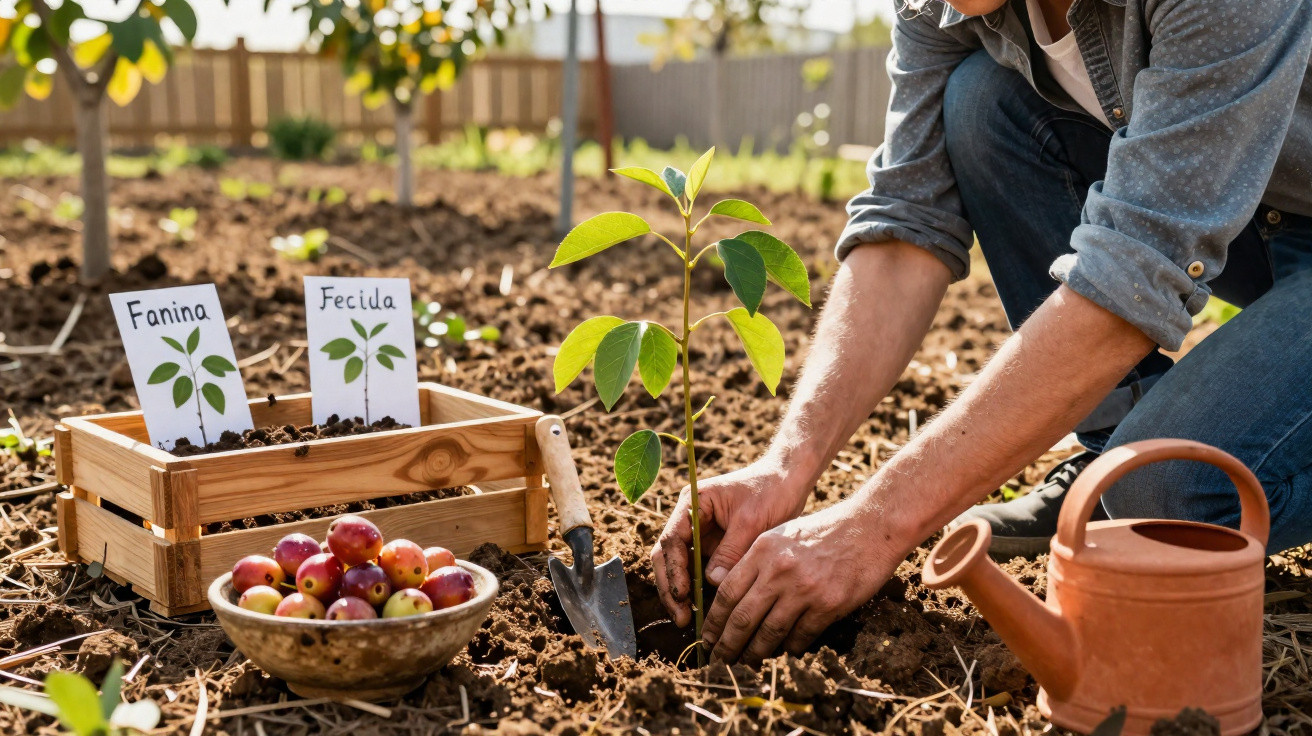
Many hobby gardeners instinctively choose apple, cherry or plum. Yet there’s a rarely planted fruit tree that shrugs off heat, asks for very little and can be extraordinarily productive - and it could quietly become the standout in your garden. The key decision falls at the end of March: in that exact window, you determine whether the tree establishes well or spends years falling short of its potential.
An almost forgotten treasure: the jujube tree
The tree in question is the jujube tree, also known as the Chinese date. Originally from Asia, it produces small, olive-shaped fruits with a flavour that brings to mind sweet apples. When dried, they resemble dates; when fresh, they’re crisp and full of aroma.
"The jujube tree is considered extremely robust, produces plenty of fruit and copes with heat and drought far better than many classic fruit varieties."
While apple or pear trees are often planted in autumn, the jujube tree prefers a late spring start. At the end of March - once the soil begins to warm and the harshest frosts have passed - it gets the best possible launch.
Why the end of March is the ideal planting window
The jujube tree can be sensitive to sharp temperature swings around the roots. Plant it too early and a sudden cold snap may damage fine roots. If you wait until the end of March, the roots benefit from:
- soil that has already warmed slightly,
- a lower risk of late frosts,
- a long growing season before winter.
This gives the young tree the summer it needs to build a strong root system - the foundation for heavy crops in the years that follow.
Rule 1: A fully sunny spot with as much warmth as possible
Because the jujube tree comes from hot regions, it wants sun - not “bright partial shade”, but as much direct light as you can provide.
The best position in the garden
Choose the warmest, brightest area on your plot. Good options include:
- a south-facing position by a house wall or masonry that stores heat,
- a slightly raised spot with no shade from trees or carports,
- a sunny corner of the front garden, well away from tall hedges.
Any place that stays shaded for long periods slows growth and reduces flowering. With a jujube tree, less sun almost always means fewer fruits.
"The more direct sun the jujube tree receives, the sweeter and more aromatic the fruit will be."
Rule 2: Free-draining soil - waterlogging is the enemy
As well as it handles drought, it struggles with standing water. If moisture sits around the roots, rot can set in quickly.
How to test and improve your soil
Take a handful of soil from the intended spot, knead it with a little water and form it into a ball:
- If it crumbles apart easily, the soil is more sandy to medium - ideal for a jujube tree.
- If you can roll it into a tough “sausage”, you’re dealing with heavy clay or very loamy soil - and you’ll need to improve it.
With heavy soils, it’s worth preparing a slightly larger planting area and improving it deliberately:
- put a 10–15 centimetre layer of coarse sand or fine gravel at the base of the planting hole,
- mix the excavated soil with sand, grit or fine chippings,
- if the soil is pure sand, also work in a little well-rotted compost.
"The root zone should feel moist, but never ‘spongy’. Any water you apply must be able to drain away quickly."
Rule 3: Plan for two trees - for significantly more fruit
Many sellers describe the jujube tree as self-fertile. That’s partly true, but in real gardens the pattern is clear: adding a second tree of a different variety noticeably increases the harvest.
Why two varieties pay off
The flowers are visited mainly by insects. When they move between two different jujube trees, pollination improves. The result is:
- more fruits setting,
- a more even harvest,
- more reliable yields even in difficult years.
If you have the space, plant at least two trees - three is better. The ideal spacing is 4–5 metres. That way they don’t compete too strongly for water and nutrients, the canopy can develop freely, and wind can dry wet leaves faster - giving fungal diseases fewer opportunities.
Rule 4: Water wisely - generous at first, then with restraint
The first thorough watering after planting
Immediately after setting the tree into the planting hole, give it a substantial watering. 10 litres is a good guide; on very sandy soil, it can be more.
"The first heavy watering presses the soil firmly around the roots and closes air gaps that could otherwise turn into dry patches."
Apply the water slowly in two or three rounds so it doesn’t just run off. If the soil settles, top it up carefully and firm it down lightly.
Keeping moisture in, without drowning the roots
For the first few weeks after planting, keep the root area slightly moist - never soggy. A mulch layer is a simple aid:
- 2–5 centimetres of straw, chipped bark or dry grass clippings,
- don’t pile it against the trunk; leave a small ring of a few centimetres clear,
- loosen the mulch regularly so it doesn’t go mouldy.
This reduces evaporation and keeps soil temperatures more stable. After that, water only when the soil beneath the mulch feels clearly dry. In typical summer weather, that often means every few days; in extreme heat, a bit more frequently.
What the jujube tree gives back: fruit, vitamins, climate resilience
If you give the tree this kind of start, it rewards you with some striking strengths.
High yields in a small space
The jujube tree usually stays at a moderate height, responds well to pruning and suits smaller gardens too. Its many fruits ripen from late summer into autumn and, depending on ripeness, can be eaten fresh, dried or used in cooking.
| Feature | Garden benefit |
|---|---|
| High vitamin C levels | A healthy snack straight from the tree |
| Heat resistance | Suitable for dry summers and climate change |
| Low water requirement (after establishment) | Less watering effort, saves money and time |
| Relatively robust health | Little need for spraying, good for a wildlife-friendly garden |
Versatile ways to use the fruit
In many parts of Asia, jujubes have been part of cooking and home remedies for centuries. In a home garden, typical uses include:
- eating them straight from the tree, slightly crisp like an apple,
- drying them into a sweet snack, similar to dates or raisins,
- preserving them as stewed fruit, purée or jam,
- adding them to muesli or baking.
If you like experimenting, you can also combine the fruit with apples or pears. That brings interesting flavour variations and makes the harvest more diverse.
What to keep in mind after planting
In the first two years, root development is the priority. Pruning should be modest during this phase: remove only dead, damaged or strongly inward-growing shoots. A light formative prune is usually enough once the tree has built a stable framework.
Later on, the jujube tree can also cope with a harder cutback. This helps keep it compact, makes the fruit easier to reach and improves airflow - which reduces disease pressure.
"Anyone who starts planting at the end of March and follows the four basic rules lays the groundwork for a fruit tree that handles climate extremes far more calmly than many garden classics."
In areas with hot, dry summers, the jujube tree can become a kind of “insurance policy”: when other trees suffer from lack of water, it will often still produce fruit reliably - showing that so-called exotics aren’t just a novelty, but a practical response to changing weather patterns.
Comments
No comments yet. Be the first to comment!
Leave a Comment