
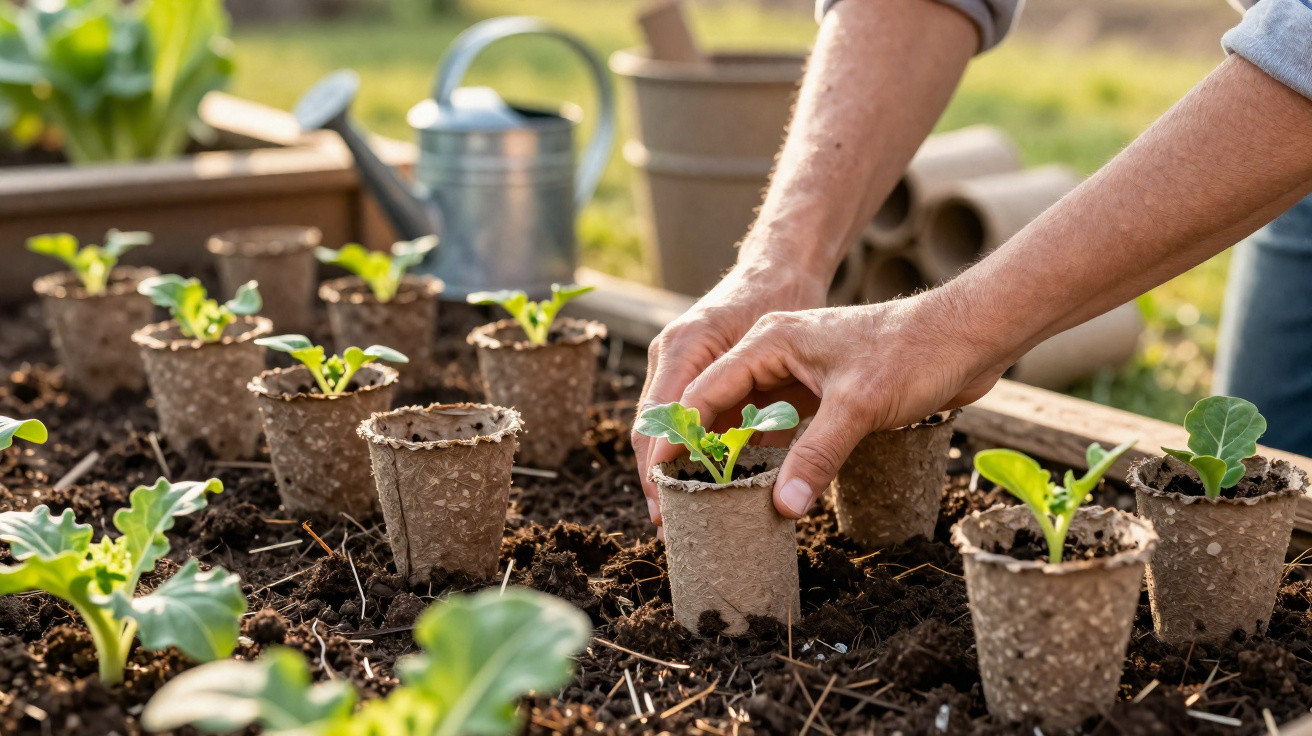
Many amateur gardeners spend spring watching young plants get nibbled down to nothing or knocked back by frost. While pricey polytunnels and mini greenhouses are flying off the shelves in DIY stores, a growing community is relying on an unglamorous bathroom leftover: the cardboard core from a toilet roll. It may sound like a craft project, but it’s a smart, low-cost way to reduce slug damage and cold-related losses.
Why the cardboard core can save cold frames and seed rows
Spring crops such as tomatoes, lettuce, peas and flowers will germinate in mild weather, yet they’re highly vulnerable to night frosts and hungry slugs. Just one night close to 0°C can scorch tender new leaves. Slugs, meanwhile, can wipe out an entire line of seedlings in a matter of hours.
That’s where the humble cardboard ring earns its keep. It provides stability, physical protection and a small buffering zone around the stem.
"The cardboard core forms a kind of mini protective wall: it blocks wind, softens temperature swings and makes it harder for slugs to attack the delicate shoots directly."
Because cardboard lets water pass through, moisture doesn’t get trapped and the soil can continue to breathe. At the same time, the small tube acts as a windbreak around the stem, keeping cold draughts at ground level away from the plant’s collar. This area is particularly prone to rot and frost cracking.
How to use toilet roll tubes properly in the bed
Using them outdoors is straightforward and costs nothing-provided you keep collecting the empty tubes.
Make a protective ring against slugs and cold
After planting out your young plants, work through the steps below:
- Gently squash the empty cardboard core lengthways once so it opens out more easily.
- Place it carefully around the seedling’s stem, taking care not to trap any leaves.
- Press the ring about 2–3 cm into the soil so it stands firm.
- Leave the top of the cardboard a few centimetres above the soil, so slugs can’t simply crawl over it.
You can also spread a thin layer of straw, leaf litter or dry grass clippings around the outside of the ring. This adds insulation and makes it more difficult for crawling pests to reach the stem from the side. If a particularly cold night is forecast, lay horticultural fleece over the bed and the rings in the evening. The cardboard circles help stop the fleece from resting directly on the sensitive leaves.
Other places to use them in the garden
Once you start, you quickly realise the cardboard sleeves are more adaptable than expected. Many gardeners use them:
- as a starter aid for seed rows of carrots, parsnips or beetroot,
- as small ridges to separate vegetable beds from lawn,
- as mini tunnels by slicing several tubes lengthways and placing them like half-pipes over very short seed strips.
This creates a whole toolbox of protection options without buying new materials.
Cardboard cores as compostable plant pots
Even before seedlings are ready for the garden, the tubes can be useful indoors or in a greenhouse. With almost no effort, they can be turned into small, biodegradable growing pots.
How to make seed-starting pots from cardboard cores
To make your own pots, you only need scissors and some seed compost:
- If you want shorter pots, cut the tube to half its height.
- Snip the bottom edge in four places, about 2 cm up.
- Fold the flaps inwards to form a base.
- Fill the pot with seed compost and add the seeds.
Cardboard absorbs a little water, then dries out again, which helps maintain more even moisture around the roots. After a few weeks, once the seedlings are large enough, you can plant the entire pot straight into the bed-without stressing the roots through pricking out.
"The plant simply grows into the soil with its cardboard pot, and over time the roots push through the soft cardboard."
The big advantage is that you avoid the root breakage that often happens when plants are removed from plastic trays. Sensitive crops, in particular, tend to cope far better when their roots are left undisturbed.
After the season: feed for the compost
Once the cardboard sleeves in the bed have become damp and soft, they shouldn’t go into general waste-they belong in the compost bin. There, they count as part of the so-called “brown” fraction: carbon-rich material similar to dry leaves or woodchip.
If you build your compost in layers, the extra material can help because:
- chopped toilet roll tubes aerate the heap,
- they absorb excess moisture,
- they provide food for worms and soil organisms.
Combining wet kitchen scraps, grass clippings and cardboard supports a steadier rotting process. After a few months you get a humus-rich soil improver, which then benefits the vegetable beds again. In that way, the cycle runs from bathroom, to bed, and back into the soil.
What gardeners should watch out for
Despite the benefits, it’s worth paying attention to what kind of cardboard you’re putting into the garden. Not all cardboard is equally suitable.
| Suitable | Best avoided |
|---|---|
| Plain, unbleached toilet roll tubes with no printing | Heavily printed cardboard packaging (bright colours, varnishes) |
| Thin, highly absorbent cardboard | Coated or glossy card |
| Standard-size toilet roll and kitchen roll tubes | Cardboard with plastic windows, adhesive strips or film |
If you want to be completely sure, tear any suspicious pieces: if the surface feels smooth and slightly waxy, it’s better kept out of the soil. Everyday, untreated toilet roll tubes are generally fine.
Practical tips: getting the most out of the tubes
A few simple habits at home and in the garden help make the effort worthwhile:
- Collect tubes and store them dry in a box-so you have plenty ready for spring.
- Plan ahead: start the first seed pots in late winter for peppers or tomatoes.
- Check the tubes in the bed after heavy rain and press them back in if needed so they stay stable.
- If slugs are a serious problem, combine the tubes with other methods such as beer traps, slug fences or hand-picking.
If space is tight, stand the finished cardboard pots close together in shallow crates or old baking dishes. This stops them toppling over and makes it easier to water from below.
Why this trick fits the moment
The move towards using everyday waste in the garden is no accident. Many hobby gardeners want to save money, cut down on plastic and still give their plots a strong start to the season. The cardboard core ticks several boxes at once:
- it costs nothing,
- it can be used more than once (pot, protective ring, compost material),
- it replaces disposable plastic pots,
- it’s simple to use-even for beginners.
It also shows how much small details can determine success or failure in the bed. If you protect seed rows and young plants well during the first critical weeks, you often end up with sturdier plants and earlier harvests. With heat-loving crops such as tomatoes or courgettes, that delicate early stage matters a great deal.
For many people, this triggers a change in mindset: instead of cardboard scraps going straight in the bin, they become part of garden planning. And the unassuming toilet roll turns from a throwaway item into a practical helper that can save more than one spring sowing through that tricky first night.
Comments
No comments yet. Be the first to comment!
Leave a Comment