
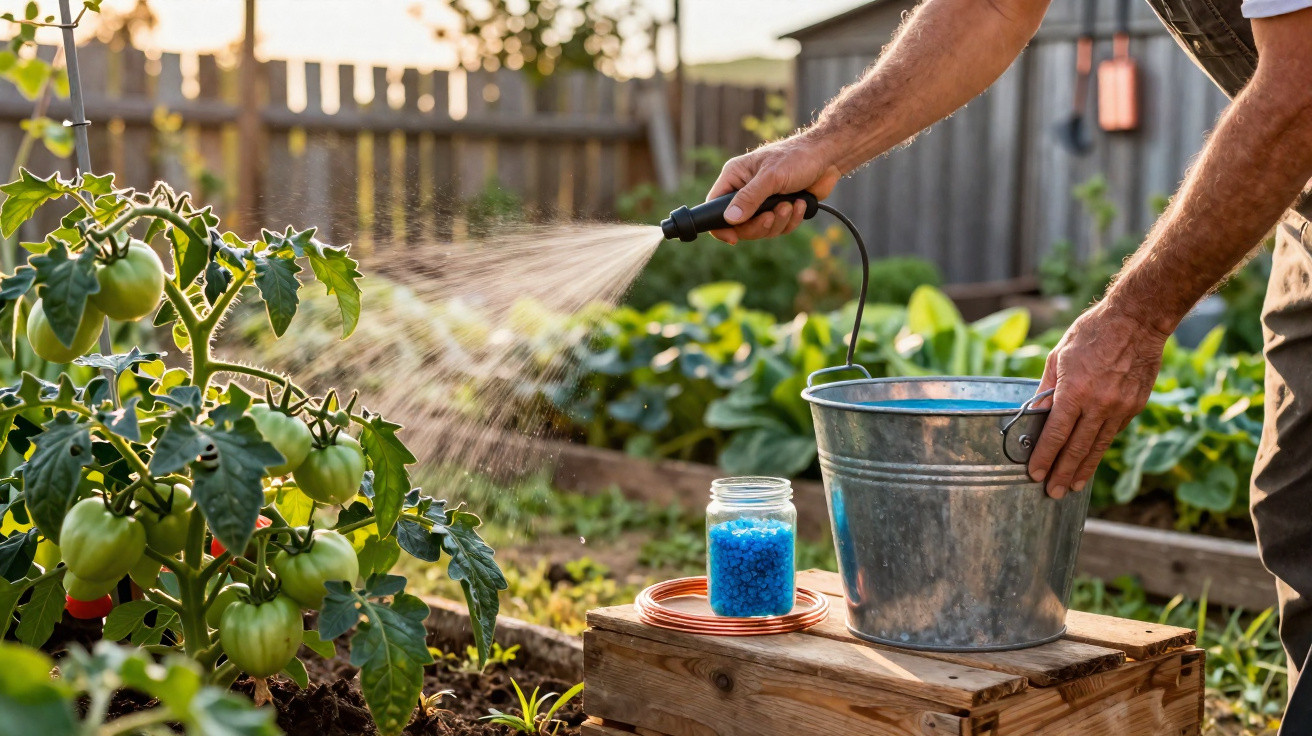
In the 1970s, plenty of village gardens had a straightforward answer to this nightmare: a blue liquid mixed in a bucket, applied once a week, and the beds stayed surprisingly healthy for a long time. Now that more people want to cut back on harsh chemistry, that old approach is attracting attention again - using copper, more specifically the traditional copper broth.
Old garden know-how: how grandparents kept the fungus under control
When tomatoes and potatoes suddenly start to fail
The culprit is late blight, often just called “fungal infection” in everyday talk. It thrives in warm, wet spells, builds up in tightly planted beds, and can spread at speed. If you don’t act early enough, you can lose a large share of your tomato or potato crop within days.
- The first signs are yellowish-brown patches on the leaves.
- Later, the stems turn dark, soft and brittle.
- Finally, the fruit rots on the plant before it can ripen.
A lot of gardeners recognise the pattern: at the end of June or start of July everything still looks fine - then, not long after, the whole planting collapses. That happened in the past too, but many allotment holders and smallholders knew how to prevent it.
“In many gardens, the blue copper solution was as much part of the weekend as popping to the baker - one spray, and the bed was ready for the next band of rain.”
Saturday routine: bucket, watering can, blue mixture
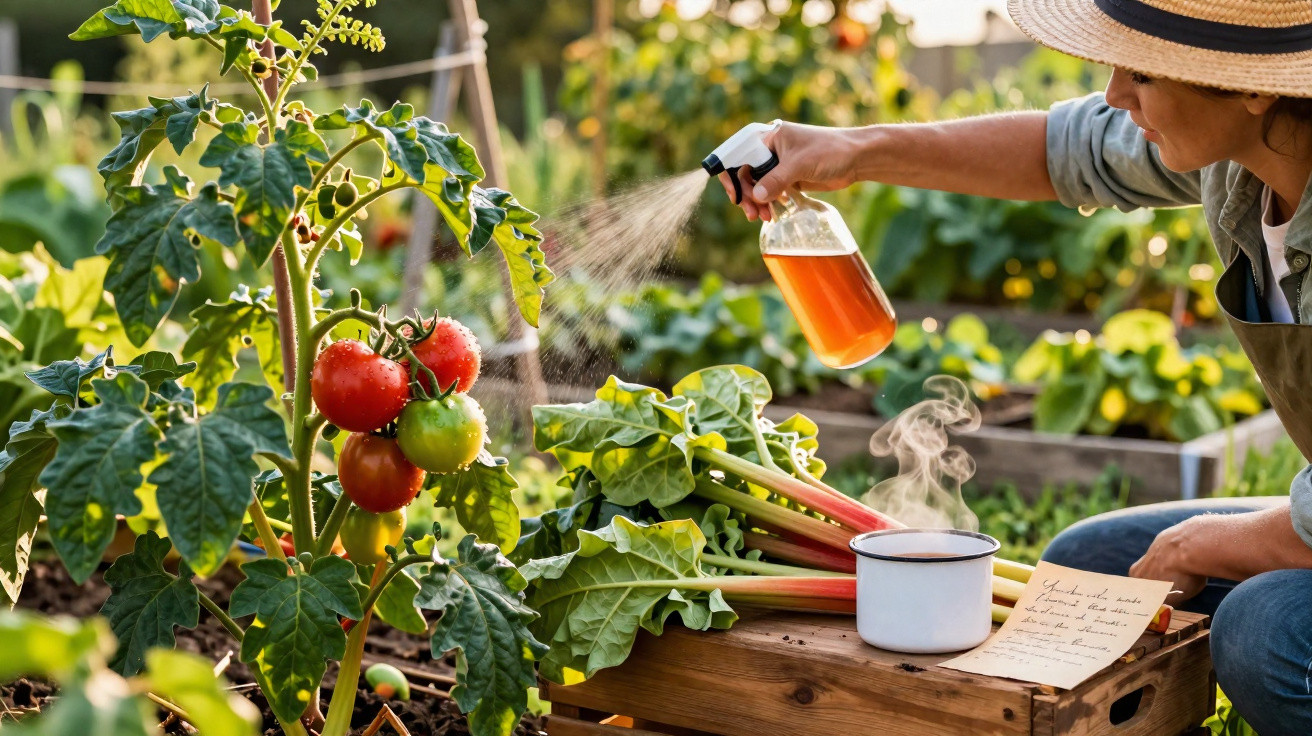
Back then, older gardeners would traditionally mix their copper brew on Saturday morning. With a bucket, a wooden stirrer, and either a watering can or a sprayer, they’d work their way around the garden. Tomato canes, potato rows and grapevines all received a fine, even coating over the foliage.
What it did: a thin protective film formed on the leaves. Fungal spores looking to settle in damp conditions no longer found the right environment to germinate. Plants stayed healthy for longer, infections were much weaker - and sometimes didn’t appear at all.
What’s behind the blue mixture: copper sulphate in brief
How copper stops the fungus
Traditional copper treatments are based on a solution of copper salts - usually copper sulphate mixed with lime - commonly referred to as copper broth. It doesn’t work from inside the plant; it sits on the surface.
There, copper disrupts the metabolism of fungal spores and prevents them developing. The plant itself absorbs only tiny amounts; most of it remains as a protective layer on the leaves until rain washes it off.
“Copper broth works like a raincoat for the leaf - it cures nothing, but it stops the fungus from getting established in the first place.”
Benefits - and where the limits are
Copper’s enduring appeal comes from its tough, proven effectiveness. It’s considered one of the most dependable protective barriers against fungal diseases on tomatoes, potatoes and vines, and - in strictly limited quantities - it is also permitted in organic farming.
Even so, there’s a downside: copper is a heavy metal. It barely breaks down in soil and can build up if it’s used too often or in excessive amounts. That harms soil life such as earthworms and beneficial micro-organisms.
- Spraying too frequently can, over time, lead to excess copper in the soil.
- As a result, soil structure and the activity of soil organisms decline.
- A sensible approach is only a few applications per season, and only when needed.
So if you use copper, it’s best to measure carefully, keep it minimal, and combine it with other measures - rather than spraying routinely every week.
How to use the old method today: copper treatment step by step
Mixing it up: equipment and dosage
To apply a classic treatment against fungal infection in the vegetable garden, you don’t need much specialist kit. What matters is clean equipment and careful handling of quantities.
- A clean pressure sprayer or a fine-rose watering can (about 10 litres capacity)
- About 30 to 40 grams of copper broth powder per 10 litres of water (depending on the product directions)
- A bucket or large container for pre-mixing
- A stirring stick, gloves and, depending on sensitivity, a face mask
Start by putting water in the bucket, then slowly stir in the powder until there are no lumps. Pour the solution into the sprayer and use it straight away. The instructions on the packaging come first - different products can require different concentrations.
Timing and the right crops
If you want results, it’s better not to wait until the first leaves are already black. Copper treatment is primarily preventive.
Typical uses include:
- tomatoes outdoors and under cover
- potatoes in the bed
- grapevines in a home garden
- sensitive vegetables such as aubergines or cucumbers in very wet summers
A good time for the first application is shortly before a forecast wet spell, once plants are growing strongly. After that, an interval of around two weeks makes sense if conditions remain favourable for blight. Heavy rain shortens the gap, because it strips off the protective film more quickly.
“More than five to six treatments per season are usually neither necessary nor sensible in a hobby garden - less really is more here.”
Applying it without harm: how to spray properly
For the treatment to work without putting extra stress on plants, it helps to stick to a few basics:
- Spray only on dry, calm days.
- Choose early morning or late afternoon, not the midday sun.
- Wet the leaves evenly on the top and underside, without it dripping off the plants.
- Remove and dispose of heavily infected leaves before treatment.
It’s also worth reviewing how you grow the crop: plants spaced well apart with good air circulation dry faster and are naturally less prone to infection.
More than spraying: complementary strategies against fungal infection
Simple gardening tweaks to reduce pressure
If you don’t rely on copper alone and instead adjust several factors, you build a much steadier level of protection. A few examples that have proven themselves in many gardens:
- Rain cover for tomatoes: A simple roof of polythene or corrugated sheets greatly reduces wet foliage.
- Never water from above: Water should go to the roots, not onto the leaves.
- Airy spacing: More space between plants helps the foliage dry quicker.
- Mulching: A layer of straw, grass clippings or leaves keeps moisture more even and supports soil organisms.
On top of that, many gardeners swear by natural sprays such as nettle feed, garlic extract or horsetail tea. They don’t fully replace copper, but they can delay treatments and help plants become more resilient.
How gardeners are experiencing copper’s return
Across allotments and community gardens in recent years, a similar picture has emerged: where copper broth is used selectively and sparingly, tomato plants and potatoes keep going noticeably longer. Leaves stay greener, leaf loss starts later, and harvesting can continue well into late summer.
A well-established approach there is to combine several points:
- Early, preventive treatment ahead of longer rainy periods.
- In-between applications using herbal feeds instead of constant copper.
- Careful choice of varieties (sturdy, blight-resistant tomato varieties).
- Regular removal of infected leaves before they become a source of spores.
Nobody thinking long-term depends solely on the blue solution. It’s one component within a wider system intended to make the whole garden more robust.
A healthy garden needs balance: tradition meets ecology
Planning copper responsibly
If you’re reviving the old 1970s method, it makes sense to adapt it to today. That includes keeping an eye on permitted annual maximum amounts and being willing to skip a treatment when the weather stays dry and settled.
A rough annual plan could look like this:
| Period | Measure |
|---|---|
| Early spring | Loosen soil, mulch, choose resilient varieties |
| May/June | Put up rain cover, start first herbal-feed sprays |
| June/July | In blight weather, one to three copper treatments, with natural products in between |
| Late summer | Remove infected plant remains from the bed consistently |
That way, pressure on the soil is spread out while the key crops remain largely protected.
More tips for resilient beds
A living soil, varied crop rotation and mixed planting are the strongest allies over the long term. Growing tomatoes in the same spot every year practically invites fungal diseases. It’s better to rotate beds and move sensitive crops from time to time.
It can also help to pair tomatoes with plants often seen as “protective companions”, such as basil, alliums or marigolds between the plants. They may confuse pests, improve soil structure, or simply increase diversity.
Ultimately it’s about finding the middle ground: the old knowledge of blue copper broth can save many harvests when it’s combined with modern caution and consideration for soil life and biodiversity. Used carefully, the method gives a real advantage in wet summers.


Comments
No comments yet. Be the first to comment!
Leave a Comment