
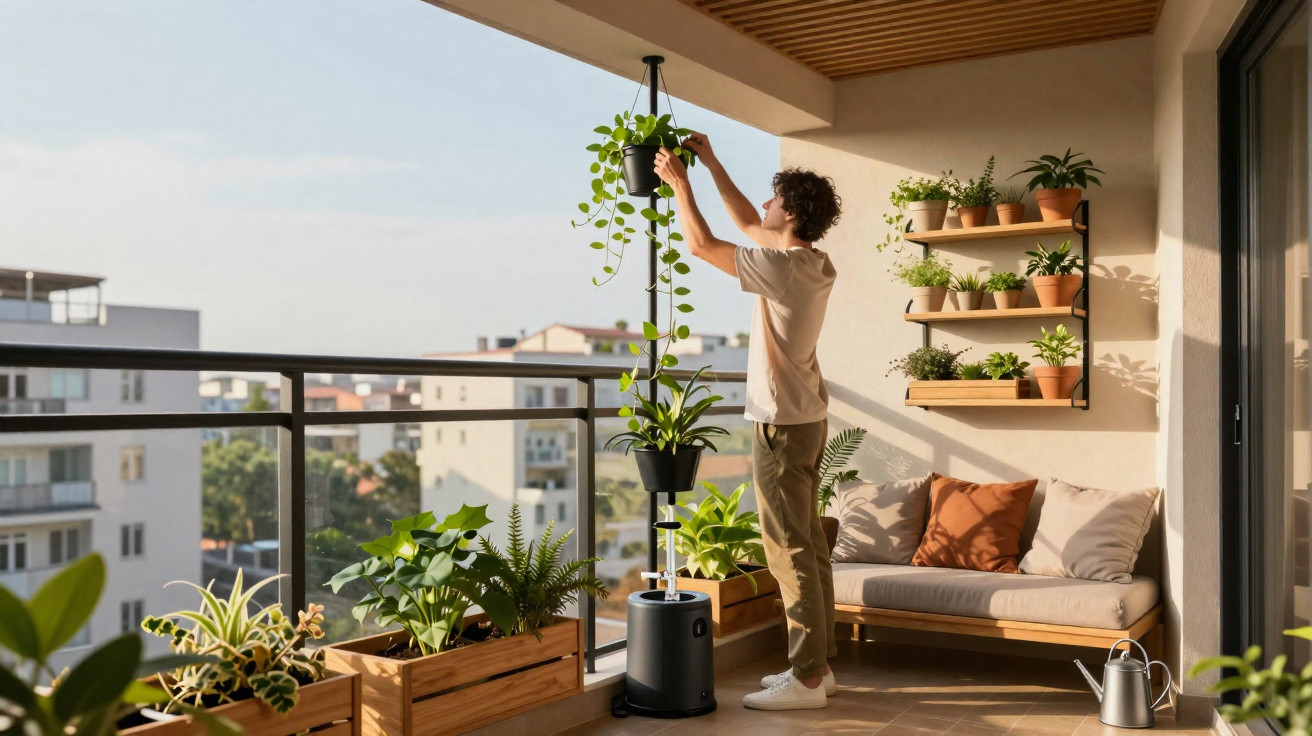
If your balcony has so far been lined with pots shoulder to shoulder, you’ll have noticed one thing: it rarely feels truly inviting. A trend spilling over from the interiors world is now reimagining outdoor space entirely - less clutter on the floor, more lightness and clean lines. The best part is that it works even on very small rental balconies.
No more pot chaos: plants move upwards
At the heart of this new approach is a simple shift: plants stop living as individual pots on the ground and instead form shared rows and planted “surfaces” in raised containers. The classic look is a long, rectangular planter box sitting on a slim, delicate frame in black metal or timber.
"Instead of ten scattered flowerpots, one slim planting table: even a tiny balcony suddenly looks tidy and modern."
These frames lift planting by around 50 to 90 centimetres. That one change can dramatically alter how your balcony feels:
- The floor stays mostly clear, so the space appears larger.
- Greenery moves up into your natural line of sight at seating height.
- Plants read like part of the furniture, not random decoration.
Especially in cities, where every square metre matters, this creates new flexibility. Under the legs of the stands you can tuck stools, storage crates or a small rug - without constantly stepping around pots.
Why a mix of heights makes the balcony look intentionally designed
The real trick behind the trend is using different heights on purpose. Instead of a single “green skirting board” along the railing, you build distinct layers:
- low containers directly on the floor (for example, for herbs),
- mid-height stands placed near the seating area,
- and, where appropriate, hanging elements from the ceiling or attached to the railing.
The result is a mini plant landscape with foreground and background. Your eye has somewhere to rest, and the balcony reads as designed rather than casually filled.
It also becomes easier to zone the space clearly. With two or three well-positioned plant stands, you can separate, for instance:
- a dining spot with a table and chairs,
- a lounge corner with an armchair or bench,
- a small “garden zone” for veg and herbs.
Instead of solid privacy screens, plants take over as gentle room dividers. It feels airier and more homely than any plastic partition.
Balcony as a second living room: décor becomes furnishing
The bigger backdrop to all of this is a mindset change: the balcony is no longer treated as a dumping ground, but as an extension of the living room. Anyone working from home or spending summer evenings outside tends to want the same care in setting it up as they do indoors.
That shift also changes what planters are expected to do. A basic plastic pot may be practical, but it can look accidental in seconds. Raised planter boxes and stands, by contrast, function like proper furniture:
- They follow a clear, deliberate shape language.
- Their height aligns with chairs and tables.
- They echo colours and materials used in tables, seating or lighting.
"Greenery stops being a gap-filler and becomes a design element that supports colours, lines and even how light is guided through the space."
Two material directions are especially popular:
| Material | Effect | Best for |
|---|---|---|
| Black metal | crisp, modern, graphic | city balconies, industrial or Scandi looks |
| Wood (e.g. larch, acacia) | warm, homely, natural | country style, boho, cosy family balconies |
Both options pair easily with classic outdoor accessories such as fairy lights, lanterns, outdoor rugs and cushions. For a Scandinavian feel, lean into lots of black and white, pale woods and rich green planting. For a Mediterranean mood, terracotta tones work well alongside small olive trees and herbs such as rosemary or thyme in taller planters.
How to achieve the new plant look in just a few square metres
Although it sounds like a major makeover, the idea is straightforward to implement in practice. Here’s a realistic set-up for a typical city balcony of around three square metres:
- One long, tall plant stand along the short side, acting as a “green wall”.
- A narrow outdoor rug beneath it to visually define the seating area.
- A small bistro table with two folding chairs on the opposite side.
- One very low pot or trough on the floor for herbs next to the table.
- Two or three hanging planters with trailing plants from the ceiling or fixed high on the railing.
This creates a clear place to spend time: the eye is drawn upwards to the greenery, the floor remains relatively open, and the balcony still feels pleasantly framed - almost like a small loggia.
Which plants work well on raised stands
Not every plant copes equally well with an exposed spot on a stand. Wind, direct sun and faster-drying compost matter more up there. These options tend to perform well:
- herbs such as basil, thyme, mint and chives,
- robust container perennials, for instance lavender or ornamental grasses,
- trailing or cascading varieties such as marigold, petunia and calibrachoa (million bells),
- compact ornamental shrubs such as dwarf conifers or small decorative bushes.
If you prefer low-maintenance choices, go for drought-tolerant plants such as succulents or Mediterranean species. They handle shallower boxes better and need watering less often.
Practical tips: planning, safety and upkeep
Before you rearrange everything, it’s worth doing a quick check of the basics.
Don’t underestimate load and fixing
Raised planters concentrate weight into a smaller footprint. Keep the following in mind:
- Check the balcony’s maximum load in your tenancy documents or property particulars.
- Place heavier containers as close as possible to load-bearing walls.
- Secure stands against tipping, for example with wedges or discreet metal brackets.
- In strong winds, don’t leave tall, narrow planter boxes standing unprotected on their own.
In rented flats, a quick conversation with the building manager or managing agent is sensible if you’re planning larger, permanent set-ups.
Sort watering in a smart way
The biggest downside of the airy look is simple: compost in elevated boxes dries out faster. These measures help:
- integrated water-reservoir systems,
- a thin drainage layer of expanded clay or lava granules,
- mulching the surface (for example bark mulch or fine gravel),
- a basic drip-watering system with a timer.
If you’re out during the day, this helps stop your showpiece balcony turning into a dust bowl in high summer.
More visual impact - and a better sense of home
Beyond appearance, the trend brings another benefit: it draws your gaze outward and makes plants feel more present in everyday life. When greenery sits at eye level, it’s easier to feel like you’re “in the garden” - even if you only have four square metres of concrete.
Psychologists have been pointing out for years that simply looking at plants can reduce stress and lift mood. A deliberately arranged balcony with tiered planting supports that: having your morning coffee beside a tall stand of herbs and grasses connects you with nature more directly than a lone pot sitting somewhere on the floor.
The style is also easy to adapt through the seasons. In spring, focus on bulbs and early flowers; in summer, go for lush balcony planting; in autumn, lean into grasses and autumn asters; in winter, choose evergreen shrubs or small conifers. The frames stay the same - only the “set” changes, a little like a rotating stage backdrop outside your balcony door.

Comments
No comments yet. Be the first to comment!
Leave a Comment