
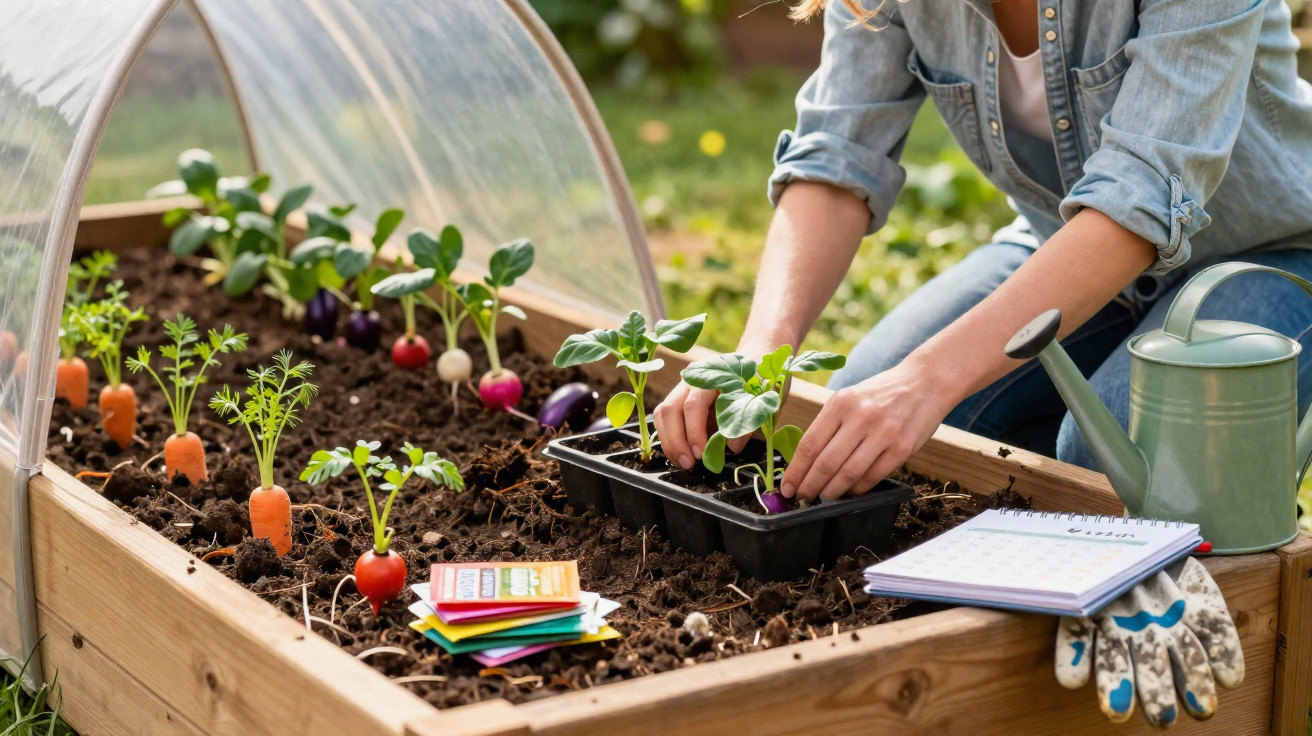
If you wait until after the Ice Saints, you can easily lose weeks of growth in the vegetable garden. By starting from early March with the right-and surprisingly straightforward-sowings, you set yourself up for sturdier plants, fewer pest problems and salads that, in high summer, more or less make their own way on to the plate.
Why March decides your summer harvest
In early March, many gardens still look a bit bleak. Yet this is exactly when hobby gardeners lay the groundwork for generous harvests from June through to August. The key is not to chase unusual varieties, but to rely on familiar, time-tested vegetables-just sown noticeably earlier than most people nearby.
Getting ahead instead of waiting until after the Ice Saints
Many beginners only begin in mid-May, once frost feels like a thing of the past. It sounds sensible, but it reduces your yield. Seeds that germinate in March or early April bank weeks of development and build a far stronger root system. Plants with that head start typically:
- flower sooner and then set fruit earlier,
- cope better during hot spells,
- are less likely to be badly affected by aphids or fungal diseases,
- produce a longer, heavier harvest.
"If you start the ‘slower’ crops in March, you can harvest up to twice as much in high summer-without more space and without chemicals."
What seedlings actually need right now
For reliable results, conditions matter more than expensive seed: warmth, light and steady moisture are the basic recipe. And for raising young plants, you can often use what you already have at home-old plastic trays, yoghurt pots or last year’s plant pots.
Key points for raising seedlings:
- Seed compost: a dedicated seed compost is airy, low in nutrients and usually peat-free-ideal so fine roots do not suffocate.
- Moisture: dampen the compost slightly before sowing; afterwards, mist rather than pour so the surface does not slump and seal.
- Light: a bright south- or west-facing windowsill prevents long, weak, “leggy” growth.
- Temperature: most crops germinate reliably at 18–22 °C.
Heat-loving stars: what should be sown indoors now
The best-known summer vegetables are true frost wimps. If you get them going in warmth now, you harvest much earlier-and often with better flavour too.
Tomatoes, peppers, aubergines: sensitive but productive
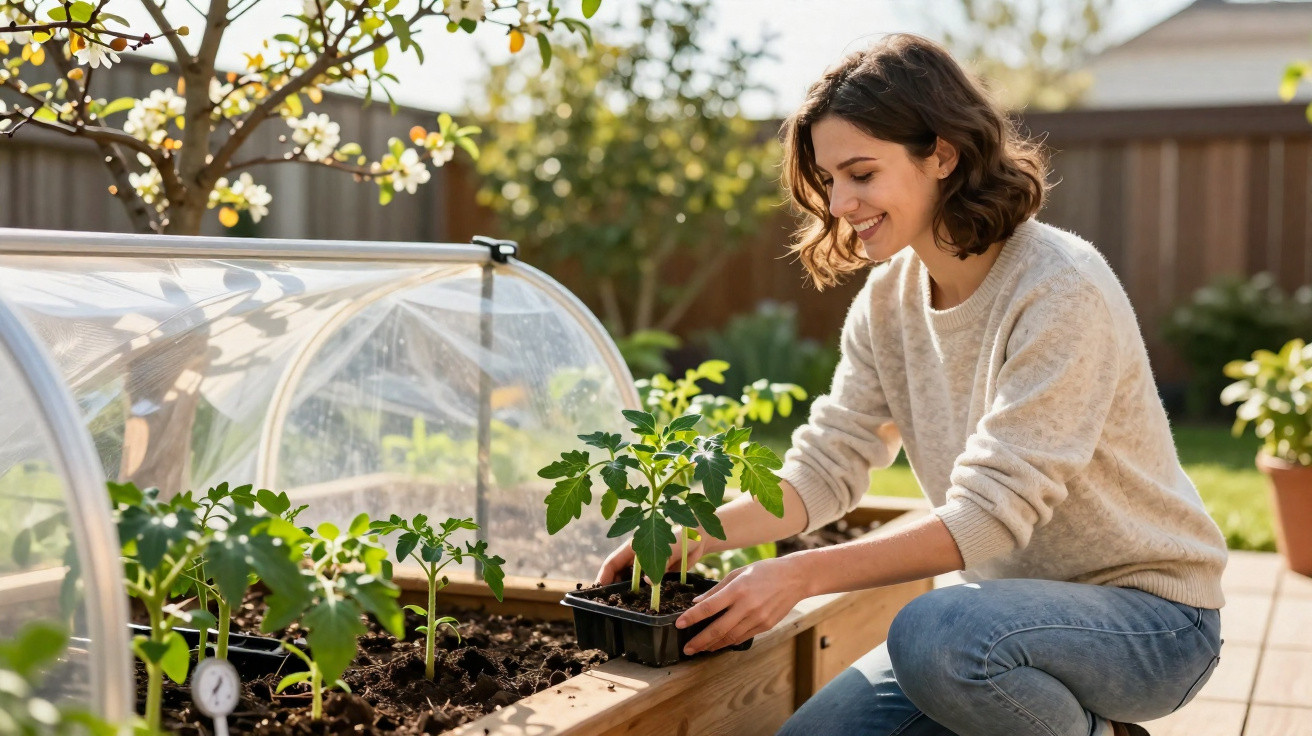
Tomatoes, peppers and aubergines are among the most popular vegetables in German-speaking countries. They should only go into the bed in late spring at the earliest, but you need to sow them much sooner-indoors.
What matters:
- Sowing time: start indoors from about early to mid-March.
- Position: a bright window; ideally a small indoor propagator or mini greenhouse lid.
- Temperature: around 20 °C for germination; consistently below 15 °C slows them dramatically.
- Sowing depth: cover only lightly with compost, as many varieties need light to germinate.
Within a few days the seedlings push up their first leaves. Once the second or third true leaf appears, it pays to prick them out into individual pots-this encourages strong roots and sturdy stems.
Basil: the perfect partner for tomatoes
Few scents say “summer evening” as clearly as fresh basil. It enjoys much the same conditions as tomatoes and is easy to raise on a windowsill.
How to grow a dense basil bush:
- Scatter seed thickly in trays or small pots, then cover with only the thinnest dusting of compost.
- Keep the compost evenly moist, but avoid waterlogging.
- Don’t let seedlings get chilled; 18–22 °C is ideal.
- Snip lightly several times to encourage branching.
"With a few pots of basil on the windowsill, even basic supermarket tomatoes suddenly taste like being on holiday."
Direct sowing in the bed: the tough ones can go out already
Not every crop needs indoor warmth. Some classic vegetables cope well with still-cool soil and can be sown straight outside.
Carrots and radishes: the reliable duo for the cold frame
Carrots can be slow in spring, while radishes race ahead. Together, they let you get surprisingly much from a single bed.
A practical approach:
- Sow carrot seed in shallow drills and cover thinly with soil.
- Sprinkle radish seed between the carrot rows, or slightly above them.
- Keep the soil consistently moist and do not let it dry out.
The radishes help open up the soil, shade delicate carrot seedlings from harsh sun and are ready to harvest after just a few weeks. As you pull the radishes, the carrots are left with extra room to grow on.
Peas and spinach: cold? they don’t mind
Peas and spinach are among the hardiest early starters. They actually prefer cool conditions to heat, and they do well outdoors in March.
Peas need something to climb-simple wire mesh or a few taut strings will do. Push the peas about 2–3 cm into the soil, water lightly and that is largely it. Spinach can be broadcast over prepared beds, lightly raked in and gently firmed down.
"Early spinach leaves and crisp peas don’t just provide vitamins; they also protect the soil surface from erosion and weeds."
Making young plants strong: gentle, steady care
For seedlings, the biggest risk is rarely cold; it is usually incorrect watering and plants being too cramped in a pot or bed.
Water properly and thin with intent
Overwatering causes fine roots to rot, drives oxygen out of the compost and invites fungal problems. A simple hand mister or a watering can with a fine rose is completely sufficient.
| Problem | Typical cause | Solution |
|---|---|---|
| Seedlings collapsing, soft and mushy | Too much water, waterlogging | Let the compost dry a little, water less, improve ventilation |
| Long, thin stems | Too dark, too warm | Move to a brighter spot, possibly cooler, prick out earlier |
| Seedlings hardly grow | Too cold or sown too densely | Choose a warmer place, remove weaker plants |
When thinning, you deliberately remove the weaker seedlings so the rest have more space. It feels harsh, but it leads to stronger, healthier plants and less fungal disease.
Gradually acclimatise to sun and wind
Moving from a warm windowsill to the garden bed is a shock for young plants. If you ease them into it, you avoid scorched leaves and growth checks.
A practical tip for so-called “hardening off”:
- Put plants outside on a mild day for 2–3 hours, sheltered from wind.
- Increase the time outdoors a little each day, avoiding direct midday sun at first.
- After about ten days, most young plants can stay outside permanently.
What to expect and when: harvesting from spring to late summer
If you plan sowing dates wisely, a few square metres can become a near-continuous supply garden.
At a glance: from the first pea to the last tomato
- April to May: first radishes, young spinach leaves and tender tufts of carrot tops for the kitchen.
- Late May to June: crisp peas straight off the support, and carrots that are steadily sizing up.
- June to August: ongoing harvests of tomatoes, peppers, aubergines and large carrots, alongside basil in all its forms.
If you resow radishes, spinach and carrots at intervals of roughly three weeks, you create a kind of harvesting “wave”: as one bed is cleared, the next row is already almost ready.
Small tricks to extend the harvest
A thin layer of organic material-such as lawn clippings, chipped twigs or straw-around the plants acts like a natural heat shield. The soil stays cooler, dries out more slowly and small soil organisms thrive. At the same time, you save both water and time spent watering.
If you also use companion planting-placing different vegetables side by side-you support healthier crops. Tomatoes next to basil, carrots among onions, spinach beneath tall pea rows: combinations like these use light and nutrients more efficiently and make it harder for pests to spread.
One more factor that is often underestimated is variety choice. Older, local varieties are frequently tougher and more resilient than highly bred hybrid lines. The produce may look a little less uniform, but these plants cope remarkably well with weather swings and limited attention-ideal for hobby gardeners with a normal amount of time.
If you put a few unremarkable seeds into pots and beds in March, you are essentially creating a living larder. In summer, almost every meal then reminds you that it began months earlier with a handful of compost and a small packet of seeds.
Comments
No comments yet. Be the first to comment!
Leave a Comment