
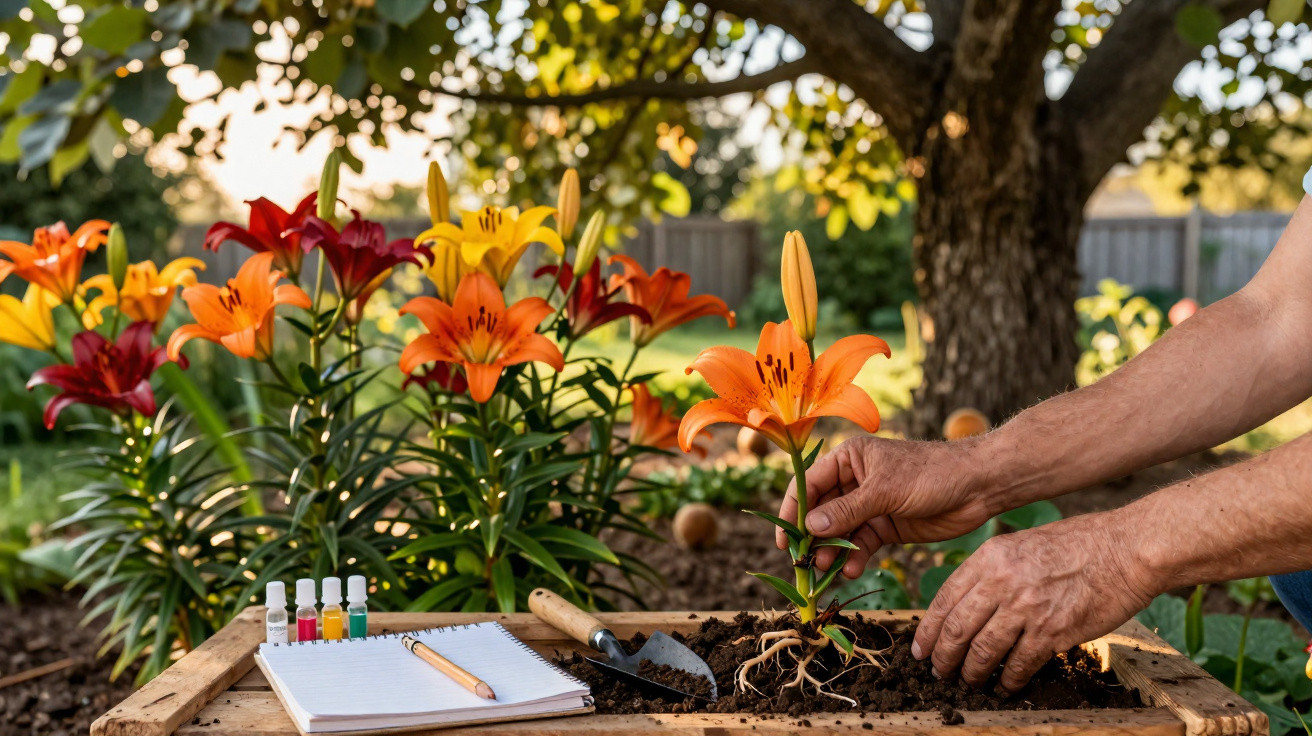
Anyone with a black walnut tree or other walnut relatives in the garden will recognise the pattern: some plants suddenly struggle, while others carry on growing surprisingly well. The reason is juglone, a natural toxin produced by the walnut family. So how do Asian lilies cope in this “chemical environment” - and what can gardeners actually do to keep the display of flowers on track?
What juglone does in the soil
Walnut trees release juglone around their roots and also via leaves, bark and nutshells. Rainwater and decomposing plant debris then carry it down into the soil. This so‑called influence zone usually extends around 15 to 25 metres from the trunk, and sometimes further, because the roots can spread well beyond what you see above ground.
Juglone disrupts the cellular respiration of sensitive plants. When roots are affected, their cells can no longer produce enough energy. The symptoms often appear quickly:
- shoots wilting within one to two days
- leaves turning yellow, then brown
- growth stopping, right up to the whole plant dying
Heavy, clay-rich soils tend to hold juglone in the root zone for much longer than sandy, free‑draining sites. Waterlogging makes matters worse, because roots remain in contact with contaminated soil water for longer.
“Nightshades such as tomatoes, peppers and potatoes are especially sensitive - under juglone influence they often collapse completely.”
Sensitive shrubs such as rhododendrons and azaleas show similar stress responses. By contrast, many woodland perennials, some bulb plants and a range of tougher perennial species cope reasonably well with juglone and have developed a degree of tolerance over time.
How Asian lilies respond to juglone
For lily enthusiasts, the outlook is unexpectedly encouraging: based on current observations, Asian lilies sit among the more juglone‑tolerant ornamental plants. They often manage to form reliable clumps even within the root zone of mature walnut trees.
Compared with highly sensitive species, losses are noticeably lower. Their cells and metabolic pathways appear to be less reactive to juglone. That said, they are not considered completely immune. In heavily affected conditions, differences compared with a “neutral” bed can still show up: weaker growth, fewer flowers and shorter stems.
| Lily type | Juglone tolerance (assessment) | Recommended planting zone near a walnut tree |
|---|---|---|
| Asian hybrids | moderate to good | feasible at roughly 15–25 m |
| Oriental lilies | moderate | better at the edge of the influence zone, with good drainage |
| Trumpet lilies | moderate | preferably towards the outer area |
| Wild species (species lilies) | varies, mostly good | often possible closer to the tree as well |
“Asian lilies aren’t ‘untouchable’, but they are among the lilies that handle juglone best.”
Site and soil: the key lever
How successfully Asian lilies perform under walnut trees depends heavily on soil conditions. Three factors matter most: drainage, soil structure and water management.
Test drainage before you plant
Before planting bulbs, a quick check is worth the effort:
- Dig a hole about 30 cm deep.
- Fill it with water.
- After 24 hours, see whether water is still sitting in the hole.
If water remains for longer, soil water will also tend to stagnate later. In that situation, gardeners should loosen the ground generously, improve it with sand and plenty of compost, or switch straight to raised beds or mounded beds.
Improve the soil with organic matter
Compost and well-rotted farmyard manure help the structure, create air spaces and encourage soil life. Microorganisms can gradually break down portions of juglone. At the same time, an open, humus‑rich soil strengthens lily bulbs so they can cope better with stress.
For Asian lilies, a planting depth of around 15–20 cm is recommended, depending on bulb size. This places the bulbs slightly below the top layer of soil, which is often the most heavily affected, while still keeping them accessible for routine care.
Practical strategies for lilies in a walnut location
With a few targeted measures, the chances rise significantly that Asian lilies will stay healthy despite juglone.
- Regularly collect fallen walnut leaves, nutshells and small twigs, and remove them from the bed.
- Apply a 5–7 cm mulch layer each year and top it up as needed - for example with bark compost or leaf mould (but not walnut leaves).
- During dry spells, water less often but thoroughly, to dilute tree‑derived compounds in the root zone.
- Watch plants closely in the first year after planting: if shoots wilt or leaves look unusually pale, act early.
- Feed sparingly with a balanced general fertiliser so lilies can produce sturdy shoots and resilient bulbs.
“If you plant lilies at the outer edge of the walnut influence zone, you reduce the juglone dose - and markedly improve the odds of success.”
As companions, consider other juglone‑tolerant plants such as hostas, astilbes, ferns and various spring bulbs. Mixed planting spreads the risk: if one species fails, the bed can still look appealing overall.
Which lilies are particularly suitable
Alongside classic Asian hybrids, certain wild species can also perform well beneath walnut trees. North American lilies that occur naturally in habitats alongside walnut relatives have a built‑in “site advantage”: over thousands of years, they have adapted to these trees’ chemical quirks.
If you prefer to proceed cautiously, start by planting only a small number of bulbs from different cultivars and species and observe how they respond. If a particular variety proves sensitive, move it to a juglone‑free part of the garden. The tougher choices can then be increased gradually.
Care through the year - and what many people overlook
Juglone levels in soil vary over the course of the year. During the tree’s active growth period and after leaf fall, the load increases because roots and dead material release more compounds. For that reason, more favourable planting windows for lilies tend to be early spring or late autumn, when concentrations are usually lower.
If previously vigorous plants suddenly show signs of weakness, juglone is not always the only explanation. Several factors often combine:
- an unsuitable pH level (too acidic or too alkaline)
- shortages of nitrogen, potassium or other nutrients
- compaction from frequent foot traffic over the bed
A soil test provides clarity. Correcting deficiencies and improving structure takes a double burden off the lilies: less nutritional stress and more reserves to handle juglone.
What gardeners can learn from the juglone issue
Experience with Asian lilies under walnut trees shows that not every “problem area” in a garden is a lost cause. With a basic understanding of chemical plant interactions and well-planned soil preparation, it is possible to create flowering pockets even in challenging spots.
Those who deliberately choose juglone‑tolerant perennials, bulbs and shrubs - and give them the best possible start - can turn the shade beneath large walnut trees into a striking, lively part of the garden, with Asian lilies providing a bold splash of colour.


Comments
No comments yet. Be the first to comment!
Leave a Comment