
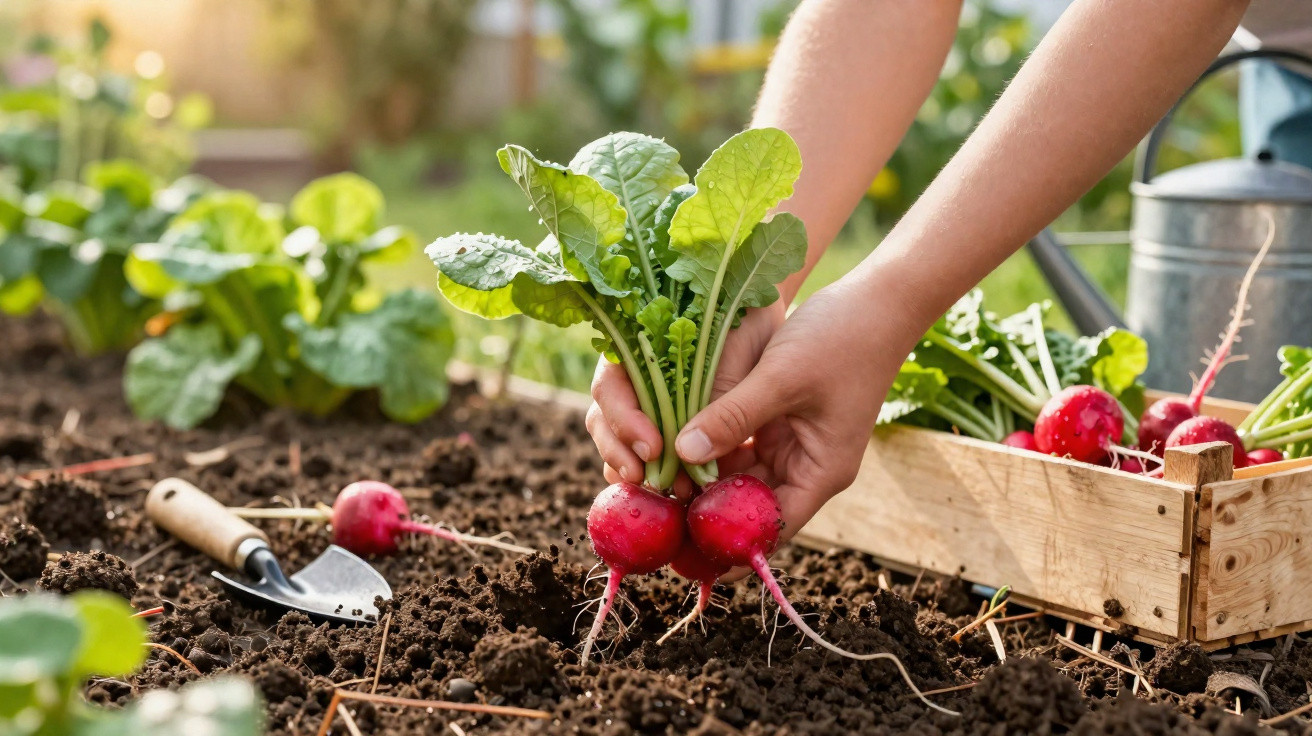
Many hobby gardeners sow radishes in spring almost as an afterthought. They are seen as the perfect beginner’s vegetable: quick to grow and happy in a small space. Yet the harvest often disappoints-hard, fiery roots, some splitting open, others staying tiny. The answer is not pricey specialist feed, but a surprisingly basic approach centred on watering and how you manage the bed.
Why radishes can be so temperamental
Radishes are famous for being easy-going, but they can be incredibly sensitive to stress-especially fluctuating moisture levels. If the soil dries out and then gets drenched, the plant reacts badly. Typical results include a hotter taste, woody texture, and cracks in the root.
"The real insider tip for perfect radishes isn’t a miracle product, but a bed that stays as evenly moist as possible."
Radishes develop at speed. In just a few weeks, they go from seedling to fully formed root. Because the growing window is so short, they do not cope well with interruptions. Miss watering for several days and then hit them with a “water bomb” from the can, and the plant struggles to keep growth steady. Flavour deteriorates, the flesh turns coarse, and in the worst case the skin splits.
The simple trick: steady moisture instead of watering shock
For crisp, mild radishes, the “recipe” is simply soil that remains consistently moist-not bone dry and not waterlogged. What matters most is a regular routine.
- Better to water lightly every day or every other day
- Rather than watering rarely but with a large amount at once
- The top layer of soil should never become completely dusty-dry
- Under cloches and in bright spring sunshine, check even more carefully
The best base is loose, humus-rich soil that holds moisture well while still letting excess water drain away. If your garden has heavy clay, it helps to work in sand and compost. That way the roots can form evenly and the soil stays aerated.
The best position for crisp roots
Radishes like bright conditions, but they do not thrive in relentless heat. A sunny to lightly shaded spot works well. In harsh midday sun-especially on dry days-the soil can dry out quickly, and an evening watering may no longer be enough.
A thin mulch layer of fine grass clippings or shredded leaves between the rows can make a real difference. It cuts evaporation and shields delicate roots from temperature spikes. At the same time, mulch encourages soil life-earthworms help keep the ground open and crumbly.
The right soil at a glance
| Soil property | Suitability for radishes |
|---|---|
| Loose, humus-rich, well-aerated | Ideal – supports even root formation |
| Heavy, waterlogged | Unfavourable – risk of rot and splitting |
| Very sandy, dry | Critical – roots quickly turn hot and woody |
Sowing: a shallow drill, a big difference
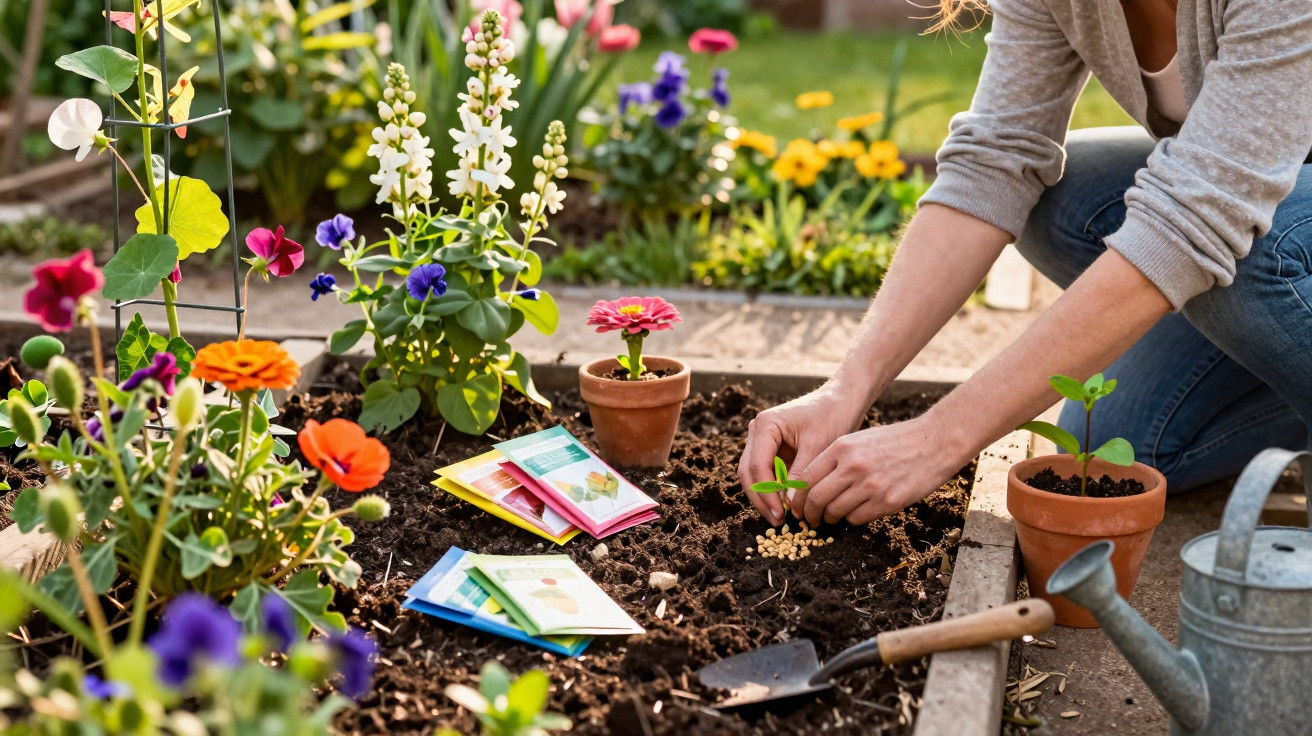
When sowing, all you need is a shallow drill about 1 centimetre deep. The small seeds are easy to scatter too thickly-one of the classic beginner mistakes. In reality, spacing matters more than a densely packed row.
Recommended spacing:
- 3 to 5 centimetres between seeds
- About 15 centimetres between rows
If you did sow too closely, you can fix it later. As soon as the first true leaves appear, thin the seedlings. Aim to leave roughly 5 to 8 centimetres between plants. Lift the extras gently so you do not disturb nearby roots. With enough room, the remaining plants can develop round, even radishes.
"Too many plants in one row means competition for water, light and nutrients-and that directly reduces root quality."
Timing: why the variety must match the season
Radishes sown in March need different conditions from radishes sown in July. Early in the year, days are shorter and nights are cooler. For that period there are specific varieties that handle low temperatures better and still grow cleanly even with limited light.
In late spring and summer, longer days and stronger sunlight take over. Some varieties then tend to bolt, producing flowers quickly instead of putting energy into the root. If you sow the wrong variety at the wrong time, you may end up with lots of leaves but very little to harvest.
Succession sowing instead of a radish glut
Many gardeners sow a large area in one go and then face a wave of radishes that all need lifting within a few days. A more useful approach is to sow little and often: top up a small patch or half a row every two weeks.
- Sow small amounts regularly
- Spread the harvest over several weeks
- Enjoy fresh roots continuously instead of having too many at once
This keeps the bed productive for longer and stops radishes ageing in the ground. Because radishes can turn furry and unpleasant quickly, this method pays off.
Watering from sowing to harvest
The most delicate period is the first few days after sowing. Seedlings can dry out fast because their roots are still tiny. Until the first leaves are properly established, the soil must not dry out completely.
Later, once the roots start to swell, the requirement stays the same: keep the soil evenly, lightly moist. If you are planning to be away, organise a solution in advance-ask a neighbour or set up an automatic watering system. One hot spell without water can ruin an entire row.
"Constantly moist instead of occasionally soaked-this pattern decides whether radishes stay tender or become inedible."
Harvest: wait too long and you lose quality
Radishes do not demand much patience. Depending on the weather, they can be ready in as little as four to six weeks. This is where another common mistake appears: people leave them “a bit longer” to try to make them bigger.
The result is predictable: the flesh becomes furry, the heat intensifies, and the skin turns tough. A quick check helps: when part of the root pushes above the soil, you can judge the diameter easily. If it is about the size of a £2 coin, it is worth pulling.
Using radishes cleverly as a catch crop
In spring and autumn, radishes are ideal gap-fillers. Between slower crops such as cabbage or leeks, they make use of the empty time and space. While neighbouring plants are still small, the radishes mature-then they are harvested long before the main vegetables need the room.
Planned this way, you get two uses from one bed: a fast early crop, then the main crop later on. A fuller canopy also keeps the soil covered and slows drying out-bringing the topic of water back into play indirectly.
Practical extra tips for healthy plants
Radishes are sensitive to fresh, heavily fertilised soil, particularly where there is lots of nitrogen. That encourages lush leaf growth while the roots stay disappointing. A better option is well-rotted compost and a more moderate nutrient level.
A few practical pointers:
- Follow crop rotation and avoid growing radishes in the same spot every year
- Watch nearby brassicas (for example cabbage), as they can attract the same pests
- Use fine mesh to protect against flea beetles if they are common in your garden
- React quickly to early feeding damage before whole rows are lost
Variety choice also matters. Round, fast-maturing types suit spring well, while longer or slightly tougher varieties can cope better with summer conditions in some cases. It is worth reading the guidance on the seed packet-most will state the recommended sowing windows.
What really causes heat and woodiness
The unpleasant sharpness in stressed radishes comes from mustard oils. The plants produce more of these compounds when under pressure-such as from drought, heat, or nutrient shortage. For the plant it is a defence; for the gardener it is unwelcome.
Woody flesh develops when inner cells become tough and fibrous, for instance when the root is left too long or the plant repeatedly stops and starts growing. Instead of a crisp bite, the texture turns stringy. With consistent watering, season-appropriate varieties, and timely harvesting, you can greatly reduce the risk.
In other words, the supposed “trick” is really a down-to-earth principle: keep the bed evenly moist, pick a sensible site, avoid sowing too thickly, and harvest on time. Do that, and you will be rewarded with crisp, mild radishes that work beautifully in salads, on buttered bread, or simply eaten straight from the garden.


Comments
No comments yet. Be the first to comment!
Leave a Comment