
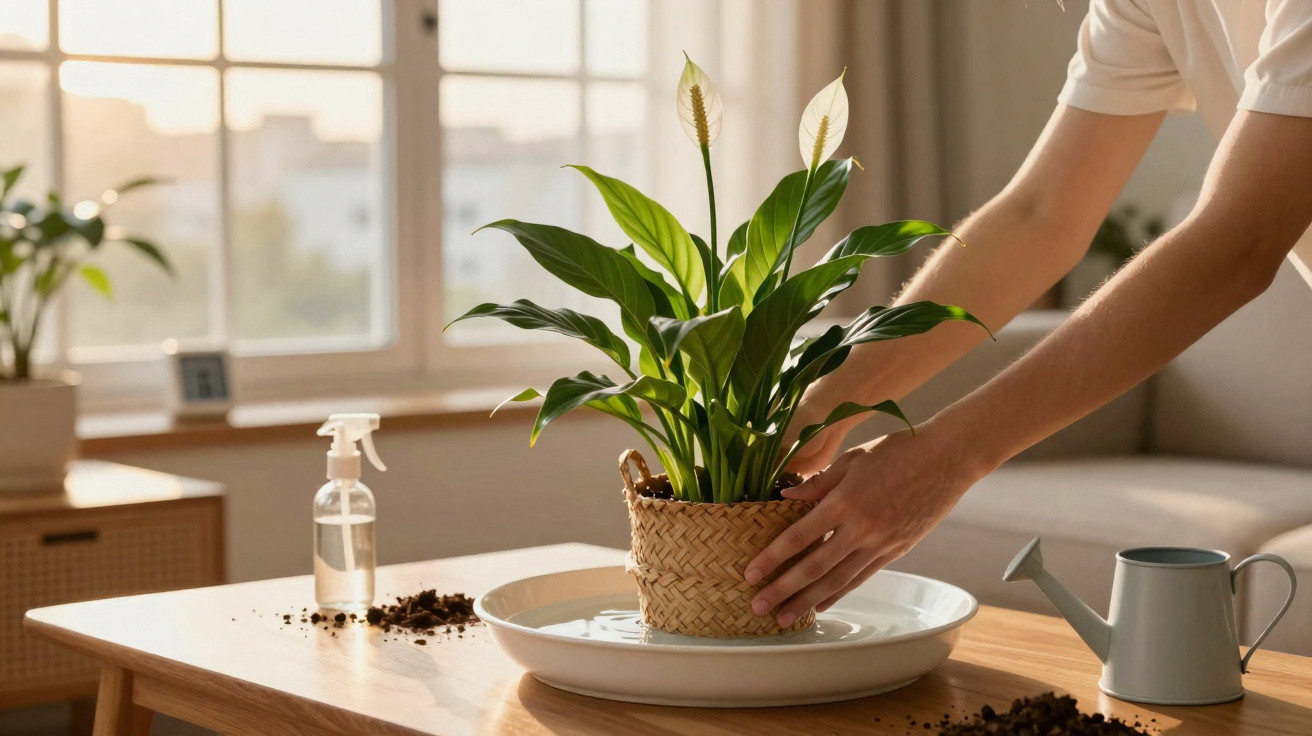
The houseplant with elegant white bracts is often described as easy-going, yet in many homes it produces few flowers-or none at all. The stumbling block is rarely fertiliser or repotting, but something far more everyday: watering. Once you get the routine right, you can coax far more from your Einblatt.
Why your Einblatt shows leaves but no flowers
The Einblatt (botanically Spathiphyllum, commonly sold as a peace lily) originates from shady tropical forests. There it grows in loose soil that stays consistently lightly moist, sheltered from harsh sun. That’s exactly the conditions you need to recreate in a pot.
Indoors, the pattern is often the opposite: either people water too rarely because they fear rot, or they drown the plant out of misplaced care. Both situations reduce flowering.
- Too dry: the plant switches into survival mode and saves energy-flower production is the first thing to be dropped.
- Too wet: the roots are starved of oxygen, begin to rot, and can barely take up nutrients.
"For abundant blooms, the Einblatt needs soil that stays lightly moist all the time-neither bone-dry nor soggy."
The trick is finding the middle ground: the compost should remain cool and moist inside the pot, while the surface is allowed to dry slightly between waterings. That balance is what encourages the plant to push out new flower stems.
The language of the leaves: how your Einblatt signals thirst
One of this plant’s strengths is that it clearly communicates. When it needs water, the leaves droop and go limp. That can look alarming, but it’s usually not a disaster-more a very obvious reminder to water.
After a proper drink, the leaves typically perk back up within a few hours. Even so, it’s best not to let it reach that stage too often, because repeated stress weakens the plant over time.
The simple finger test instead of rigid watering schedules
Rather than watering by the calendar (for example, “Wednesdays and Sundays”), a flexible approach works far better. The classic method is the finger test:
- Push a finger 2–3 centimetres into the compost.
- If the top layer feels dry but it’s still slightly moist underneath, that’s the ideal time to water.
- If it’s completely dry deeper down as well, don’t wait any longer.
- If it still feels clearly moist throughout, leave the watering can where it is.
This automatically adjusts your watering rhythm to room temperature, the season, and the size of the pot.
How often should you water? Seasonal guidelines for spring, summer, autumn and winter
The finger test should be your main guide, but rough benchmarks can help you build intuition:
| Season | Typical rhythm | Note |
|---|---|---|
| Spring | 1–2 times per week | New leaves and flowers; water demand increases. |
| Summer | 2–3 times per week | Warm air dries the surface more quickly. |
| Autumn | Every 7–10 days | Growth slows; less water needed. |
| Winter | Every 2–3 weeks | Cooler rooms, but keep an eye on dry central-heating air. |
These figures aren’t a strict rule. Small pots dry out faster; large planters hold moisture for longer. A south-facing spot, a north-facing spot, underfloor heating-each of these changes the rhythm. The finger test remains the most dependable compass.
Work like a professional: bottom watering protects the roots
Many professionals recommend bottom watering for the Einblatt because it’s gentler on the roots and significantly lowers the risk of waterlogging.
How bottom watering works, step by step
- Fill a bucket, the sink, or a shallow tray with water.
- Stand the pot in it so the drainage holes at the bottom sit in the water, while the rim stays dry.
- Wait 10–15 minutes for the compost to soak up what it needs.
- Lift the pot out and let it drain thoroughly before putting it back into its outer pot.
"With bottom watering, the compost absorbs only as much water as it can hold-the best protection against rotten roots."
The Einblatt usually responds very well to this method because moisture spreads evenly from the bottom upwards. By contrast, water splashed over the leaves or poured into the plant’s crown can encourage fungal issues.
Light, humidity, position: the hidden supporting players
Even the best watering method won’t deliver many flowers if the location is wrong. The Einblatt prefers bright conditions without direct sun. Strong midday sunshine can scorch the leaves quickly, while a dark hallway will leave the plant merely limping along.
- Ideal: a bright corner of the room; an east- or west-facing window; filtered light behind a curtain.
- Less suitable: right on a windowsill in summer sun, or directly above a radiator.
Humidity matters too. In its native habitat the Einblatt grows in humid tropical air. In winter, dry central-heating air stresses the leaves and can lead to brown edges.
Simple tricks for higher humidity
A few small changes can noticeably improve the microclimate around the plant:
- Lightly mist the leaves on warm days using low-limescale water.
- Place the pot on a tray of damp expanded clay pebbles (keeping the base of the pot dry).
- Avoid positioning the plant right next to hot radiators.
When evenly moist compost, gentle light and slightly elevated humidity come together, the Einblatt can reliably channel its energy into new flowers rather than only producing foliage.
Fertiliser, repotting and common mistakes that hold back flowering
Alongside watering, nutrients and pot size also make a difference. A pot that’s well filled with roots can even encourage flowering-but eventually it becomes too tight.
Practical rules of thumb:
- Feeding: from March to September, apply a liquid houseplant fertiliser at a low dose about every two to four weeks.
- Repotting: every two to three years, move it into a slightly larger pot with loose, humus-rich compost.
- Drainage: a layer of expanded clay or coarse gravel at the bottom of the pot helps prevent waterlogging.
A frequent mistake is watering more at the first sign of a yellow leaf out of guilt. However, yellow or brown leaves can also be caused by overly wet compost, cold draughts, or simply the ageing of individual leaves. Put your finger in the compost first, and only then reach for the watering can-this avoids a lot of problems.
Risks of incorrect watering and how to spot them
If the watering routine is wrong for a long time, the Einblatt tends to show it clearly:
- Waterlogging: soggy compost, a musty smell, black or brown roots, leaves yellowing despite “plenty of water”.
- Persistent dryness: limp leaves, dry leaf tips, hardly any new flower buds.
If you notice these signs, it’s worth checking the pot. When in doubt, gently ease the plant out, inspect the roots, and if there’s rot, replant in fresh, lightly moist compost. After that, switch strictly to watering as needed-rather than watering “just in case”.
Why this watering method helps even beginners succeed with blooms
The appeal of this routine is that it needs no expensive gadgets, apps or complicated charts. A finger, a quick look at the leaves and a bit of patience are enough to understand what the Einblatt wants.
If you stick to lightly moist compost, bottom watering and a bright spot without harsh sun, you’ll often be rewarded with new white flower stems within a few weeks. Especially in smaller flats, an Einblatt can add fresh, calm accents with very little effort-provided the watering can is used thoughtfully.
Comments
No comments yet. Be the first to comment!
Leave a Comment