
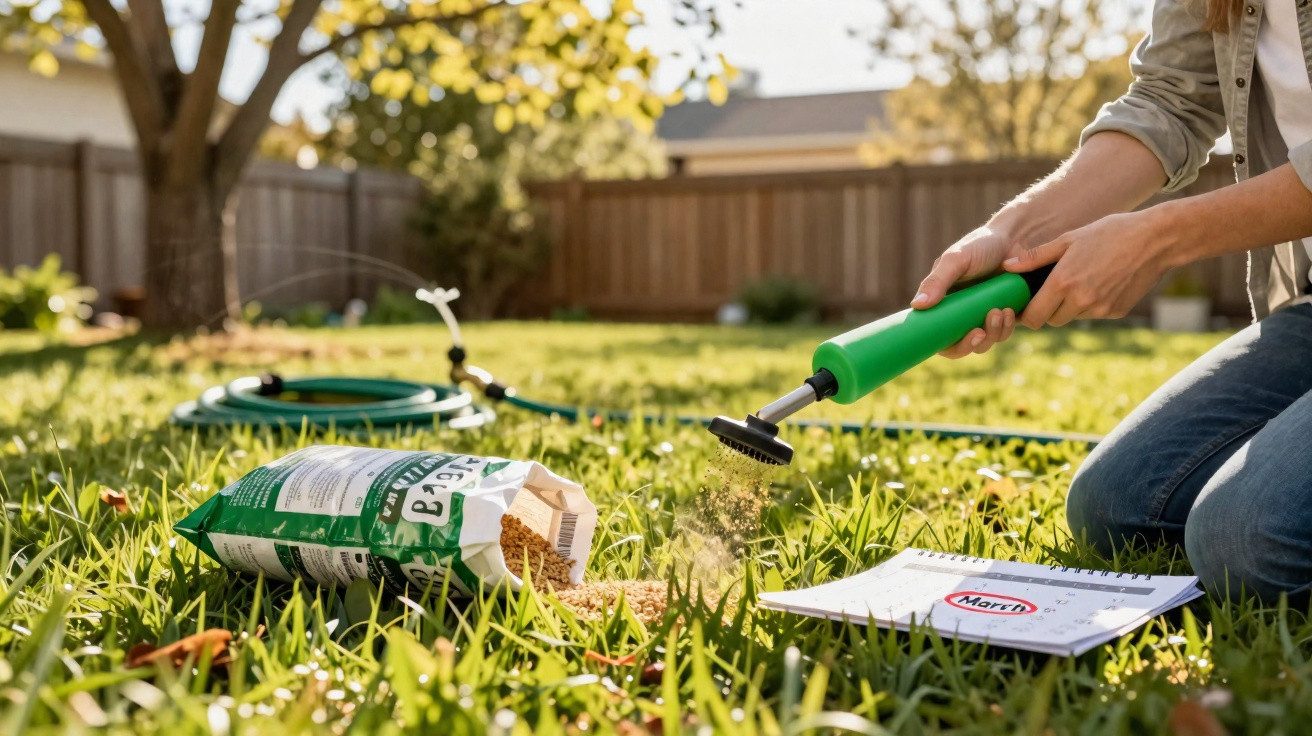
By the end of winter, a lawn often looks dull, slightly yellow and generally tired. Many people assume that is normal and simply wait for “better weather”. That is exactly the mistake: this is the point in the year that decides whether your lawn looks scorched in July or carries on through summer like a green carpet.
Why late March becomes the make-or-break moment for your lawn
Beneath what looks like harmless yellowing turf sits a problem you can barely spot from above: a dense layer of thatch made up of moss, dead roots and plant debris. It is only 1 to 2 centimetres thick, but it acts like a lid over the soil.
The consequences are very specific:
- Rainwater runs off instead of soaking down properly.
- Air struggles to reach the roots.
- The grass plants root shallowly, right in the zone that dries out first.
- With the first burst of heat or drought, the lawn quickly turns brown.
“If you break up this ‘lawn thatch’ before the end of March, you give your grasses a crucial head start for summer.”
The right moment is not something you pick from the calendar; you feel it in the ground. As soon as the soil temperature sits consistently at around 10 to 12 degrees, grass starts into growth. That is precisely when the lawn can handle an intervention without being pushed into stress. Depending on where you live, that is usually in March, and in cooler areas sometimes not until the very start of April.
The one decisive step: scarifying the lawn in March
The technical name for this job is scarifying. In practice, it means lightly slitting the turf so that thatch and moss are loosened. Anyone seeing it for the first time is often shocked at how much material comes out of the lawn.
Step by step: how to do it
- Mow the lawn short: Cut the area down to about 2 to 3 centimetres. The ground should be slightly damp, but not waterlogged.
- Set the scarifier correctly: The blades should just scratch the surface, not plough into the soil. A depth of about 2 to 4 millimetres is usually more than enough.
- Work in crossing passes: Go over the lawn first lengthways, then again at right angles. That way you cover the area evenly.
- Keep an eye on the weather: Do not do this if ground frost is still possible, or straight after a frosty night.
Many hobby gardeners set the scarifier too deep. Then the machine tears out roots and leaves bare patches behind. A gentle scratch is enough - and the grasses respond by producing new roots that grow downwards.
After scarifying: the lawn looks battered - and that’s a good thing
Right after you finish, the lawn often looks worse than it did beforehand. That is normal and, in fact, a positive sign: the thatch has been lifted and the soil surface is exposed.
Now comes the second part of the job, which is often underestimated:
- Remove everything: Clear away all the pulled-out material thoroughly, using a rake or a lawnmower.
- Apply a thin layer: Spread and work in about 1 centimetre of mature compost or a specialist lawn topsoil (topdressing).
- Add sand on heavy soils: On clay-heavy, compacted areas, scatter a little washed sand. The sand drops into the slits and improves aeration over the long term.
“The ground looks bare and uneven straight after scarifying - and that is exactly when the real regeneration begins.”
With the surface opened up, rain and nutrients can move deeper into the soil, and the grasses produce more new, strong roots. Scarifying in March takes advantage of the damp spring weeks to charge the soil up like a sponge.
How scarifying helps protect the lawn from summer heat
You see the benefit months later, when temperatures rise and the first lawns nearby start to look scorched. The reasoning is straightforward:
| Without scarifying | With scarifying in March |
|---|---|
| Water runs off across the surface | Water penetrates deeper |
| Roots stay shallow | Roots grow deeper |
| Soil dries out very quickly | Soil holds moisture like a buffer |
| Lawn turns yellow quickly in heat | Lawn stays green and resilient for longer |
The contrast is especially clear in full-sun areas: if you never scarify, you will often see water simply running away during heavy rain. When the turf is opened up in March, the soil can absorb the rainfall from the following weeks and “store” it for summer.
Correct care after scarifying
To keep the improvement going, the lawn needs regular air from spring through to autumn.
Aeration: small air holes for compacted soil
Every four to six weeks, a light loosening is worth doing. You can manage this with a garden fork, a spiked roller aerator, or dedicated aerating tools. The aim is lots of small holes across the lawn - not digging it over.
The advantages are obvious:
- The soil is less likely to compact.
- Water and oxygen reach deeper layers.
- In hot weather, the lawn needs less additional watering.
Mow higher in summer
In addition, raise the mowing height gradually as summer approaches. Longer grass shades the soil, slows drying, and protects the crown of the grass plants from sun scorch.
What if 31 March has already passed?
If you miss the ideal window by a small margin, you do not have to give up. As long as spring warming is only just getting going, careful scarifying can still be done.
Useful rules of thumb:
- Scarify only when soil temperatures are around 10 to 12 degrees.
- Make sure there is no heatwave forecast in the coming days.
- Set the machine shallower; it is better to make an extra pass than to go too deep.
Afterwards, bare areas can be repaired with grass seed. Fine watering and a few weeks of patience are key. Newly laid lawns should only be treated gently in the first year: remove leaves and moss, aerate lightly, but do not cut deep slits.
Tricky cases: shade lawns and damp corners
In shady or persistently wet gardens, moss builds up particularly fast. In those spots, scarifying alone rarely solves it, because the cause lies deeper: too little light, compacted soil, and often a pH value that is too low.
“In dark garden corners, only a package of measures helps: more light, less compaction, the right seed mix.”
Practical steps for these areas:
- Thin hedges and shrubs slightly so more sun reaches the ground.
- Loosen the soil by aerating and adding a light dressing of sand.
- Scarify lightly, then overseed with specialist shade-lawn mixtures.
- Water lightly but regularly in spring so the seed germinates well.
If you suspect the soil is too acidic, you can buy simple pH tests from a garden centre. If the reading is clearly below 6, a cautious application of lime in autumn often improves conditions for grasses and helps keep moss somewhat in check.
Common mistakes - and how to avoid them
A lot of “burnt” lawn problems are self-inflicted. Three classics show up again and again:
- Scarifying too rarely: Thatch builds up over years until the lawn behaves more like a moss carpet.
- Poor timing: Scarifying in blazing early-summer heat puts maximum stress on the grasses.
- Wrong mowing height: Cutting extremely short all year weakens the plants and encourages moss.
If you bear these points in mind and put in one to two hours in March, you can often push back the point at which your lawn struggles in summer by a noticeable margin. In dry years, that head start can be decisive - especially where water is scarce or watering is only allowed at certain times.
That is how an unremarkable spring job becomes a real safeguard against scorched patches in July: the soil holds more water, the grasses root deeper, and your garden stays a green retreat for longer when hot days make it most needed.




Comments
No comments yet. Be the first to comment!
Leave a Comment