
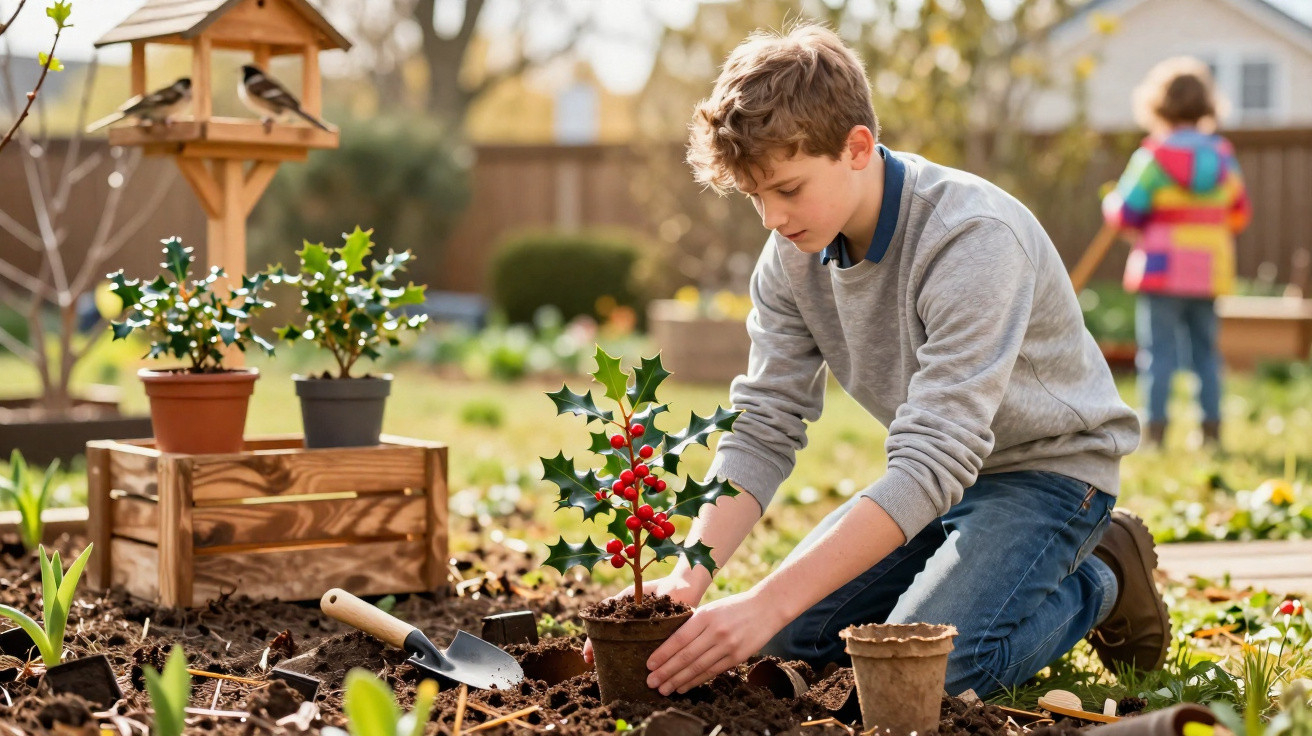
A lot of amateur gardeners feel the same pull towards the end of winter: something needs to change, and the outdoor space should look fresher. Before tulips and daffodils take over, an evergreen shrub with vivid red berries can deliver a visible reset - and it has long been regarded as a lucky charm around the home.
Why holly is considered a lucky charm
Holly, botanically Ilex, has been part of Central European gardens for centuries. Its evergreen leaves and bright red berries stand out precisely when there is little else happening outside. In many areas, the shrub is associated with protection, resilience and a new beginning after the dark months.
Evergreen, frost-hardy and rich in symbolism: holly combines practical gardening know-how with a touch of magic.
That symbolism has a straightforward explanation. While many ornamental shrubs stand bare in winter, hollies look like small islands of colour. They hold their own against frost, wind and grey skies. In older traditions, that toughness turned them into plants said to keep “evil spirits” away and to safeguard home and property.
There is also a very down-to-earth advantage: there are over 400 varieties. From compact dwarf types for balconies to substantial shrubs used as privacy screening, there is an option for almost any setting. If space is tight, you can choose forms that happily stay in a pot. If you have a garden, you can opt for species that grow several metres tall.
The perfect timing: why planting before the beginning of March matters
Gardeners often advise getting holly into the ground before March begins. There are two clear reasons for this: stronger root establishment and a small psychological boost.
- Plenty of water available: Roots benefit from the moist soils at the end of winter. That gives the plant time to settle in before summer heat and dry spells arrive.
- A quicker start to the season: Planting early increases the chances of good flowering and berry formation in the same year or the following year.
- A sense of a fresh start: The planting window falls exactly when nature starts to stir again - many people turn it into a small ritual for a “new year” in the garden.
For anyone craving more structure outdoors, planting early creates an instant, visible marker. Where there was only bare soil or old leaf litter, an evergreen shrub suddenly appears and makes an immediate difference.
Planting holly properly: step by step
To help the plant perform at its best, it pays to be careful when planting. Here are the key points at a glance:
| Aspect | Recommendation |
|---|---|
| Number of plants | 1 male shrub for 3–5 female plants, if lots of berries are desired |
| Planting distance in a bed | 1,5–2 m for normal-sized varieties, 1–1,2 m for dwarfs |
| Planting hole | About 40 cm wide and 40 cm deep per plant |
| Soil preparation | Mix with about 5 l mature compost and 2 l coarse sand or fine gravel |
| First watering | Immediately after planting, 5–10 l water per shrub |
| Container growing | Pot with 30–40 cm diameter and depth, 20–30 l free-draining compost |
| Mulch layer | Around 5 cm organic mulch around the root area |
How amateur gardeners go about planting
- Dig the planting hole to the recommended size and loosen the soil well at the bottom.
- Combine the excavated soil with compost and sand or fine gravel to keep it open and free-draining.
- Set the root ball so it sits exactly at soil level - not too deep and not sitting proud.
- Backfill with the prepared soil, firming gently but without compacting it hard.
- Water thoroughly, then add a mulch layer of bark chips, leaves or grass clippings.
- In exposed, windy spots, protect young plants from strong gusts, for example with a support stake.
Maintenance: little work, long-lasting enjoyment
Hollies are widely seen as tough, low-maintenance woody plants. Once they have established, many gardens require only minimal attention.
In the first few weeks after planting, a consistent watering routine helps. If conditions stay dry, a bucket of water once a week can go to the roots. After the first year, most plants cope well with normal rainfall and only need extra water during prolonged drought.
A light tidy-up in late winter keeps the shape pleasing. Gardeners mainly remove dead twigs and thin the centre slightly to improve structure. If you like tightly clipped hedges or ball shapes, holly can be used for that too - but it is best to prune gently so the natural framework is not completely spoiled.
Safety aspect: wonderful for birds, risky for children
The red berries are a real draw for blackbirds, thrushes and other winter visitors. For many birds, they provide a useful food source when little else is available.
A blessing for wildlife in the garden, a potential hazard for small children and pets: holly berries are poisonous.
For people, the situation is different. The berries are considered toxic and can cause severe stomach and bowel upset if eaten. If you have toddlers or very curious pets, it is sensible to choose locations that are not right next to play areas.
Three precautions are particularly sensible:
- Do not plant hollies directly beside sandpits or children’s favourite spots.
- Pick up fallen berries from time to time.
- Explain in an age-appropriate way that the attractive red berries are off limits.
A second consideration is where the plants come from. Local species and varieties are usually better suited to climate and soil and can support native insects and birds. Many nurseries now label suitable shrubs clearly.
Which varieties suit balconies and gardens
If you only have a balcony or small terrace, you do not have to miss out on this lucky shrub. Many compact varieties grow slowly and are well suited to container life. They often reach no more than one to two metres in height and stay narrow.
In a traditional garden setting, stronger-growing types are more common. They can be used as specimen shrubs, privacy hedging or as part of mixed planting. If berries are a priority, choose female varieties known for heavy fruiting and make sure at least one male pollinator is within reach - either in your own garden or nearby with neighbours.
Most garden centres and nurseries start selling from February. Going early usually means a wider choice and the chance to ask which variety suits your soil, light levels and preferred mature size.
More than decoration: the role holly plays in the garden
Hollies are not just attractive. They offer birds shelter, provide winter food and give the garden structure all year round. Paired with ornamental grasses, early-flowering bulbs or perennials, they quickly create a scene that shifts with the seasons without looking empty in winter.
Many plant lovers also use the shrub for cut greenery. The glossy leaves last well in a vase and, in the colder months, work as a base for door wreaths or table arrangements. If you have older plants, routine pruning can supply decorative material straight away.
For anyone weighing up whether it is worth it, the benefits speak for themselves: year-round green, extra structure, food for birds, minimal maintenance and a dash of tradition. It is exactly this combination that leads gardeners to snap up holly in late winter.
So, if you want a clear sign of a fresh start, plant a holly shrub in a border or a container before March begins. The effort is modest, the impact lasts for years - and perhaps the old belief in good luck really does bring a little tailwind for the season ahead.
Comments
No comments yet. Be the first to comment!
Leave a Comment