
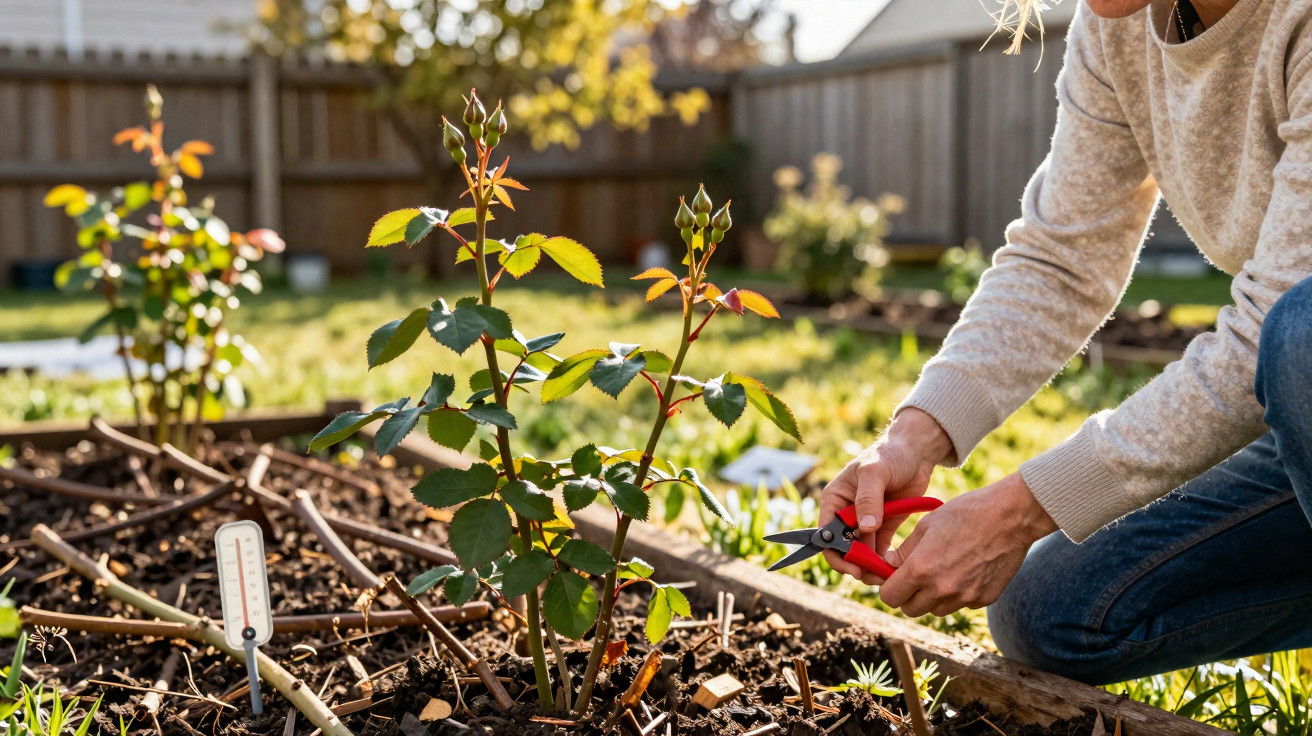
Many amateur gardeners face the same question every year: when is the ideal moment to prune roses so they burst into life properly in spring? Cut too early and a late frost will punish you. Leave it too late and a large part of the plant’s flowering energy is wasted. The answer sits in a fairly narrow window - and in reading the plant’s rhythm rather than following the calendar blindly.
The perfect time: this short window decides how spectacular the flowers will be
Pruning roses may sound leisurely, but in reality it’s a race against the season. What matters is the period at the tail end of winter, just before growth really accelerates.
"The best time to prune roses is - depending on the region - roughly between mid-February and mid-March, shortly before vigorous new growth."
If you prune well before that point, you encourage the rose to start spring too soon. It produces fresh, soft shoots full of moisture, which makes them extremely vulnerable to frost. Even a single bitterly cold night can kill those young shoots back - and the damage can travel deeper into the wood.
On the other hand, pruning very late causes problems too. Once the roses are already covered in leaves, the plant has invested a lot of stored energy into that growth. If you then cut back hard, it has to do the same work all over again - and that noticeably weakens it.
Thermometer, not calendar: the end of hard frost is the signal
The key factor is not the date but the weather. While sharp night frosts are still likely, the secateurs are better left in the shed.
"Only when the period of hard frosts is largely over is it time to pick up the shears."
In many areas, that moment tends to arrive around mid-March. A useful rule of thumb: it’s almost always safer to prune a few days late than a week or two early. Roses can cope with a small delay, but they respond badly if fresh cuts are exposed to sub-zero temperatures.
Buds show you when to begin
Alongside the forecast, the plant itself gives the most reliable cue. Look closely at the shoots and you’ll spot small swellings that may take on a slight red or pink tint. That marks the start of new growth.
"As soon as the buds are visibly swelling, but there are still no fully formed leaves, conditions are ideal for rose pruning."
At this stage, sap is already moving into the shoots, yet the rose hasn’t spent much energy on fully developed leaves. If the first leaves have already opened, time is tight: the cut should happen soon so the plant can redirect its strength, quickly and deliberately, into the remaining shoots.
Regions compared: why pruning doesn’t happen at the same time everywhere
Gardens across German-speaking regions sit in very different climate zones - from the mild Rhine Valley to harsher upland areas. That’s why a single fixed “Germany date line” simply doesn’t work.
Mild regions: being brave about an earlier cut
In places with comparatively gentle winters - such as the Upper Rhine Plain, many wine-growing areas, the North Sea coast, or large cities with urban heat islands - roses can often be pruned from the second half of February.
- Moderate winters, with severe frost rarely persisting beyond late February
- Roses start into growth early if mild weather continues
- If you wait too long, you may end up cutting shoots that already have leaves
Here it helps to watch classic early-spring indicators. In many gardens the traditional guideline is: once forsythia is in full bloom, it’s time to prune roses. In very mild areas, that can be as early as late February.
Cooler regions and higher ground: patience pays
In northern and eastern Germany, at higher elevations in low mountain ranges, and in Alpine valleys, night frosts often linger much longer. In those locations, caution is essential.
"If you garden in an area prone to late frosts, you often wait until mid-March or even late March for the main pruning."
There, the soil may still be frozen when spring is already well established elsewhere. By pruning later, you slow the rose’s start slightly and protect the new shoots from late-frost damage. The well-known “Ice Saints” period in mid-May is still worth keeping in mind - brief cold snaps can happen - but they do far less harm to a well-structured rose bush that wasn’t pushed into growth too early.
What’s happening inside the plant: why timing is so sensitive
Rose pruning is not just about appearance. Every cut affects the plant’s internal energy system.
How sap flow influences flowering
During winter, sap retreats largely into the roots. This is where the rose stores its reserves. As days become brighter and warmer, it pushes that energy back up into the shoots to feed buds and, later, leaves.
"If you prune just before or at the start of this sap movement, you channel the plant’s strength into a few strong shoots - which then produce more and larger flowers."
If too many weak branches remain, the available energy is spread across too many “takers”. The result is lots of thin growth, smaller blooms, and an overall less impressive display.
Why pruning too late drains the rose
When a rose has already grown strongly and formed leaves, it has used up part of its winter stores to do so. If you then cut back drastically, it must rebuild everything again.
That double workload slows growth, increases susceptibility to disease, and can set back older or already weakened roses significantly. Well-timed pruning avoids that unnecessary loss of strength.
How to prune on the day: practical rules for strong roses
Even perfect timing won’t help much if the technique is poor. A blunt or dirty cut can do more harm than skipping pruning altogether.
- Use sharp, clean, disinfected rose secateurs
- Aim for clean, smooth cut surfaces with no crushing
- Never prune in rain or wet conditions to reduce the risk of infection
The three-bud rule for bush roses
For classic bedding roses and shrub roses, a straightforward method has proved reliable: the three-bud rule.
"Count three visible buds up from the base of a shoot and cut just above the third."
Choose a bud that faces outward. That way, the new shoot grows away from the centre rather than into it. The plant develops a looser, goblet-like shape with good airflow and light through the middle.
The correct cutting angle helps prevent rot
Make the cut on a slant, about 5 millimetres above the bud. The higher side of the sloping cut should face away from the bud. This allows rain and dew to run off instead of sitting on the sensitive bud area, which greatly reduces rot and fungal issues.
Spring clean at the rose: out with the old, in with flowering strength
Pruning roses should always include a thorough “spring clean”. The plant wastes valuable energy if it continues to supply old or diseased wood.
Remove dead wood and weak shoots without compromise
Dead shoots are usually easy to spot: brownish-grey, brittle, often marked with cracks. Living shoots show green beneath the bark and feel more flexible.
"Anything that is clearly dead, diseased, or very thin should be removed completely - without false hesitation."
Very thin, soft shoots rarely carry strong flowers. More often, they simply sap strength from the main framework. What should remain are several sturdy, well-spaced basal shoots that form the shrub’s structure.
More light, fewer diseases: open up the centre
An old gardening rule says: "A bird should be able to fly through without bumping." It refers to an airy framework, particularly in the middle of the shrub. By taking out shoots that cross, rub, or grow inwards, you avoid damp areas inside the plant that dry slowly.
This markedly lowers the risk of fungal diseases. At the same time, more light reaches inner buds - and those can often produce a surprising number of attractive blooms.
Care after pruning: what the rose really needs now
After pruning, the rose is under stress. Many shoots are gone, the cuts need to seal, and new growth is starting at the same time.
- Remove old leaves and all prunings completely; don’t leave them on the ground
- If the soil is dry, water moderately, but avoid waterlogging
- Plan a light spring feed using a dedicated rose fertiliser
If you like, spread a thin layer of well-rotted compost around the root area. It adds nutrients and improves soil structure without pushing the plant too hard.
Practical tips for beginners and common mistakes
New gardeners in particular tend to prune either far too timidly or wildly overconfidently. Both approaches have consequences. Light trimming leads to ageing, crowded shrubs with few flowers and lots of disease. Bold experiments in mid-winter, by contrast, invite frost damage.
| Mistake | Result | Better solution |
|---|---|---|
| Very early pruning in January | Frost damage, dead new shoots | Wait until after the hard-frost period |
| Not removing dead wood | Source of disease, weak growth | Cut out all dead wood completely every year |
| Leaving too many weak shoots | Lots of small flowers, little impact | Focus on a few strong basal shoots |
If you’re unsure, practise on an older shrub by removing one or two branches first. A decisive, correct cut can feel almost like a rejuvenation treatment - and the rose often repays it in summer with noticeably more and stronger blooms.
One more point that’s often overlooked: gloves. Rose thorns aren’t just unpleasant; they can also cause inflammation. Sturdy gardening gloves - and ideally protective eyewear - make pruning day significantly more comfortable.





Comments
No comments yet. Be the first to comment!
Leave a Comment