
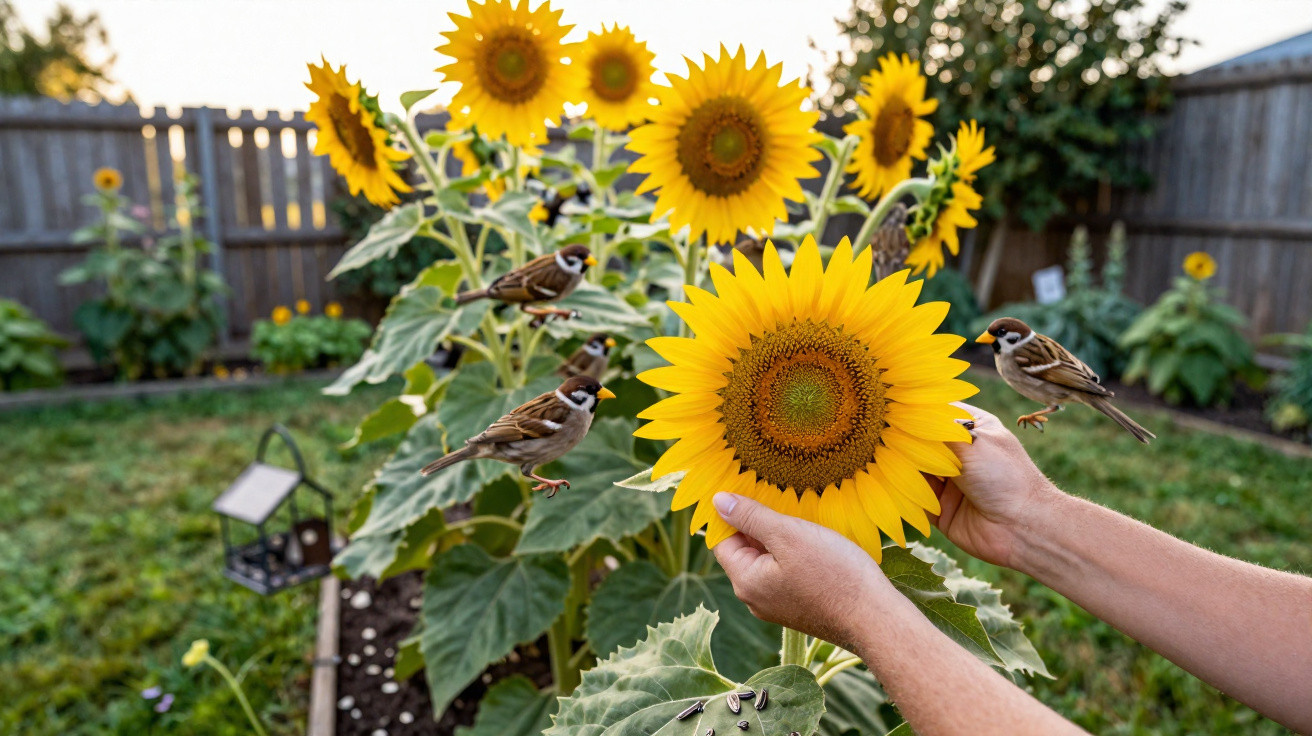
The answer is often growing right there in the border.
Rather than buying yet another high-tech bird feeder, more and more nature lovers are choosing a surprisingly straightforward approach: a single plant that provides food, shelter and a landing spot all in one. It turns the garden into a natural bird canteen-without constant topping up or scrubbing.
Why living plants easily outperform bird feeders
Seed silos and little feeder houses share one major drawback: they draw lots of animals into a very small space. It may please the photographer, but it is not ideal for bird health. Droppings, dampness and leftover food build up in one spot-perfect conditions for germs and parasites. If you feed this way, you need to clean regularly, otherwise the feeding area becomes a risk.
A wildlife-friendly garden works differently. Plants spread food across the whole area. Birds peck a few seeds here, grab an insect there, perch briefly in the stems or canopy and then move on. Fewer crowded hotspots means less stress and fewer pathogens.
A single well-placed plant can make a garden more attractive to birds than several expensive feeding stations.
There is more: a living plant sways in the wind, offers branches and stems as perches, and simply feels familiar. Shyer species, in particular, often feel safer in a natural setting than at a sterile plastic feeder close to the house.
The key role of a sunflower bed
Among classic garden plants, one stands out: the sunflower. It is a visual showstopper, easy to grow-and for birds it is effectively a self-service buffet.
Why the flowerhead becomes a food dispenser
Once the yellow petals drop, the interesting part begins. The large flower disc dries and gradually reveals hundreds-sometimes thousands-of seeds. These sit neatly in rows, are partly sheltered by the flower structure at the sides, and often stay surprisingly dry even after a downpour.
For birds, that is ideal: they can cling to the firm surface or sit directly on it, feed at leisure, and launch away instantly if danger appears. An artificial feeder rarely offers such a natural, non-slip place to perch.
- The height of the stems provides a clear view and therefore a greater sense of safety.
- Thick, sturdy stalks can support several birds at once.
- Seeds that drop down also feed species that prefer to forage on the ground.
That way, it is not only the nimble climbers that benefit, but also blackbirds, finches and other visitors that would rather rummage for food at ground level.
Energy for cold nights: sunflower seeds as winter fuel
Sunflower seeds are small powerhouses. They pack plenty of fat and protein into a tiny package. It is precisely this combination that helps many birds survive winter. Every freezing night costs them huge amounts of energy, which they must replace the next day.
Varieties with black seeds are especially valuable. They contain more oil than striped types and are readily taken by tits, finches and sparrows. A single large head can supply food for months if you simply leave it standing.
Black sunflower seeds are like nature’s energy bar for small birds-compact, high in fat, and easy to crack.
If you have been buying expensive "premium winter mixes", you can easily replace part of that spend with a sunflower patch in your own garden.
These bird species benefit most
A well-grown sunflower bed can create a surprising amount of activity. Typical visitors include, for example:
- Blue tits and great tits – climb directly onto the heads and take seed after seed.
- Goldfinches – experts at picking out seeds that sit deeper in the head.
- Greenfinches and chaffinches – collect fallen seeds from the ground.
- House sparrows and tree sparrows – use both the heads and the seeds below.
- Dunnocks – dart around in the shade of the stems and peck at leftovers.
Under the dry stalks you will often also see collared doves or Eurasian turtle doves waiting patiently for seeds to fall. Over time, it becomes a kind of multi-storey system: climbers at the top, perching and waiting areas in the middle, and ground feeders below.
How to sow and care for them with minimal effort
The right timing and spacing
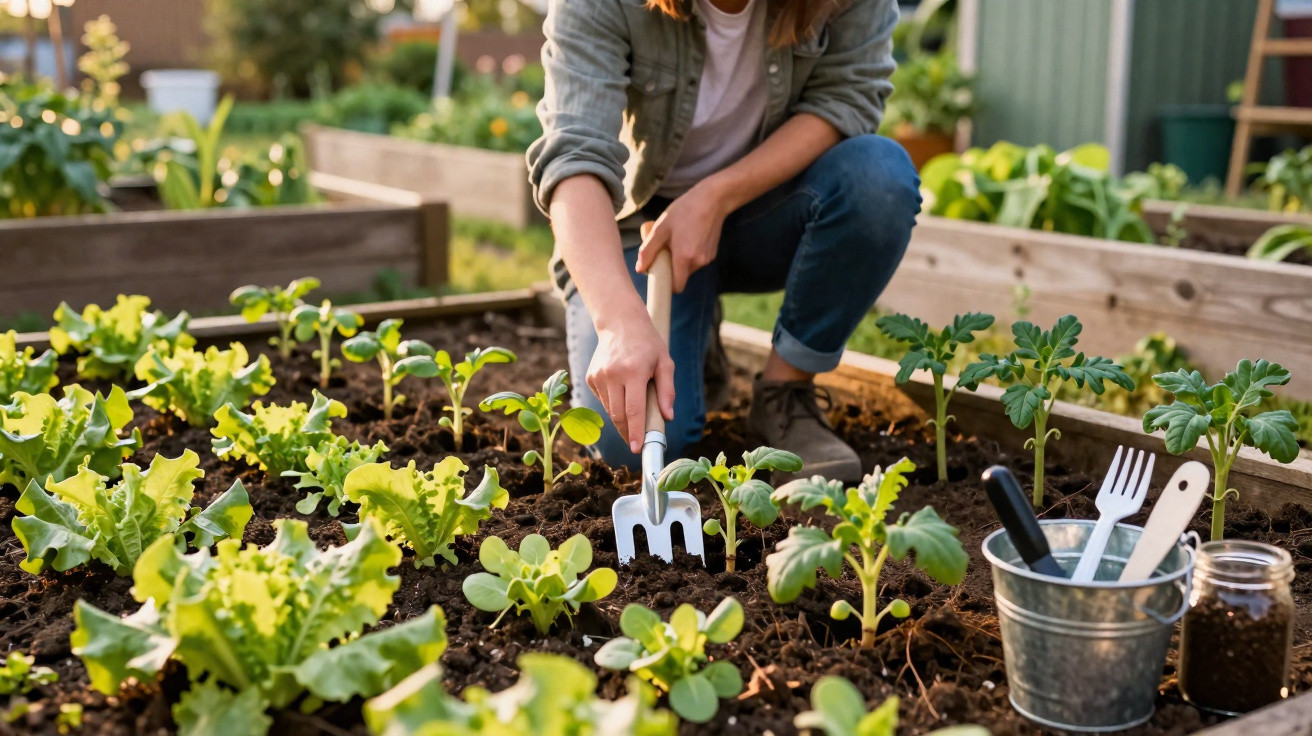
Sow once the last night frosts have passed-usually from April onwards. Push the seeds 2–3 centimetres into the soil. A spacing of 20–30 centimetres between plants is sufficient for medium varieties; tall giant types do best with 30–50 centimetres between rows.
In the first few weeks after sowing, do not let the young plants dry out. Light watering is enough until the roots are established deeper down. After that, sunflowers cope surprisingly well with dry spells. On normal, sunny garden soil, fertiliser is usually unnecessary.
A trick for long-lasting bird activity
To extend the effect, avoid sowing everything at once. Instead, do two rounds spaced 2–3 weeks apart. This staggers flowering and ripening, keeping food available over a longer period.
| Period | Action | Benefit for birds |
|---|---|---|
| April–May | Sow in one to two stages | Basis for staggered ripening |
| Summer | Let plants grow with very little interference | Perches and shade |
| Autumn | Leave faded heads in place | Main feeding phase begins |
| Winter | Do not cut down the stems | Ongoing buffet and sheltered spaces |
Why leaving them standing matters so much
The biggest mistake often happens in autumn: everything gets cut back "tidily" because the garden is meant to look neat. But that is exactly how the most important winter resource disappears for many animals. If you leave the brown sunflower heads standing until spring, you create a genuine refuge.
The seeds feed birds, while the hollow stems provide hiding places for solitary bees, parasitoid wasps and other beneficial insects. Larvae overwinter inside; in spring, new pollinators emerge and, in turn, enrich the garden.
A seemingly "messy" sunflower patch in winter is, in fact, a fully functioning mini ecosystem.
Saving money while bringing more nature into the garden
If you buy multiple sacks of bird food every year, you quickly notice how the costs add up. A packet of sunflower seeds often costs only a few pounds, yet produces kilograms of food. Many plants will self-seed if you leave a few seeds in the bed.
This does not only reduce spending. The garden also feels more alive, because food, shelter and structure come together in one place. Children, especially, get to see for the first time how closely plants, insects and birds are connected.
Practical extra tips for the biggest impact
- Plant in groups rather than as single plants-birds tend to feel safer.
- Position sunflowers near shrubs so birds can reach cover quickly.
- A shallow water area or a dish nearby increases the number of visitors.
- Mix in a few varieties with especially large heads to produce more seed mass.
If you want to go one step further, pair sunflowers with other "bird plants" such as thistles, millet or cornflowers. That extends the natural food supply across many months and keeps the garden lively well into late summer and autumn.
Especially in densely built-up residential areas, a bed like this can have a remarkable effect. Birds are finding fewer and fewer suitable refuges and natural food sources. If you sow a few rows of sunflowers and then simply leave them standing, you create a small paradise with minimal effort-for wildlife and for your own enjoyment.
Comments
No comments yet. Be the first to comment!
Leave a Comment