
With a handful of professional tricks, you can put a stop to it.
Plenty of homeowners know the scene: the moment the winter rain arrives, a lawn you’ve worked hard to keep looking good turns into a brown, slippery mess. Children, the dog, the wheelie bin - every trip across the ground makes it worse. Garden professionals rely on straightforward but effective steps to prevent exactly that.
Why the lawn turns into a muddy track in winter
Before you reach for a spade, rake or aerator, it pays to understand what’s causing the problem. Mud isn’t created by rain alone. Far more important are the soil’s structure and how much wear it’s taking.
- Heavy, clay-rich soil: Water struggles to drain away and sits on the surface.
- Compacted ground: Regular walking or driving over it squeezes soil particles together. The pores that would normally carry water and air disappear.
- Waterlogging caused by poor fall: If the garden has “dips”, water pools there.
- Weakened lawn: Bare patches and thin growth don’t hold the soil in place, so mud forms more quickly.
"Wet, compacted soil is like a soaked sponge - nothing goes in and nothing comes out."
Once you’re aware of these factors, you can tackle the causes directly, rather than just throwing sand or boards onto the mud as a temporary fix.
Improve drainage: get air and structure back into the soil
Professionals almost always start by aerating the ground. Without air in the soil, no drainage solution will last.
Aerate the lawn properly - not just once a year
Aeration means creating holes in the ground so water can drain and oxygen can reach the roots. You can do this in two ways:
- Manually: Use a garden fork or specialist aerating sandals and go over the trouble spots several times, driving holes at least 8–10 centimetres deep.
- Mechanically: A hire machine from a DIY store will cover larger areas much faster and more evenly.
The holes need to remain open and not be trodden closed again. Late autumn and spring are ideal, when the soil is damp but not waterlogged.
Work in organic matter
After aerating, the ground is full of holes, but it can still react badly to heavy rain. This is where organic materials help, because they build a crumbly, open structure over time.
Proven additions include:
- well-rotted compost
- composted bark (bark humus)
- mature farmyard manure (use sparingly)
These materials loosen heavy soils, create air spaces, and help rainwater spread through the profile instead of sitting on top.
"If you regularly work in a thin layer of compost, you build a much tougher, more hard-wearing lawn soil over the years."
Quick help after heavy rain: materials that soak up water
If the garden has already become a skating rink, you’ll need a rapid plan so nobody ends up ankle-deep in sludge.
Sand, gravel and wood - where each option makes sense
Depending on the area, professional gardeners use different materials:
- Sharp sand: Worked lightly into the holes of an aerated lawn, it improves permeability exactly where it’s needed.
- Fine gravel or chippings: Best for heavily used transition zones, such as in front of the patio or by the garden gate.
- Woodchip or bark mulch: Creates a dry walking surface that looks natural. Especially useful where grass struggles to grow well anyway.
All of these approaches are mainly short-term. Used on their own, they simply delay the issue until the next spell of rain.
Firm paths: where stepping stones save the lawn
A common mistake is trying to make the entire garden lawn, even in places that are walked over every day. Grass simply won’t cope there.
Use ground reinforcement grids and stepping stones intelligently
Garden professionals recommend designing well-used routes deliberately:
- Ground reinforcement grids: Plastic grids are laid over a prepared base and filled with soil or chippings. Grass can establish on top without turning immediately to sludge.
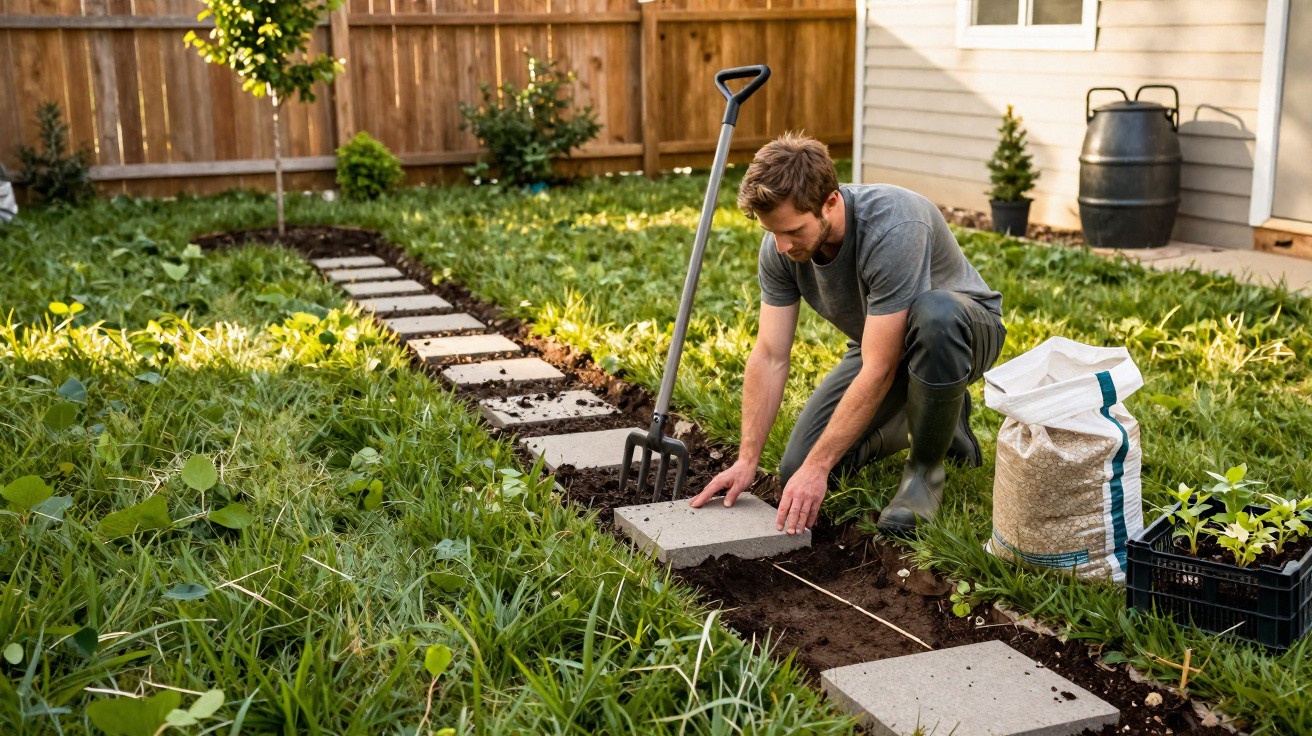
- Stepping stones: Individual concrete or natural stone slabs create a clear route through the green. The soil around them gets a break and stays more stable.
For both options, the method is the same: remove 8–10 centimetres of soil first, add a sand or chippings base, compact it well, then lay the slabs or grids. Do the groundwork properly and you’ll have peace for years.
Plants that love wet ground - and take pressure off the soil
Not every area has to be lawn. In corners that stay wet all the time, professionals often turn to plants that drink up lots of water and effectively “share” the moisture load.
Trees and shrubs as a natural pump
Typical choices for damp zones include:
- various willow species
- alder
- birch
- some poplar varieties
These woody plants pull large amounts of water out of the ground through their roots. Not every species suits every small terraced-house garden, but even one modest tree or a moisture-loving shrub can noticeably improve a soggy corner.
Tough perennials instead of a struggling lawn
Where it’s constantly shady and damp, a small perennial bed can work better than grass. Bog perennials and moisture-tolerant grasses gradually form a dense root network that stabilises the soil and cuts down on mud.
"Sometimes the best solution is to give up on lawn altogether in particularly difficult spots and let other plants do the work there."
Long-term prevention: keeping the lawn stable even in wet winters
If you’re fighting mud year after year, it’s worth rethinking your routine. Many issues are created by habit.
Handling wet ground the right way
A few simple rules make a big difference:
- Avoid walking on wet grass whenever possible, especially with a wheelbarrow or car.
- Guide dogs, children and wheelie bins along set routes, rather than cutting across the lawn.
- Clear fallen leaves promptly so a wet, air-tight layer doesn’t build up on the grass.
If you can already see in autumn where it’s going to be critical, you can aerate early, work in sand, or create a temporary walking surface.
Drainage systems for problem areas
In gardens affected by water running down slopes or by very heavy soils, professionals sometimes install technical drainage. Pipes are laid at a fall at 40–60 centimetres depth to collect excess water and channel it away. This takes planning and often requires permission, but it solves severe waterlogging where other measures are no longer enough.
Practical examples and extra tips from the garden
A typical situation in a terraced-house garden: the worst muddy patches appear in front of the patio, at the garden gate, and along the route to the garage. Here, a combined approach works well - stepping stones, a stabilised chippings area, and aerated strips of lawn in between. The overall look stays green, while the wear is directed onto firm surfaces.
If you have children, shifting the play area onto bark mulch or safety tiles reduces stress on the grass. In areas where the dog regularly sprints or runs along the fence, a narrow gravel strip is often worthwhile. Grass won’t survive there long-term, so it makes sense to plan for a different surface from the start.
The lawn seed mix matters too: hard-wearing sports lawn mixes with deeper-rooting grasses tolerate moisture and foot traffic better than ornamental lawn blends. In trouble spots, targeted overseeding with tougher varieties is worth doing.
If you understand how soil, water and usage interact, you’ll soon realise the winter mud patch isn’t inevitable. With a bit of planning, a few targeted actions and the right planting, you can create a garden that stays usable through the wet months - and starts spring without a battle through the bog.



Comments
No comments yet. Be the first to comment!
Leave a Comment