
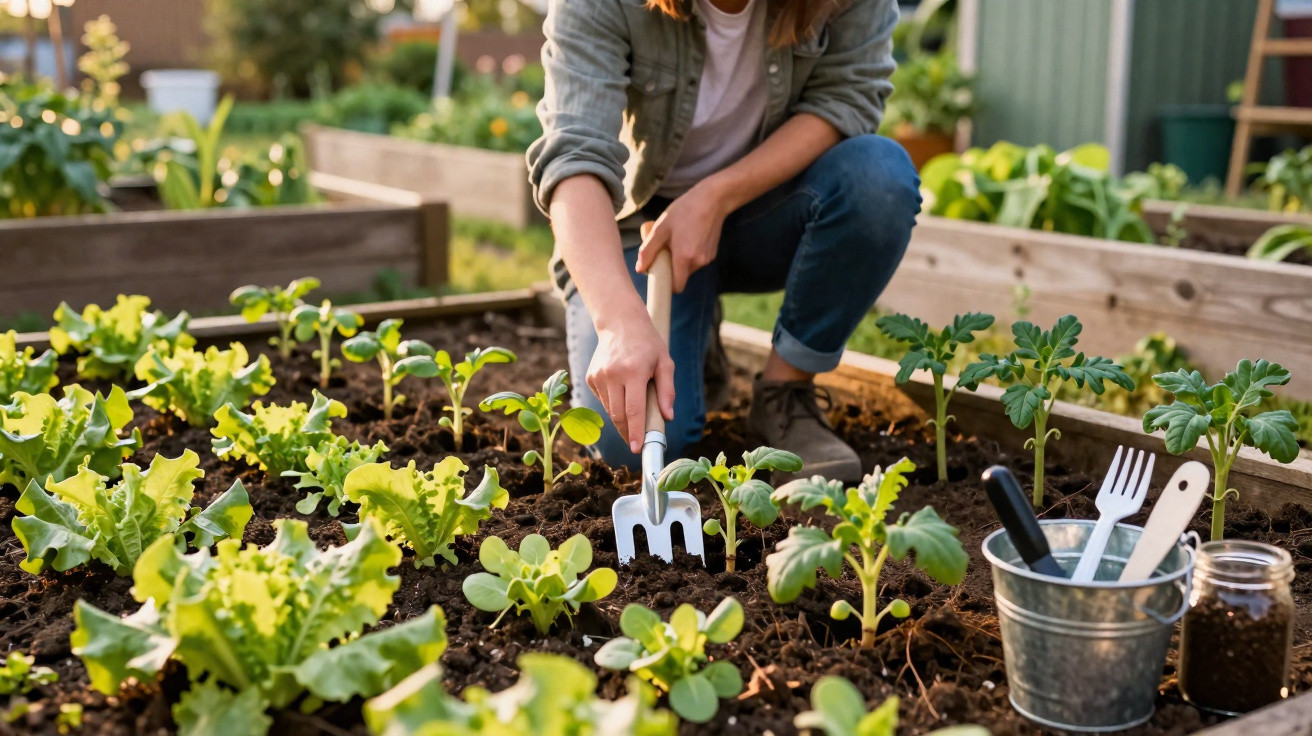
Strolling through modern allotments or small back-garden plots, you might spot something odd among the lettuce, strawberries and herbs: white fork prongs sticking up from the soil. It’s not an art installation and it’s not quirky décor - it’s a surprisingly smart, chemical-free way to deter animal pests that costs next to nothing.
Why plastic forks are stuck between tomatoes and lettuce
At first glance it looks like a joke, but the method relies on a simple idea: animals don’t like nasty surprises under their paws. Cats, rabbits, squirrels and even birds prefer soft, open soil where they can walk comfortably, scratch about or dig.
If the bed is dotted with forks pushed into the ground with the tines facing upwards, that same patch turns into an obstacle course. Each step can prick, the surface feels unreliable, and crossing the vegetable bed suddenly isn’t worth the hassle.
Plastic forks turn a cosy “cat litter-bed” into an unpleasant obstacle zone - with no poison and no stink.
Cats are often the biggest culprits. Freshly loosened earth is irresistible to them - either as a toilet or as a warm place to lounge in the sun. Sharp-edged tines put them off reliably, and after one or two uncomfortable encounters they usually choose somewhere else.
Other small animals respond in much the same way. Squirrels, constantly hunting for buried stores, probe the soil as they search; when they repeatedly meet rigid obstacles, they tend to abandon the attempt. Rabbits also lose interest in hopping through when something is poking up between the plants at every turn.
Beyond the “prick factor”, there’s a second effect: appearance. Rows of upright forks read like a tiny fence to many animals. Unfamiliar vertical shapes signal danger, so lots of four-legged visitors avoid the area instinctively. Unlike sprays and liquid repellents, the barrier remains visible and effective after rain.
Best timing: when vegetables are still small and vulnerable
The fork trick is most useful during the delicate window when seeds have just been sown or young plants have only recently been planted out. At that stage, a single night-time visit from a cat, hedgehog or rabbit can be enough to flatten tender seedlings or dig them up entirely.
Experienced gardeners say damage from animals dropped noticeably once they packed forks closely around sensitive areas. Many rely on it particularly for:
- lettuce, spinach and rocket
- strawberries and other berry bushes
- young tomato and pepper plants
- freshly sown rows in a raised bed
In smaller urban gardens - where neighbours’ cats roam constantly - a plastic-fork barrier can mean the difference between “everything gone” and “a generous harvest”.
How gardeners place the forks correctly
A few lone forks pushed in at random won’t achieve much. What matters is a considered layout that blocks the routes animals would normally take.
Classic strategies for effective fork barriers
- Edge protection: Place forks close together along the outside edges of the bed so animals don’t jump or walk in to begin with.
- Circles around plants: For particularly valuable or delicate plants, position four to six forks in a ring around them.
- Between rows: Push forks into the paths between two vegetable rows so there’s no clear corridor to run through.
- Block animal tracks: Where animals repeatedly pass, deliberately “spike” those lines with forks.
Many gardeners suggest around 8 centimetres between forks, always with the tines facing upwards. If you leave bigger gaps, animals tend to notice quickly and use that exact opening.
After heavy rain or wind, it’s worth a quick check: straighten any forks that have toppled and reinsert those that have shifted. The results depend heavily on keeping the area consistently protected.
How the fork method fits into a natural protection plan
Plastic forks won’t solve every wildlife issue; they work best as one part of a wider, as-natural-as-possible approach. Combining several gentle deterrents usually protects crops far more reliably.
Scents animals love - or can’t stand
Some plants give off smells that many small mammals avoid. Common favourites include:
- marigolds around tomato plants and vegetable rows
- basil near peppers and tomatoes
- mint in pots along the bed edge (it spreads aggressively, so it’s better not planted directly into the bed)
These scent barriers complement the forks’ physical deterrent. While the tines make stepping in awkward, the smell encourages many animals to give the area a wider berth in the first place.
For especially stubborn rodents, some gardeners occasionally reach for stronger measures: sprinkling cayenne pepper around plant stems can sting sharply in the noses of sniffing animals. After rain, though, the powder needs applying again.
Essential oils are also increasingly used. Some gardeners dab stones or small bits of wood with peppermint, eucalyptus or citrus oil and place them where damage is worst. This creates a “scent belt” that reinforces the fork barrier without harming beneficial insects such as bees.
Coffee grounds - a small all-rounder in the bed
Another everyday helper is used coffee grounds. The coarse texture irritates slugs and snails, and the strong smell also bothers many small mammals. On top of that, coffee grounds add a little nitrogen and, over time, can improve soil structure.
If you combine forks, scented plants and coffee grounds, you gradually build a robust, chemical-free protective wall around your vegetables.
Sustainability angle: cut waste, save the harvest
Part of the appeal is that you don’t need to buy new plastic. Many households still have old disposable forks left over from barbecues or takeaway deliveries. Instead of binning them, they can be given a second life in the vegetable bed.
Compared with pricey specialist products from the garden centre - often wrapped in yet more plastic - this approach is kinder to your budget and reduces rubbish. The forks can be reused year after year, simply moved as beds are replanted, and they leave no residue in the soil.
If you want to keep it even more environmentally minded, use forks you already own or choose sturdy, reusable versions rather than buying new disposable ones. Some gardeners even label forks with a marker to identify varieties or rows - so they double as plant markers.
Practical day-to-day tips for the garden
To keep the fork trick manageable in everyday use, a few simple habits help:
- Give forks a quick clean before the first use so old grease or food residue doesn’t attract animals.
- Mix colours: white forks are more visible; darker ones blend in more - it depends on your preference.
- Don’t push forks too close to stems, so plants have enough room as they grow.
- Keep a safe distance from areas where children and pets play to avoid injuries.
In family gardens, safety matters. The tines need to remain visible, but they shouldn’t be placed where children are often barefoot. If you’re unsure, angle forks slightly at the edges of paths so the tips aren’t pointing straight up.
Why this quirky trend is here to stay - and isn’t just an internet gimmick
Plenty of tips from gardening forums vanish as quickly as they appear. Plastic forks are different: they’re now showing up in allotment sites, rented gardens behind blocks of flats, and even on demonstration beds for urban gardening projects.
The explanation is straightforward: the method works often enough that people talk about it. It won’t replace a sturdy fence, a proper wire basket to stop voles, or thoughtful bed planning. But it does plug a gap for exactly the animals that quietly pad through veg patches at night and leave nothing behind by morning except their tracks.
For anyone trying to garden with as little poison as possible, a plastic fork becomes a practical ally. It’s visible, tangible and easy to explain. Neighbours notice, ask about it, try it themselves - and that’s how the idea spreads from bed to bed.
Comments
No comments yet. Be the first to comment!
Leave a Comment