
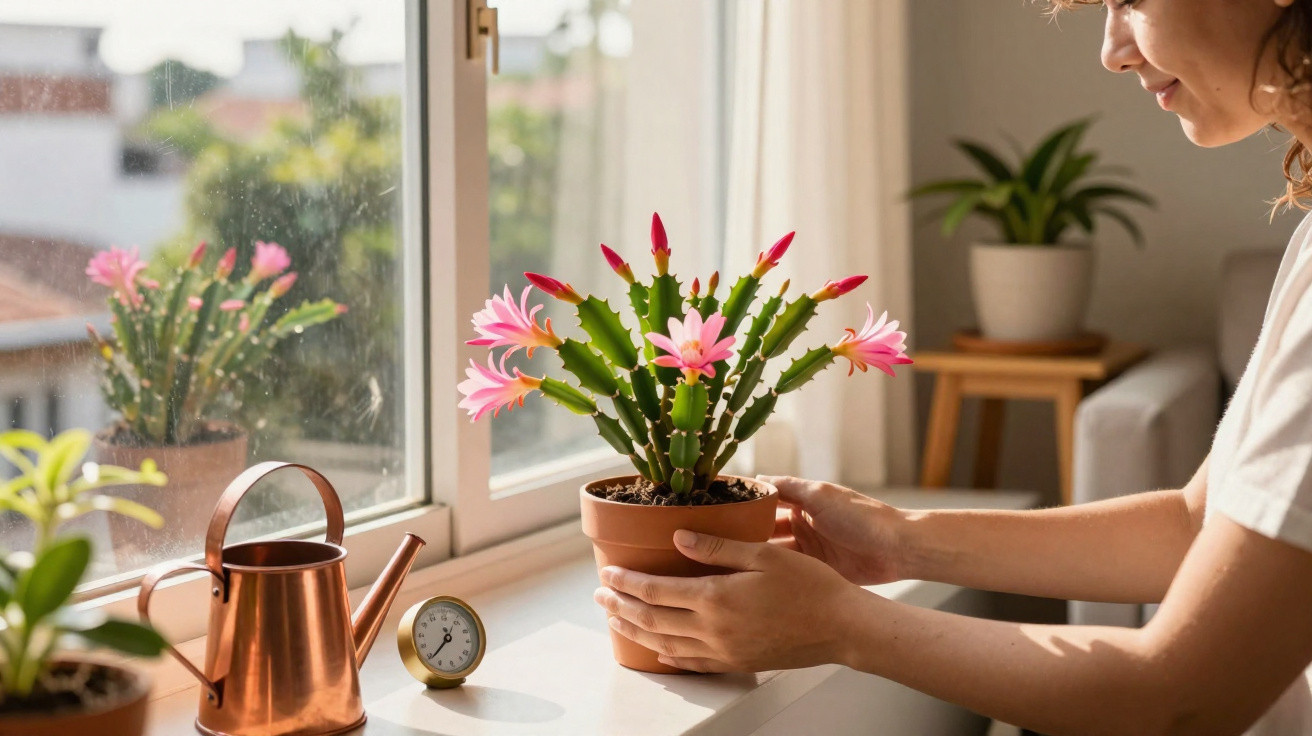
The Easter cactus is usually a straightforward houseplant - until it reaches its delicate flowering stage in March. That’s when every small mistake can come back to bite: buds shrivel, drop off, and the plant "plays up". With a few targeted tweaks, though, it can flower for weeks like a miniature firework display on your windowsill.
Why March becomes the Easter cactus’s big test
The Easter cactus (most often sold under the botanical name Rhipsalidopsis) isn’t a desert cactus at all, but comes from humid forests in South America. In nature it grows on trees among moss and decomposing plant material - so it wants bright conditions without harsh direct sun, and evenly moist compost that is never waterlogged.
Here, its flowering period typically runs from March to May. This is exactly when it becomes obvious whether you handled the previous months correctly. Without a cool winter rest, the plant often stays sparse in spring: buds may not appear at all, or they are shed shortly before opening.
"The actual flowering in March is only the tip of the iceberg - it’s prepared during a cool, restrained winter period."
What the seasonal routine looks like for a well-cared-for Easter cactus:
- Autumn/Winter: 6–8 weeks of rest at around 12–15 °C, watering very sparingly
- February: gradually increase light, water a little more often, raise the temperature slightly
- March: buds develop and open - this is when the sensitive phase begins
As soon as buds are visible, the plant channels a huge amount of energy into producing flowers. During this window it becomes highly reactive to change - especially anything that affects its position.
The one mistake in March that can cost every bud
The most common trigger for sudden bud drop is an unsettled or unsuitable spot. Right when the plant needs consistency, it gets shifted about, or ends up in a draught.
Moving it while it’s budding: "just quickly shifting it" can backfire
A common scenario: the cactus sits on the dining table, then gets carried to the window for a photo. Or it’s moved from a chest of drawers to the windowsill because the light seems better there. To us it feels harmless; to the plant it’s a shock.
"From the first visible sign of budding, the Easter cactus needs a fixed position - any move can trigger bud drop."
Typical March placement mistakes:
- Turning the pot so that "all sides get the same amount of light"
- Leaving it on a windowsill that’s frequently opened for airing
- Positioning the pot directly above a warm radiator
- Putting it in full midday sun behind glass, causing heat stress
- Setting it close to the front door where cold air regularly comes in
Even a strong draught, or a temperature swing of just a few degrees back and forth, can be enough for the Easter cactus to shed buds one by one.
Light, temperature, water: what the ideal March spot looks like
To make sure flowering doesn’t just start but actually lasts, the Easter cactus needs the most stable microclimate you can provide in March.
The right light: bright, but not relentless
The best option is a very bright position without scorching midday sun. These places work well:
- An east-facing window (morning light)
- A west-facing window with a light curtain
- A bright spot in the room, about 1–2 metres back from a south-facing window
If it’s too dim, flowers stay small or don’t open properly. If it’s too intense, the flat segments can turn reddish, develop patches, and the plant looks stressed.
Temperature: avoid a rollercoaster
At 18–22 °C, the Easter cactus is generally comfortable in March. Sudden changes are what cause trouble:
| Critical location | Problem |
|---|---|
| Above a radiator | Air becomes too dry and the root ball dries out quickly |
| By the front door | Repeated cold draughts, buds fall off |
| Next to a tilted/open window | Localised chill and constant air movement |
| Conservatory with strong sun | Heat build-up by day, cold at night |
Watering in March: more than winter, but with restraint
After the drier winter period, the Easter cactus does need more water again in March - just not a "watering can on full-time duty".
- Use a finger test: the top 2–3 cm of compost should feel dry.
- Then water thoroughly until the entire root ball is moistened.
- Empty the saucer or cachepot completely after about ten minutes.
The root ball should stay lightly fresh, never soaking wet. Standing water leads to root rot; the segments become soft and glassy. If your home air is very dry, a tray filled with damp expanded clay pellets can help. This gently raises humidity without leaving the roots sitting in water.
What is strictly off-limits in March: fertiliser and repotting
Many hobby growers reach for fertiliser precisely during flowering. The logic seems sound: more blooms must mean more food. For the Easter cactus, however, that extra push is a stressor.
"During flowering in March, the Easter cactus mainly needs peace and steady care - not a nutrient boost and not fresh compost."
Fertiliser: only useful after flowering
While the cactus is in full bloom in March, extra nutrients offer very little benefit. Worse, a strong dose can upset the plant, alter conditions around the roots, and weaken it.
Better:
- Don’t fertilise at all during flowering in March
- Start gently once new growth begins after flowering
- Use a weakly diluted cactus fertiliser once a month
Put repotting on hold
A new pot, fresh compost, extra room - all sounds like good care, but during flowering it adds strain. The root ball is disturbed and the plant has to re-establish roots instead of directing energy into blooms. Bud drop is then almost inevitable.
A better window for repotting is after flowering, usually in late spring or early summer. Then the Easter cactus can invest in root growth and settle into the new substrate without pressure.
If there are no buds in March: look back to winter
Sometimes the Easter cactus stays plain green in March, without a single bud. When that happens, the cause is nearly always found in the months before.
Typical reasons:
- Winter location too warm, consistently above 20 °C
- Too much water during the rest period, so there’s no clear "winter mode"
- Strong artificial lighting late into the night
In autumn, the Easter cactus needs a genuine pause:
- Lower the temperature to 12–15 °C for 6–8 weeks
- Water only enough to stop the root ball drying out completely
- No fertiliser, minimal disturbance, and a generally quiet position
If you take this rest period seriously, you’ll usually be rewarded with far more buds the following March.
Common misunderstandings and practical tips for living rooms and beyond
A widespread misconception is treating the Easter cactus like a pot of geraniums - lots of sun, lots of water, lots of fertiliser. That doesn’t match its origins as a forest cactus at all. It likes brightness, but not hard midday sun. It wants moisture, but never "wet feet".
It does well in typical living rooms, bright offices, or on a sideboard near a window. In rented homes with dry central heating, it’s often worth nudging humidity up slightly: a small indoor fountain, a dish of water on a radiator, or the expanded clay pellets under the pot can be enough.
If you have several plants, you can overwinter them together in a cooler space - for example, a bedroom or a stairwell with a window. That makes it easier to carry out the winter rest consistently without having to micromanage each plant.
With this approach, the tricky March period becomes far less stressful: a fixed spot, stable conditions, and no fuss - and the Easter cactus goes from a "drama cactus with dropping buds" to a reliable spring star on the windowsill.



Comments
No comments yet. Be the first to comment!
Leave a Comment