
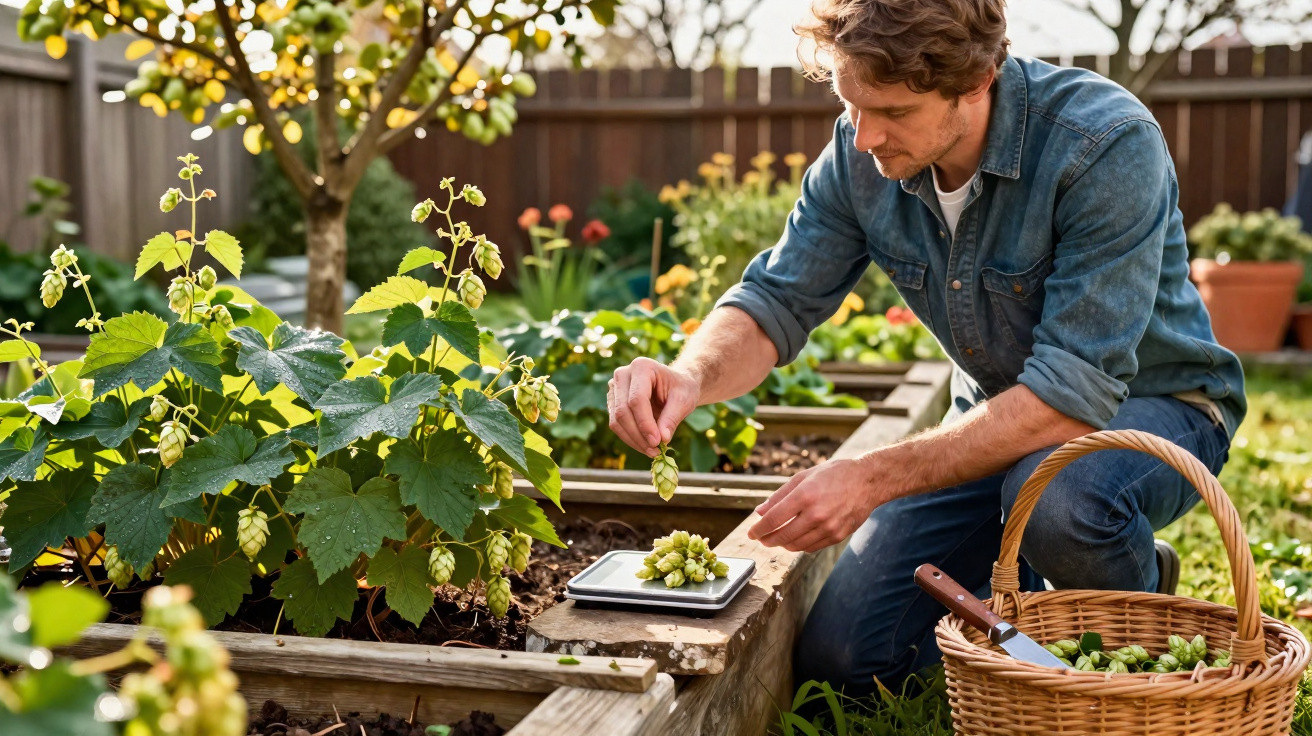
This is not some exotic superfood, but a native climbing plant that runs riot in hedges, along fences and at the edges of woodland. If you spot it at the right moment in spring, you can pick its young shoots - and, in theory, sell them for a price more often associated with luxury mushrooms.
A “weed vine” that suddenly becomes a luxury
In countless gardens, the same routine plays out every year: as soon as temperatures rise, green tendrils push up from the soil, latch on to conifer hedges, chain-link fencing or shrubs, and in no time form shoots several metres long. Many people cut them back or pull them out because they smother beds and can quite literally choke other plants.
What looks like an infestation is, in fact, wild hops. This perennial returns each year from its rootstock and can climb several metres high. Annoying for gardeners - but a prize for some chefs. Because the first growth that appears in March and April is considered a delicacy in high-end cooking.
"In foodie circles, young hop shoots are traded as the ‘Truffles of the North’ - and, at top quality, can reach up to 1,000 euros per kilo."
That peak price refers to freshly picked, perfectly graded produce in small quantities, typically supplied straight to restaurants. A handful gathered by chance from the back of the garden will fetch less in reality - but it certainly isn’t worthless.
Why wild hops command such high prices
For professional kitchens, only the very youngest shoots matter: the first few centimetres that emerge from the ground in early spring. They are slender, delicate, slightly curled and almost seem fragile. That fragility is precisely what makes them exclusive: they have to be found, identified, harvested by hand, and moved carefully without damage.
Each shoot weighs about 1 gram. Only the top 2–3 centimetres are edible and truly tender. To collect 1 kilo, you need hundreds of shoots - and, above all, a lot of time spent kneeling on damp ground.
- Harvest lasts only a few weeks in March/April
- Every shoot is picked by hand
- Only the tips make it into the kitchen
- They often grow in awkward, hard-to-reach spots
- The market is small, while demand from top restaurants is high
Because only a small number of foragers specialise in hop shoots and the season is extremely short, a niche market develops. In that niche, gourmets and restaurants pay willingly - as long as the shoots arrive ultra-fresh, clean and visually unblemished.
How to identify wild hops in the garden with confidence
Wild hops grows as a climbing plant with rough, slightly scratchy stems that twist around supports in a spiral. One key tell: the vine always winds upwards clockwise - i.e. from left to right when you look at it.
Typical features as the season progresses:
- Stems: rough, slightly bristly, green to reddish, strongly twining
- Leaves: arranged opposite each other, hand-shaped with lobes, coarsely serrated
- Habitat: damp hedges, stream banks, woodland edges, overgrown corners of gardens
- Scent: when the young shoots are rubbed, resinous with a faint lemony, spicy note
Early in the year, when only shoots are visible, identification is trickier. They appear as tender, curved stems, usually green with a hint of violet, sometimes almost pale. If you rub them, you’ll notice the characteristic hop note with a slight bitterness.
There is a real risk of confusion with other climbers. Particularly problematic is the resemblance to poisonous species, such as bryony. If you are not fully confident in the identification, do not eat anything - and instead consult a knowledgeable gardener, a forester or a plant identification app.
The best time to harvest
Depending on the region, the season usually starts in March; in cooler areas it is more likely to be April. Once shoots are about 15–20 centimetres long, the most tender tips are ready for the kitchen.
- Break or cut off only the top 2–3 centimetres
- Never strip the stems bare, so the plant can recover
- If shoots are wet, pat them dry carefully - don’t wash them like salad
- Use the same day if possible, or store cool and airy
If you harvest regularly from the same spot, keep an eye on the plants. Wild hops is tough, but if individual plants are raided too aggressively, they respond with weaker new growth.
What hop shoots taste like - and how chefs prepare them
Straight after picking, hop tips taste like a cross between green asparagus and young peas, with a fine, slightly bitter edge and subtle nutty notes. In upmarket restaurants they often appear as a short seasonal feature on menus, usually in small portions.
Popular preparations include:
- briefly blanched and tossed in butter, similar to asparagus tips
- as a side for fish or veal
- stirred through creamy risottos or delicate pasta dishes
- in egg dishes such as an omelette or scrambled eggs
Cooking time is crucial: if they are boiled for too long, the shoots lose their delicate texture and become bland. Many professionals blanch them for just 1–2 minutes in salted water, then move them straight into a pan or fold them through a warm sauce.
Beyond the kitchen: other uses for hops
Hops is best known as a key ingredient in beer. The familiar hop cones that form in late summer give beer its bitterness and aroma. Wild hops also produces cones, although not in the same yields as cultivated varieties. Small craft breweries sometimes use them to create special, locally distinctive brews.
Hop cones are also used in herbal teas and home-remedy blends. They contain substances that are said to have a calming effect. Many people drink hop tea, or mixtures with valerian and lemon balm, as a sleep aid. If you collect cones yourself, dry them thoroughly, store them in a dark, dry place, and check for any visible signs of mould.
Opportunities and risks for hobby gardeners
If you pick hop shoots in your own garden, it is usually for private use. The figure of up to 1,000 euros per kilo is mainly a signal of how sought-after - and labour-intensive - this delicacy is. Trying to gather large amounts commercially quickly runs into limits: dependence on the season, restricted locations, and legal questions around foraging.
It is more realistic as a small side income, for instance by working with a local restaurant or farm shop. The essentials are correct identification, hygienic harvesting, and very short distances between the picking spot and the kitchen.
Anyone who tolerates hops in their garden - or even encourages it - should be clear-eyed about its temperament. This climber grows fast, shades fences and shrubs, and can overwhelm other plants. It helps to train it deliberately on wires or canes, cut it back regularly, and decide firmly where hops is allowed to grow - and where it isn’t.
Practical tips for handling it in the garden
- Let hops grow only where it is free to climb (e.g. a trellis)
- Mark the root area so you can look for shoots in spring
- Cut back rampant summer growth early
- Don’t gather for the kitchen from roadside verges or contaminated soils
If you want to approach the idea cautiously, start with small amounts: identify it carefully first, then pick just a few shoots and try them in a simple dish. That way you can get to know the flavour without turning your garden into a hop plantation overnight.
In German-speaking regions especially, where many people enjoy both gardening and cooking, this unassuming climber has intriguing potential. Anyone who walks past their hedges with open eyes in spring may end up seeing the supposed “weed” very differently - as a rare vegetable garnish with a surprisingly high market value.
Comments
No comments yet. Be the first to comment!
Leave a Comment