
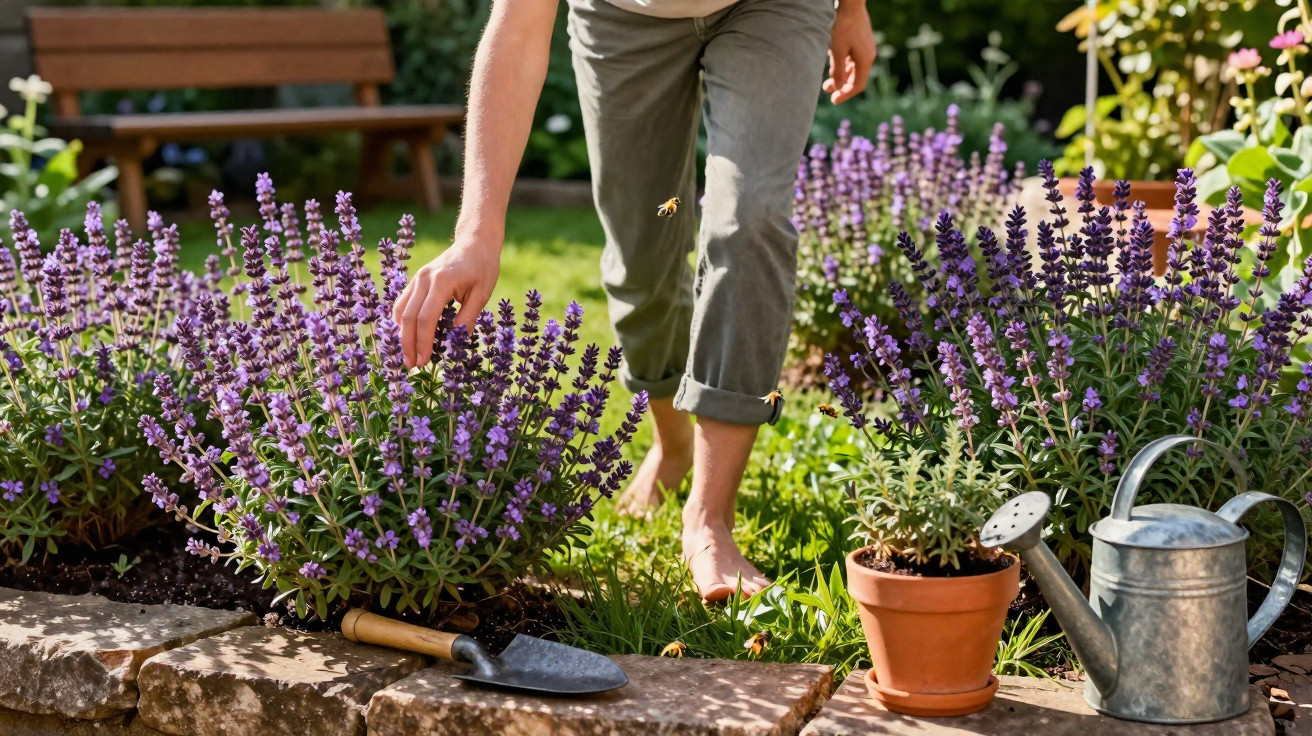
Many keen gardeners are realising that the old dream of a flawless, deep-green lawn no longer fits today’s climate or everyday life. Water costs are rising, heatwaves are becoming more frequent, and there simply isn’t time for constant mowing. Instead, an unexpectedly practical alternative is drawing attention: a low, fragrant herb that spreads like a living carpet, copes well with drought - and can noticeably bother mosquitoes around the patio.
Why the classic lawn is losing ground
A typical ornamental lawn only looks good if you’re forever keeping on top of it: mowing, watering, aerating, feeding, and hand-pulling weeds. On sunny patches it often turns yellow quickly in midsummer. Many councils impose watering restrictions or limit the use of mains water. In that context, a perfect lawn can suddenly feel like a luxury project that doesn’t match the reality of the garden - or your patience.
There’s also the ecological downside: closely cut grass offers very little for wildlife. Few flowers, little food for insects, and a fairly uniform surface. When people plan gardens now, they’re more likely to favour tough, bee-friendly areas that can cope for a few days without a watering can.
"More and more garden owners are replacing delicate lawns with low-maintenance ground cover - above all an aromatic thyme carpet."
Thyme as ground cover: when the herb bed replaces the lawn
The spotlight is mainly on a type of thyme that forms a low, dense carpet and rarely grows taller than around 10 centimetres. Among garden enthusiasts, this creeping thyme is no longer a secret tip: it’s seen as a hardy, drought-tolerant alternative to grass and suits modern, climate-adapted gardens both visually and practically.
It stays close to the ground, branches readily, and gradually fills the gaps between individual plants. Over time you get a soft, lightly springy carpet that nestles alongside paths, seating areas, or between stepping stones. In many gardens it steadily takes over from conventional lawn - at least in sun-baked spots around the patio, driveway, or front garden.
Instead of constant upkeep: establish it once, then let it get on with it
Once the thyme carpet is properly established, the workload drops markedly:
- Hardly any watering needed, even in dry summers
- No regular mowing as you would with a lawn
- Fewer weeds because the cover closes in densely
- A flowering area for insects instead of a monotonous green sheet
Even outside the flowering period, the carpet remains attractive. The foliage is usually evergreen or only changes slightly, so the garden doesn’t look completely “bare” in winter.
Scent in the garden: how thyme keeps mosquitoes in check
One benefit many people only notice after a while is how strongly creeping thyme smells once you walk over it or brush it with your hand. Its leaves contain essential oils that create the familiar, savoury aroma you’ll recognise from the kitchen.
Those fragrance compounds aren’t popular with every insect. Mosquitoes in particular are often thrown off by intense herbal scents. By planting a dense thyme carpet near the patio, a garden bench, or a garden seating area, you create a kind of natural, scented buffer.
"The thyme carpet doesn’t replace anti-mosquito spray, but it can noticeably slow the pests down around seating areas."
Some garden owners even make a habit of taking a quick walk across the patch before sitting down. Slightly crushing the leaves boosts the fragrance. The air around the patio then smells more strongly of herbs - and mosquitoes are more likely to look for another corner.
Flowering carpets for bees and other pollinators
From late spring and through much of the summer, the carpet produces countless tiny flowers in shades from pink to purple. For bees and other pollinating insects, it’s an easy feast. Where a closely mown lawn offered little, you suddenly have a colourful, lively patch with real value for wildlife.
So if you also want to support biodiversity, this type of ground cover tackles several points at once: less water use, more flowers, and more structure in the garden.
How to create a thyme carpet properly
The best time to plant is from late winter into spring, once the ground is no longer frozen and is starting to warm up. At that point there’s usually enough residual moisture in the soil for new roots to form without you needing to water constantly.
The right soil for creeping thyme
Thyme prefers poor, relatively dry conditions and doesn’t tolerate waterlogging. In heavy, clay-rich soils, growth slows or the plants can rot in winter. If that’s what you have in your garden, it’s worth improving the situation:
- Loosen the soil thoroughly
- Work in sand or fine gravel
- Improve drainage, for example with a drainage layer
- Avoid rich compost and heavy feeding
The plant manages with very few nutrients. Overly fertile soil tends to produce soft, disease-prone growth that is less drought-resistant.
Plant spacing and number of plants per square metre
To get a closed surface, many gardeners plant several small young plants (small pots or root balls) fairly close together. A common approach looks like this:
| Area | Recommended number of plants | Typical spacing |
|---|---|---|
| 1 m² | 9–12 plants | 30–40 cm |
| 10 m² | 90–120 plants | 30–40 cm |
In the first few months you’ll still see gaps. Over time, each plant branches out, spreads sideways, and closes the open spaces. Later you end up with a continuous carpet that leaves hardly any room for unwanted weeds.
Practical tips for care, foot traffic and design
A thyme carpet copes well with occasional walking, especially if the ground underneath is firm. For heavily used routes or areas where children play, combining it with stepping stones works well. That way the main load goes onto solid slabs, while the thyme greens up the joints decoratively.
Water is only really needed during establishment and in exceptionally long dry spells. If you reach for the watering can too often, you can actually weaken the roots, because the plant has less reason to grow deeply. A simple rule: only water once the soil has dried out several centimetres down.
Cutting back isn’t essential, but it can help the area every few years. A light trim after the main flowering period encourages tighter growth and removes dried flower heads. It also keeps edges next to borders or lawn lines looking more defined.
Where a thyme carpet is particularly worthwhile
- Around patios and seating areas, to disrupt mosquitoes and other pests
- On slopes, where lawn care is awkward
- In the front garden as an easy-care, tidy-looking surface
- Between paving, gravel areas and stepping stones
- On poor, sunny soils where lawn struggles to survive
What to consider before switching
Moving from lawn to a thyme carpet noticeably changes the character of the garden. The overall look becomes more natural and Mediterranean, and less formal. If you need a sports or play area for children, it’s often better to keep hard-wearing lawn mixes on part of the space and combine them with thyme zones, rather than converting everything.
For allergy sufferers, the heavy flowering of certain varieties can matter. If you’re sensitive, start by trying the plant in a small area and see how your body and airways react. In many cases people tolerate thyme better than highly pollen-rich ornamental grasses, but it varies from person to person.
Pets usually cope well with the fragrant carpet too. Dogs often like to lie on the warm, dry surface, and cats may use it as a viewing spot. Only with particularly sensitive animals is it worth checking whether skin irritation appears if they spend a lot of time lying in the thyme.
For anyone looking to adapt their garden to drier summers, a thyme carpet offers a practical option: lower water consumption, a more relaxed maintenance routine, a more natural look - and a pleasant side effect on mild evenings on the patio when mosquitoes once again make a beeline for the garden.



Comments
No comments yet. Be the first to comment!
Leave a Comment