
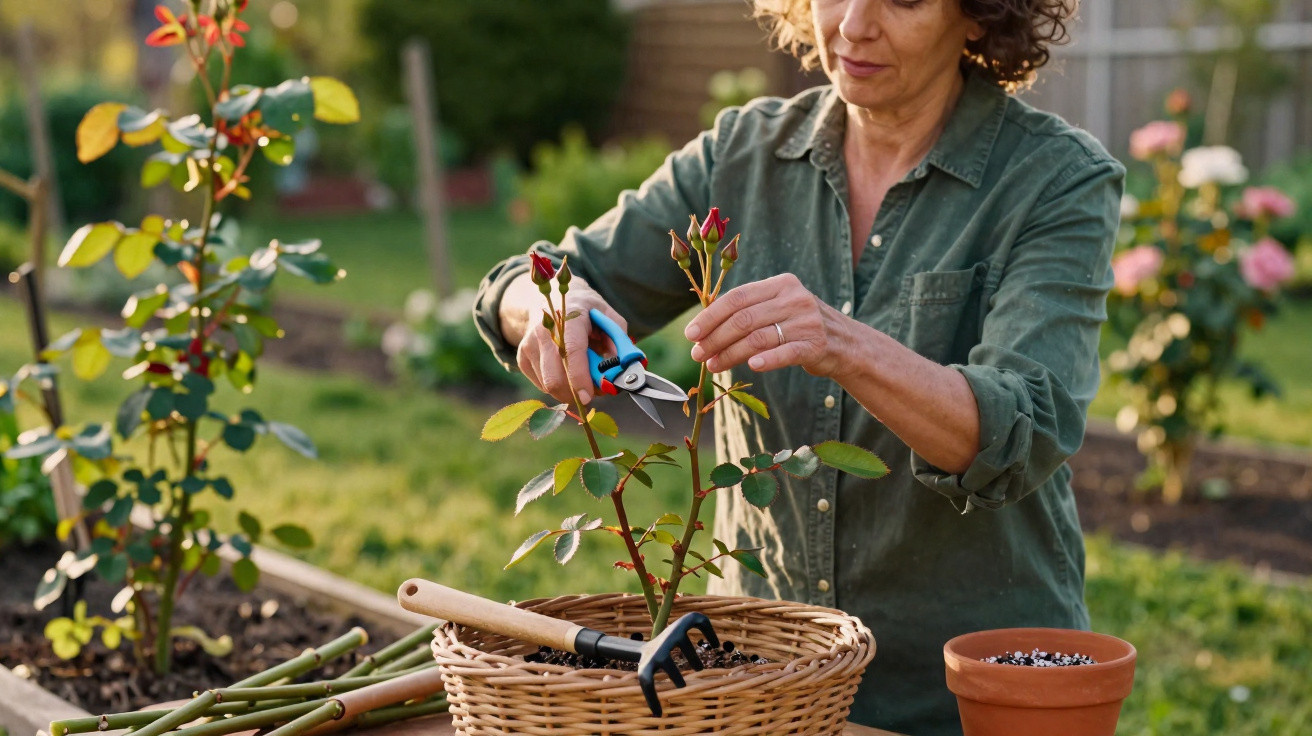
A seasoned nursery grower has developed a strikingly straightforward approach that takes much of the frustration out of rose pruning. It is not about tricky cutting techniques; it is about reading the rose bush properly first, and then removing only what genuinely benefits the plant.
Why the usual rose pruning often disappoints
In many gardens, spring rose pruning follows the same routine: a quick overall cut-back, a bit of thinning, and that is that. The expectation is simple-strong new growth followed by a burst of flowers.
In practice, it often goes the other way. If you cut too hard, roses can look drained of energy, take longer to get going again, and set fewer buds. If you cut too cautiously, you are left with a tangled mass of weak, spindly shoots where fungal diseases can spread easily.
"Roses react very sensitively to the height, style and timing of pruning-‘somehow’ is rarely enough."
Common results of thoughtless rose pruning include:
- fewer and smaller blooms
- vigorous growth in the wrong places
- a dense centre with poor air flow
- greater susceptibility to fungal diseases
- a shape that is neither attractive nor easy to maintain
Many rose enthusiasts then assume the variety is “bad” or the position is unsuitable. In reality, the issue is surprisingly often down to how the plant is pruned.
The professional method: observe first, then cut
Nursery professionals approach a rose bush very differently from most hobby gardeners. Before the secateurs go anywhere near the plant, they study its structure and condition with care.
They work through a simple checklist:
- Which shoots are strong and full of life?
- Where are the dead, blackened or diseased sections?
- Which branches are rubbing, crossing, or growing towards the middle?
- What should the finished form be-more open, more upright, or more bushy?
The purpose is not to make the rose look “tidy” at all costs; it is to build a stable framework that is well lit and well ventilated.
"Good rose pruning brings air and light into the crown without stripping the plant of its strength."
The nursery method is easy to remember:
- Strong, healthy main canes stay.
- Old, dead and very weak wood is removed completely.
- Shoots that cross or chafe against one another are thinned out.
- Each remaining shoot is shortened deliberately just above an outward-facing bud.
That bud-the clearly visible “eye”-sets the direction of the next flush of growth. If it points inwards, the new shoot heads straight back into the centre. If it points outwards, the shrub opens up and tends to stay healthier for longer.
The right time in spring
With rose pruning, timing matters almost as much as the cuts themselves. Prune far too early and a late frost can damage tender new growth. Leave it too late and you remove growth the plant has already spent energy producing.
Rather than relying on the calendar, it pays to watch what is happening in your own garden. A good moment has arrived when:
- the buds are clearly swelling and starting to show a hint of green,
- the harshest night frosts in your area are largely over,
- the ground is no longer continuously frozen.
In many places, this falls between late winter and early spring. If you are a bit late and can already see small new shoots, there is no need to panic-simply prune more gently and avoid anything too drastic.
Step by step: how to tackle your rose bush
Before making the first cut, take a short walk around the plant. Viewing it from all sides makes it much easier to spot where it is overcrowded and where there are gaps.
The key actions at a glance
- Start by removing any shoots that are clearly dead, black, brown, or damaged.
- Cut out very thin, weak twiggy stems that would be unlikely to carry worthwhile flowers.
- Inside the plant, remove branches that grow across the centre or rub against others.
- For a shrub rose, aim to keep three to five strong basal canes.
- Shorten each of those main canes just above an outward-facing bud.
Cuts should be clean and smooth. Sharp, clean secateurs prevent crushing and lower the risk of infection. Make the cut at a slight angle so rainwater can run off-only a small slope is needed.
Match the height to the plant’s vigour
How far you can cut back depends closely on the strength of the individual rose. Very vigorous shrubs usually cope well with a shorter prune. Weaker plants should keep more wood so they retain enough reserves.
| Vigour | Recommended shoot length after pruning |
|---|---|
| very vigorous shrub rose | about 20–30 cm |
| medium-strength rose | about 30–40 cm |
| weak or young rose | leave nearer 40–50 cm |
One-size-fits-all “lawnmower heights” take away the rose’s individuality. Each variety-and often each plant-has its own rhythm and typical shape. If you work with that, you will get shrubs that look more natural and grow more reliably.
"Many professionals talk about a dialogue with the rose: you do not force it-you guide it."
Mistakes to avoid in spring
A few common pitfalls show up in almost every amateur garden. Once you know them, they are easy to avoid.
- Aimless all-over cutting: Removing a third everywhere without considering structure often creates patchy, unbalanced shrubs.
- Leaving too much old wood: Fear of “over-pruning” often means tired, low-flowering wood is left in place.
- Cutting too close to the bud: If you cut right on the “eye”, it can dry out. A small stub of about 1 cm helps protect the bud.
- Blunt or dirty tools: Crushed, ragged wounds are ideal entry points for fungi and bacteria.
Choosing a handful of clean, purposeful cuts with good tools helps your roses far more than frantic snipping.
What roses really need after pruning
Pruning is not the only job in the rose bed. The shrub is about to enter an intensive growth phase that demands energy and nutrients.
In dry soils, the plant benefits first from a thorough watering. After that, give a spring feed using well-rotted compost or a dedicated rose fertiliser. Those nutrients support fresh shoots and strong bud formation.
A thin layer of mulch around the root zone is also very useful. It helps the soil hold moisture for longer, reduces overheating in summer, and makes it harder for weeds to establish. Organic mulches such as shredded leaves or bark compost will even improve soil structure over time.
"If you prune roses correctly and then look after them well, you gain twice over: stronger plants and longer flowering periods."
In the weeks after pruning, keep an eye on the young growth. If the shoots develop evenly and head outwards with vigour, the prune was well judged. Inward-growing stems or very long, thin “fishing rods” are a sign that the plant should be guided differently next time.
What the method changes in the garden over the long term
Many gardeners say their relationship with roses shifts completely once they stop pruning “by the book” and start treating each shrub as its own small project. When you look first and cut second, roses feel less like divas and more like robust partners in the garden.
Over time you build an instinct for which canes provide the framework, where the plant lacks air, and how the flowers are likely to be distributed later. Rose pruning then stops feeling like a chore and becomes more like careful fine-tuning in your border.
It also helps to learn a couple of key terms. The “eye” is the bud from which a new shoot will grow. “Old wood” refers to older, somewhat exhausted canes that may still be alive but produce fewer blooms. If you regularly prune above an outward-facing eye and replace part of the old wood each year, you keep roses vigorous and youthful.
It is also worth combining this pruning approach with other gardening tasks. Underplanting roses with suitable perennials such as lavender or catmint can improve the microclimate: less soil splash onto leaves, more beneficial insects, and a more stable environment overall. In those conditions, roses tend to cope better even if you do not get every cut perfect.
Even older, badly shaped specimens can be brought back gradually. There is no need to fix everything in a single year. Often it is enough to follow the observe-first rule for one season and improve the framework step by step each year. Many supposedly “difficult” roses then suddenly reveal what they are truly capable of.



Comments
No comments yet. Be the first to comment!
Leave a Comment