
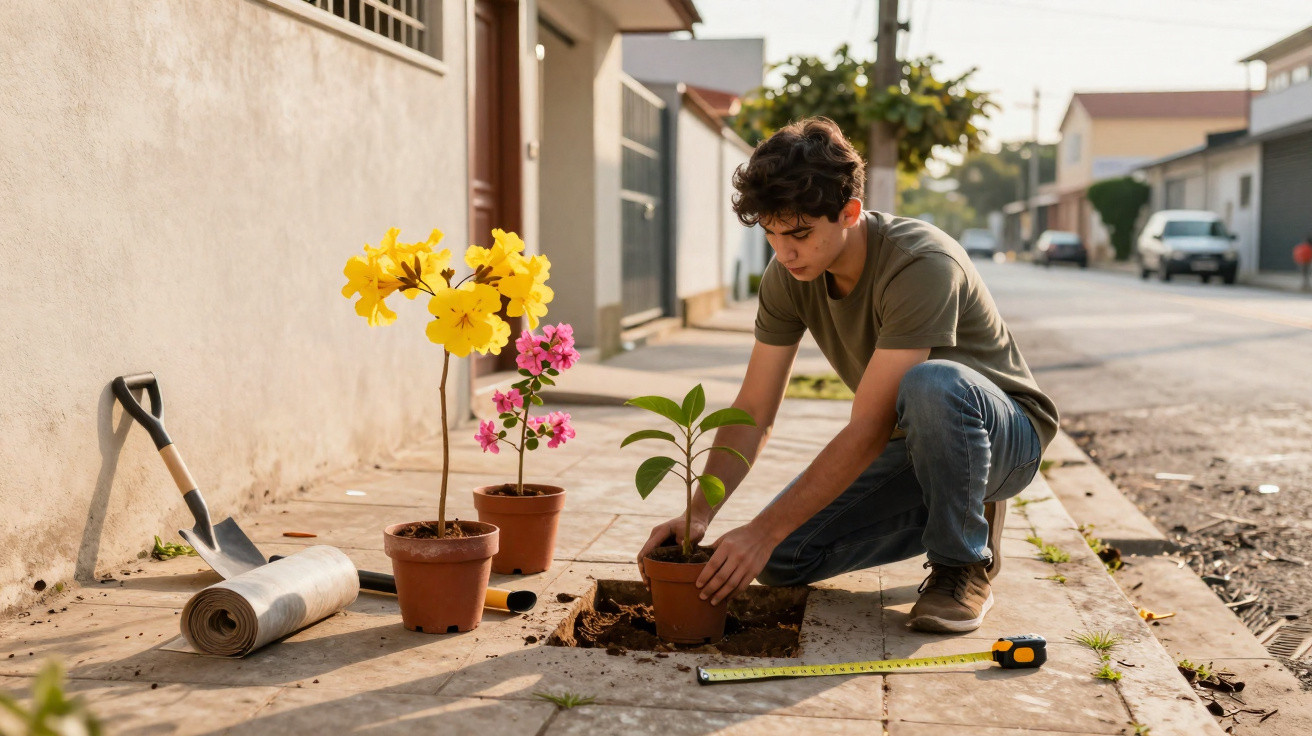
Choosing a tree for a pavement requires more consideration than simply looking at shade or the attractiveness of its flowers. Unsuitable species can lift concrete, damage pipework and turn urban planting into a problem for the street.
Why do some trees crack pavements?
Trees with shallow, spreading and vigorous root systems often seek moisture and room in the upper soil layers. Over time, their roots may force up concrete slabs, distort the pavement and create a hazard for pedestrians.
Urban tree planting covers trees in public and private parts of towns and cities, including streets, squares and parks. The selected species must therefore suit the available space in terms of its eventual size, canopy, roots and safety.
Before planting, take the following factors into account:
- Roots: choose species with deep, non-invasive root systems.
- Size: smaller trees are less likely to conflict with overhead wires and building fronts.
- Pavement: leave an unobstructed route for pedestrians and wheelchair users.
- Overhead wiring: tall or broad canopies need adequate clearance and professional pruning.
- Local authority: check local requirements before digging the planting hole.
What are the 3 best trees for narrow pavements?
On streets with limited room, the best choices are species with a controlled size, manageable canopy and less invasive roots. Surinam cherry, dwarf yellow ipe and crape myrtle stand out by combining beauty, moderate shade and urban adaptability.
Even so, no tree should be planted without assessing the pavement, electricity network, pipework and council rules. A successful result relies as much on the species as on a correctly prepared planting hole, initial watering, canopy training and formative pruning.
Why is Surinam cherry a suitable choice?
Surinam cherry is well suited to small urban spaces because it has a moderate mature size, a dense canopy and roots that are generally less invasive when properly trained. In addition to providing light shade, it bears fruit that attracts birds and makes the pavement feel more lively and pleasant.
The right tree prevents cracked pavements
The choice should take account of roots, canopy and available clear space.
Compact species limit conflicts with concrete, walls, gates and overhead wiring.
However, planting must still comply with the local authority rules in each town or city.
For Surinam cherry, allow at least 1.5 metres from walls, gates and known pipework, while retaining a generous permeable area around the trunk. On streets with low overhead cables, training pruning prevents the canopy from spreading over wires and building fronts.
It is a suitable option for residents seeking:
- A small-to-medium fruit tree.
- Roots that are less invasive than those of large, shallow-rooted species.
- Moderate shade for residential pavements.
- Bird attraction and greater visual appeal along the street.
When should you choose dwarf yellow ipe or crape myrtle?
Dwarf yellow ipe is an ornamental choice for anyone wanting striking flowering without selecting an excessively large tree. Its compact size is better suited to small pavements, provided there is enough room for the canopy, a permeable planting hole and a safe distance from overhead wiring.
Crape myrtle, also known as resedá, is widely used in urban planting because of its controlled size, showy flowers and less troublesome roots. It is therefore often an alternative for narrow streets, house frontages and places where larger trees would be excessive or risky.
In practical terms, use these clearances:
- Surinam cherry: at least 1.5 metres from walls, while keeping a clear passage along the pavement.
- Dwarf yellow ipe: around 2 metres from walls, with extra attention paid to overhead wiring.
- Crape myrtle: around 1.5 to 2 metres from buildings and driveway entrances.
- Utility poles and corners: consult the local authority before planting near these locations.
How can you plant without creating future problems?
Like the perfect tree for small gardens that does not crack the pavement, these species perform best when planting takes account of space, drainage and maintenance. The right tree needs prepared soil and ongoing care.
Before planting, verify local authority requirements, the minimum clear walking width, the presence of pipes and the height of the electricity network. With an appropriate species, safe spacing and well-executed pruning, the pavement gains shade, beauty and comfort without becoming a source of damage to the concrete.





Comments
No comments yet. Be the first to comment!
Leave a Comment