

The first time my banking app reduced me to tears, I was on the floor, surrounded by washing that needed putting away and facing an empty fridge. My rent payment had just left my account. Then an unexpected vet’s bill arrived. When a friend messaged, “Brunch this weekend?”, my chest clenched as though they had asked me to give away a kidney rather than share a few pancakes.
Each notification felt like a judgment on me personally. Every outgoing payment appeared to make a statement about my value, my prospects and whether I was capable of being a properly functioning adult.
I was not simply spending money. I was spending my self-worth.
The change that transformed things for me did not begin with a budget.
It began with a question I did not want to face.
When I realised money was not the real issue
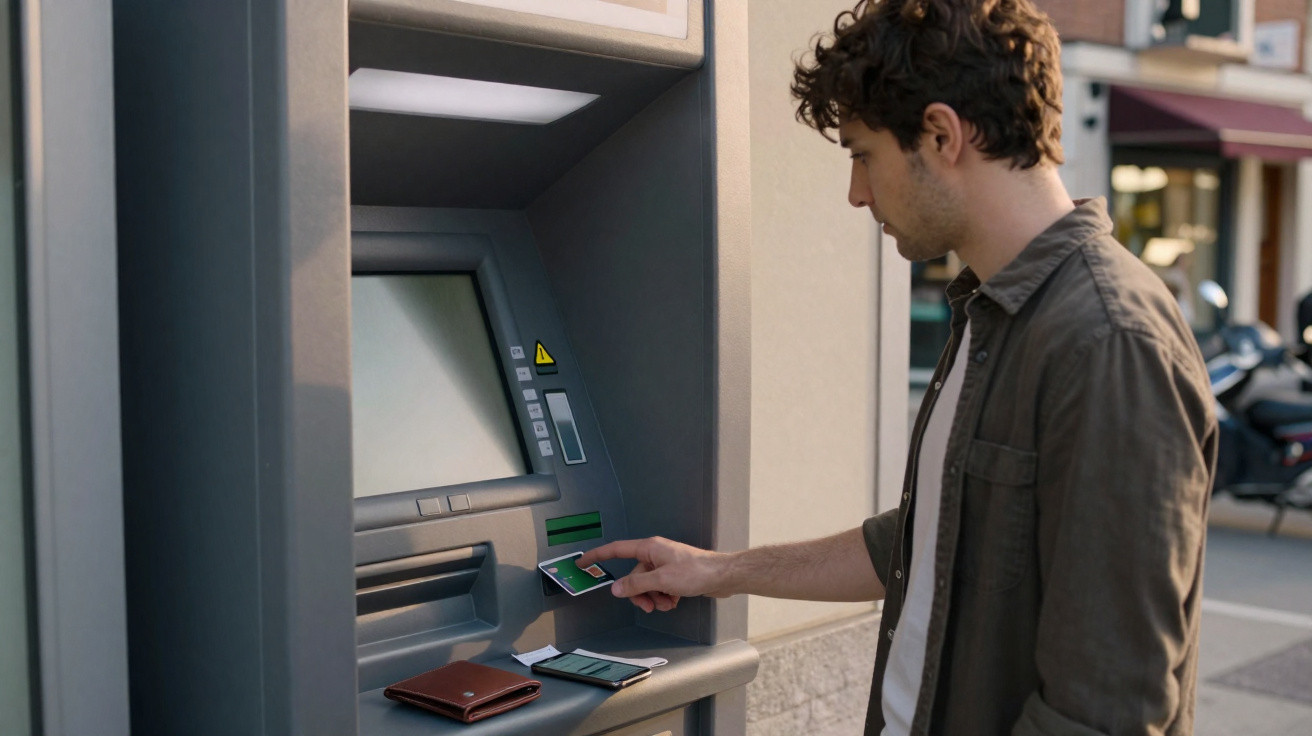
Most of us know that moment when an ordinary purchase sparks a complete mental tailspin. You use your card to pay for groceries, then immediately begin doubting your career, relationship and entire plan for life. That was once my standard response. Whenever I spent anything at all, I felt either frightened or guilty.
One evening, as I looked at my online banking, something became clear: the figures themselves were not alarming. My response to them was. I was not broke; I had simply been emotionally conditioned to see every transaction as an emergency. I began to wonder whether my problem was not money, but the meaning I attached to it.
There is one particular day I still remember clearly. I was standing in a chemist, holding a £15 moisturiser. Mine had run out, and my skin was sore, flaky and red. For ten minutes, I debated buying that bottle as if I were considering a luxury yacht.
In the end, I returned it to the shelf. I went home, spent the evening scrolling, ordered food I did not particularly want and ultimately spent four times as much. The following morning, I had irritated skin and a £40 takeaway receipt. What I had framed as the “responsible” decision had become self-sabotage.
For the first time, I could see the pattern plainly: I would deny myself small, appropriate purchases because they felt “too much”, then spend emotionally on things I did not even care about.
As I paid closer attention, it began to make sense. My mind seemed to operate in only two settings: panic or numbness. I had grown up with worried conversations about money, unforeseen bills and that constant low-level fear that everything might unravel at any moment.
By the time I reached adulthood, my nervous system had not registered that circumstances had changed. My earnings changed and my life changed, but my reactions remained fixed at 12 years old.
The financial shift that eventually made a difference was not about making more money or tracking every penny more intensely. It was about recognising money as neutral information rather than a judgement of my character. Only then could I develop habits that were not rooted in fear.
The financial shift: replacing reactions with simple rules
My turning point was one seemingly basic rule: before I received any income, every pound would already have a purpose. This was not a restrictive “budget” involving 27 categories. Instead, I used three consistent pots: “Now”, “Later” and “Future Me”.
“Now” covered bills, food and essentials. “Later” was for near-term plans and enjoyment. “Future Me” covered savings, debt repayments and anything that could make next year easier than this one.
Every payday, fixed percentages went automatically into those pots. That single change removed much of the emotion from everyday spending. I no longer had to make every choice from the beginning; I was following directions I had already set for myself.
During the first month, the figures were not great. “Now” did not contain enough. “Later” was almost laughably small. “Future Me” held a single-digit amount that made me feel embarrassed. Even so, I gave the system a try.
Then I was invited to a dinner I genuinely wanted to attend. I checked my “Later” pot, and the money was available. There was not loads of it, but there was enough. The question was no longer “Can I afford this?” but “Do I want to spend my ‘Later’ money on this?”
Conversely, an advert for a new phone appeared. Previously, I would have entered an emotional battle with myself. Under the new system, the answer was straightforward: my “Future Me” pot had not reached its target, and replacing a functioning phone did not fit my priorities. There was no breakdown, only a calm no based on a rule I had already accepted.
The reasoning is almost frustratingly simple. If every pound is assigned a role in advance, your mind does not have to hold a moral argument whenever you buy something. Instead of asking, “Am I being good or bad?”, you ask, “Does this match the purpose given to this money?”
That modest gap between feeling and action is where calm can exist. Gradually, I found myself checking my banking app more frequently rather than avoiding it. My heart rate no longer jumped. Expenses became figures, and figures no longer felt like accusations.
Of course, no one manages this perfectly every day. Life is untidy, and some months go completely off track. Yet once you know what it is like to have rules that protect you from your own panic, returning to a purely reactive approach becomes difficult.
How to make this financial shift without becoming a spreadsheet robot
If I had to reduce my approach to one practical habit, it would be this: choose your percentages once, then automate as much as possible. I set aside a quiet hour with a notebook and my previous three bank statements. I selected broad proportions: 60% for “Now”, 25% for “Later” and 15% for “Future Me”.
Were those figures flawless? Definitely not. They were estimates, but they were still better than relying on feelings alone.
The next part was practical: I arranged automatic payday transfers into three separate accounts or sub-accounts. I wanted some friction. I wanted it to feel unusual to take money from “Future Me” for an arbitrary sale. That small obstacle protected me more often than self-control ever had.
Something I wish I had learned sooner is that you will get it “wrong” in the first few months. You will underestimate certain costs, overestimate others and probably become annoyed by your own optimism. That does not mean the approach has failed; it means you are gathering useful real-world information.
Many people give up at this stage because they take the discomfort as proof that they are bad with money. It is not. It is simply the uncomfortable period when old impulses encounter new rules. Be kind to yourself if you spend too much from one pot. Change the percentage and try again the following month.
If you have debt, particularly emotionally loaded debt such as unpaid tax or money owed to a relative, make room for it in “Future Me”. Treat it not as a punishment, but as a source of relief you are steadily moving towards.
“I used to think discipline meant saying no to everything fun,” a friend told me when she tried this system. “Now it just feels like I’m saying yes on purpose instead of by accident.”
- Give your pots names that feel human – “Security”, “Joy” and “Future Me” are more effective than “Account 1, 2, 3”.
- Begin with approximate percentages rather than trying to make them perfect – revise them after two or three untidy months.
- Automate transfers on payday, so the emotional part of your brain does not get first access to all your money.
- Leave a small “chaos buffer” in your “Now” pot for minor emergencies, such as taxis or last-minute presents.
- Review everything once a month over a coffee, rather than panicking at midnight before rent is due.
The quiet freedom of staying calm at the checkout
Now, my relationship with spending feels unexpectedly… quiet. It is not perfect or carefully curated to influencer standards. It is simply more settled. An unexpected bill still frustrates me, and a large purchase still makes me stop and think. The difference is that my body no longer moves instantly into alarm mode whenever money changes hands.
If a friend suggests a trip, I do not spiral. I look at my “Later” and “Future Me” pots. Sometimes the answer is yes, and sometimes it is not yet. Both answers feel grounded.
The genuine change was not becoming “good with money”. It was letting go of shame and viewing expenses as decisions within a framework I had created for myself. Anyone can access that, whatever their income. The amounts may vary, but the feeling can remain the same.
| Key point | Detail | Value for the reader |
|---|---|---|
| Give every pound a purpose | Use straightforward pots such as “Now”, “Later” and “Future Me” with set percentages | Limits emotional decisions by replacing them with clear rules |
| Automate your approach | Schedule payday transfers to separate accounts or sub-accounts | Reduces impulse spending and safeguards long-term goals without requiring constant willpower |
| Anticipate untidy months | Treat early errors as feedback for revising your percentages | Avoids shame spirals and helps you continue long enough to see results |
FAQ:
- Question 1 What happens if my income changes each month?
- Question 2 Is this still worth doing if I am in debt?
- Question 3 How can I stop feeling guilty about spending on “fun”?
- Question 4 What if emergencies repeatedly derail my plan?
- Question 5 How long does it take to stop responding emotionally to expenses?



Comments
No comments yet. Be the first to comment!
Leave a Comment